
Cassava Republic Press
Cassava Republic Presswas founded with the aim of bringing high quality fiction and non-fiction for adults and children alike to a global audience.
View Rights Portal
Cassava Republic Presswas founded with the aim of bringing high quality fiction and non-fiction for adults and children alike to a global audience.
View Rights Portal
Republika Penerbit is a Jakarta-based publishing company. We publish books with genres ranging from religious (Islamic books), nonfiction, biography, historical fiction, contemporary fiction, fantasy, picture books, to comics. Some of our fiction has been adapted into films and there will be more to be filmed.
View Rights Portal
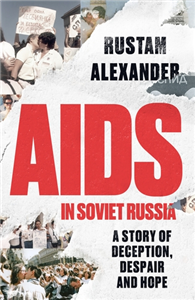
The first book to tell the shocking story of the AIDS crisis in Soviet Russia. Throughout the 1980s, as the world was grappling with the escalating crisis of AIDS, Soviet Russia continued to deny there was a problem. Arguing that the disease was limited to foreigners and 'immoral' groups, the government failed to take meaningful action, long past the point other countries had begun to recognise the full scale of the threat. In this ground-breaking book, Rustam Alexander tells the story of AIDS in Soviet Russia. Fixated on disinformation, censorship and the persecution of marginalised communities, the Soviet authorities wasted precious time, allowing the epidemic to strike at the very heart of the nation: its children. Yet, despite the government's failure, a number of brave journalists, doctors and nascent gay groups decided to take matters into their own hands and engage in full-fledged AIDS activism. Tracing the political and social response to AIDS in the final years of the Soviet era, Alexander sheds light on the devastating consequences of government inaction. He draws on personal stories, media reports and archival materials to provide a riveting account of the Russian people's fight against AIDS amid the tumultuous transformations of Gorbachev's perestroika.
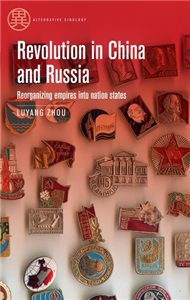
Most scholars believe that China's nationality policy, like that of other socialist states, imitated the Soviet nationality model, a system which has been termed an "affirmative action empire." This book offers two contributions to the literature which run counter to this convention. First, it argues that the People's Republic of China (PRC) and the Soviet Union (USSR) were different; while the PRC was aimed to build an ideal-typical nation-state, the USSR was an open union of nation-states that was only temporarily confined to a physical territory. Second, while scholars who have noted this difference attribute it to contextual factors, such as ethnic structure, geopolitical status, and Russia's intervention into the Chinese Revolution, this book contends that context shaped the Sino-Soviet difference, yet it did not determine it. Rather, there was significant leeway between the implications of the contextual factors, and what the policy-designers ultimately established. This book probes who held agency, and how these individuals bridged this gap.
 Trusted Partner
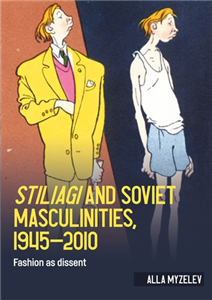
This book provides an in-depth analysis of the Stiliagi, the Soviet Union's pioneering youth subculture from the late 1940s to the early 1960s. Characterized by their distinctive Western-influenced fashion, affinity for jazz, and resistance to Soviet ideological conformity, the Stiliagi represented a significant cultural shift in post-war Soviet society. The book examines how this subculture, through its embrace of alternative masculinities and nonconformist behaviours, challenged prevailing social norms and influenced Soviet cinema, theatre, and broader cultural discourse. Drawing on rigorous research, the book situates the Stiliagi within the broader context of Soviet and Post-Soviet history, arguing that their legacy persisted well beyond their absorption into mainstream culture. Essential reading for scholars of Soviet history, cultural studies, and subcultural movements, this work offers a nuanced understanding of the Stiliagi's enduring impact on Soviet identity and cultural resistance.
Trusted Partner
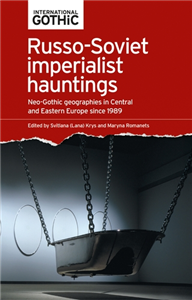
Russo-Soviet imperialist hauntings attempts to capture some of the ghosts of the colonial and totalitarian past that have been proliferating in international political and cultural landscapes after the collapse of the USSR. By conflating postcolonial, post-totalitarian, postcommunist, and Gothic discourses, it maps virtually untouched aspects of cultural decolonization, focusing on unsettling "hauntings" of unresolved memory traces of Russo-Soviet domination in the former Eastern Bloc countries and Soviet republics. Operating within a vast intertextual field of social, cultural, and ideological discourses, the volume enables a productive exchange across distinct (inter)disciplinary boundaries and represents a range of voices from Europe and North America. The contributors' diverse interests draw on transmedia (literature, visual arts, and film), transnational, and translingual (diasporic literature) approaches, providing insights into a variety of forms that the Gothic has taken in the (late) twentieth and twenty-first centuries, and demonstrating its consistent engagement with history, ideology, and politics.
Trusted Partner


Vladimir Putin has been ruling Russia for 25 years. There is no end in sight to his dictatorship. He relies on repression at home and is waging a war of destruction against a neighbouring country. The conflict with the West has long become a systemic conflict between an illiberal-autocratic ideology and liberal-democratic principles. Nothing will change as long as Putin remains in power. Nevertheless, as far as can be ascertained under unfree conditions, the majority of the population seems to be supporting Putin. Does this mean that too many people in Russia do not want democracy or peace? Will everything remain the same after Putin? Or is there a chance that Russia will eventually take a different, more democratic path? Whatever the outcome of the war in Ukraine, Russia is not going to disappear. We will still have to deal with our big neighbour in the east. This makes it all the more important to focus on longer-term developments. As a recognised expert on Russian history and society, the author outlines what the post-Putin era might look like. His in-depth analysis makes it clear that Russia is partly Putin, but Putin is not everything about Russia.
Trusted Partner
The relationship between Germany and Russia is Europe's most important link with the largest country on the continent. But despite Germany's unparalleled knowledge and historical experience, its policymakers struggle to accept that Moscow's efforts to rebalance Europe at the cost of the cohesion of the EU and NATO are an attack on Germany's core interests. This book explains the scale of the challenge facing Germany in managing relations with a changing Russia. It analyses how successive German governments from 1991 to 2014 misread Russian intentions, until Angela Merkel sharply recalibrated German and EU policy towards Moscow. The book also examines what lies behind efforts to revise Merkel's bold policy shift, including attitudes inherited from the GDR and the role of Russian influence channels in Germany.
Trusted Partner
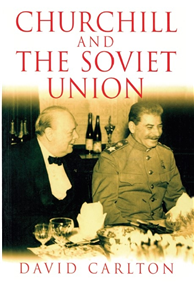
In the already vast literature on Churchill, no single work has focused on his changing attitude towards the Soviet Union. This is the first project to isolate just one major theme in Churchill's lifeExplores whether or not Churchill was consistent through forty years and examines the possibility that perceptions of domestic political advantage may have shaped his course more than high-monded and disinterested evaluations of evolving Soviet intentions and capabilitiesChurchill still arouses a great deal of general interest, and a work which challenges a number of preconceptions, as this book does, will undoubtedly appeal to the general readerA clearly argued, revisionist study of Churchill's views about and dealings with the Soviet Union. It will be part of the growing historical literature that seeks to reassess Churchill. ;
Trusted Partner
 Trusted Partner

This book explores the housing problem throughout the 70 years of Soviet history, looking at changing political ideology on appropriate forms of housing under socialism, successive government policies on housing, and the meaning and experience of 'home' for Soviet citizens. Attwood examines the use of housing to alter gender relations, and the ways in which domestic space was differentially experienced by men and women. Much of Attwood's material comes from Soviet magazines and journals, which enables her to demonstrate how official ideas on housing and daily life changed during the course of the Soviet era, and were propagandised to the population. Through a series of in-depth interviews, she also draws on the memories of people with direct experience of Soviet housing and domestic life. Attwood has produced not just a history of housing, but a social history of daily life which will appeal both to scholars and those with a general interest in Soviet history.
Trusted Partner

Insurgency has plagued the North Caucasus since the collapse of the Soviet Union. Between 2007 and 2015, rebels waged their struggle under the banner of the Caucasus Emirate (Imarat Kavkaz, IK). This book systematically examines the IK's ideology to explain what the group claimed to be fighting for and against and how it sought to mobilise people behind its cause. It reveals a group with a weakly developed political programme, which aligned itself with global jihadism but consistently prioritised local concerns. It demonstrates the priority rebel leaders afforded to shaping local identities, but also their failure to forge a unified movement or revitalise armed struggle. Re-evaluating the IK's ideology helps us better understand the past and future of armed struggle in the North Caucasus.
Trusted Partner
Soviet materialities explores how material transforms our understanding of Soviet culture, from the textures of domestic space in 1960s apartment blocks to Gulag labour on the Moscow canal, and from avant-garde literary theory in the 1920s to conceptual art under perestroika. It starts from the ethos that the material world shapes people and society. Taking a material approach-or a range of material approaches-can therefore illuminate aspects of the cultural production and lived experiences of Soviet socialism that are not reflected in other kinds of historical records. This edited volume brings cutting-edge research by emerging scholars together with the established voices who have broken the ground in this sub-field over the last twenty years and promises to make a major intervention in the study of Soviet history and culture.
Trusted Partner
This major new study fills a significant gap in the academic literature on the Cold War by considering President Lyndon Johnson's policy towards the Soviet Union. The author examines the attitudes of Johnson and his leading advisers toward the Soviet leadership, taking into account the effects of Moscow's growing splits with Beijing, the impact on US-Soviet relations of nuclear issues, the Vietnam War, and clashes over Cuba, the Middle East and Eastern Europe. The author's research is based on detailed scrutiny of archives in Britain and the United States, as well as recently published document collections. His study also examines the President's personal leadership qualities, his mistakes in Vietnam and his success as a peacemaker with Moscow. The book constitutes a major contribution to literature on President Johnson's foreign policy 'beyond Vietnam'. The book will be of interest to students of the Cold War, the Johnson Presidency and of US foreign relations. ;
Trusted Partner
Trusted Partner
Trusted Partner

The Russian Revolution of 1917 was not just a world-historical event in its own right, but also struck powerful blows against racism and imperialism, and so inspired many black radicals internationally. This edited collection explores the implications of the creation of the Soviet Union and the Communist International for black and colonial liberation struggles across the African diaspora. It examines the critical intellectual influence of Marxism and Bolshevism on the current of revolutionary 'black internationalism' and analyses how 'Red October' was viewed within the contested articulations of different struggles against racism and colonialism. Challenging European-centred understandings of the Russian Revolution and the global left, The Red and the Black offers new insights on the relations between Communism, various lefts and anti-colonialisms across the Black Atlantic - including Garveyism and various other strands of Pan-Africanism. The volume makes a major and original intellectual contribution by making the relations between the Russian Revolution and the Black Atlantic central to debates on questions relating to racism, resistance and social change.
Trusted Partner

Over four decades as a diplomat, Sir Frank Roberts dealt with headline issues, including policy towards Germany during the years of appeasement, the Second World War alliance with the Soviet Union, the origins of the Cold War, NATO affairs, the Berlin and Cuban Missile Crises, European integration, and relations with the Federal Republic of Germany. Collaborating with the renowned American diplomat, George F. Kennan (the cryptonymous author 'X' of an influential 1947 article), his despatches from Moscow in 1946 shaped Britain's Cold War strategy. In 1954 he played an integral part in the diplomacy behind the rearmament of the Federal Republic and her incorporation into NATO, helping to build an enduring structure of transatlantic security. Roberts' career sheds new light on British foreign policy across an era in which Britain slipped from global pre-eminence to regional power status.
Trusted Partner

Human rights and détente inextricably intertwined during Carter's years. By promoting human rights in the USSR, Carter sought to build a domestic consensus for détente; through bipolar dialogue, he tried to advance human rights in the USSR. But, human rights contributed to the erosion of détente without achieving a lasting domestic consensus.
Trusted Partner
Securitising Russia shows the impact of twenty-first-century security concerns on the way Russia is ruled. It demonstrates how President Putin has wrestled with terrorism, immigration, media freedom, religious pluralism, and economic globalism, and argues that fears of a return to old-style authoritarianism oversimplify the complex context of contemporary Russia. The book focuses on the internal security issues common to many states in the early twenty-first-century, and places them in the particular context of Russia. Detailed analysis of the place of security in Russia's political discourse and policy-making reveals nuances often missing from overarching assessments of Russia today. To characterise the Putin regime as the 'KGB-resurgent' is to miss vital continuities, contexts, and on-going political conflicts which make up the contemporary Russian scene. Securitising Russia draws together current debates about whether Russia is a 'normal' country developing its own democratic and market structures, or a nascent authoritarian regime returning to the past. ;
Trusted Partner

This innovative, multi-contributed book, now available in paperback, argues convincingly that Russia will never be able to create a viable democracy as long as authoritarian regimes are able to flourish in the regions. The main themes covered are democratisation at the regional level, and the problems faced by the federal states in forging viable democratic institutions in what is now a highly assymetrical Federation. A major strength of the book lies in its combination of thematic chapters with case studies of particular regions and republics. Very little has been published to date on the actual processes of democratisation in particular republics and regions. The book takes into account the literature available on the 'new institutionalism' and outlines the importance of institutions in developing and maintaining democracy. It looks at the importance of sovereignty, federalism and democratic order, and considers the distinct problems of party-building in Russia's regions. Electoral politics are also considered fully, before the book goes on to consider the whole issue of regional politics and democratisation in five particular areas of Russia - Novgorod, the Komi Republic, Russia's Far East, Tatarstan and Bashkortostan. The authors, the majority of whom are internationally recognised experts in their field, have been drawn from Britain, the USA, Russia and Germany, giving the book a truly global perspective. ;
Trusted Partner
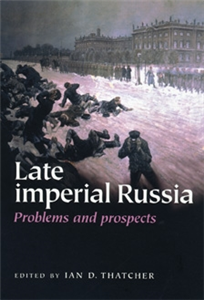
This volume offers a detailed examination of the stability of the late imperial regime in Russia. Students and scholars will appreciate the lively summaries of the latest scholarship in political, economic, social, cultural, and international history. Accessible yet insightful, contributions cover the historiography of complex topics such as peasants, workers, revolutionaries, foreign relations, and Nicholas II. In addition, there are original studies of some of the leading intellectuals of the time. The late imperial economy is examined through the writings of Tugan-Baranovsky. There is an account of M. N. Pokrovskii's radical interpretation of late imperial Russia's historical path of development. The state of the Russian theatre is studied through the lives of theatrical impresarios. Each chapter also highlights a unique interpretation, suggesting new lines of inquiry and research. This book will be compulsory reading for students of Russian and European history of the late nineteenth and early twentieth centuries seeking to better understand why Tsarism collapsed in 1917. ;



