Your Search Results

      • Trusted Partner
        Humanities & Social Sciences
        September 2017

        Gender and housing in Soviet Russia

        Private life in a public space

        by Pamela Sharpe, Lynne Attwood, Penny Summerfield, Lynn Abrams, Cordelia Beattie

        This book explores the housing problem throughout the 70 years of Soviet history, looking at changing political ideology on appropriate forms of housing under socialism, successive government policies on housing, and the meaning and experience of 'home' for Soviet citizens. Attwood examines the use of housing to alter gender relations, and the ways in which domestic space was differentially experienced by men and women. Much of Attwood's material comes from Soviet magazines and journals, which enables her to demonstrate how official ideas on housing and daily life changed during the course of the Soviet era, and were propagandised to the population. Through a series of in-depth interviews, she also draws on the memories of people with direct experience of Soviet housing and domestic life. Attwood has produced not just a history of housing, but a social history of daily life which will appeal both to scholars and those with a general interest in Soviet history.

      • Trusted Partner
        Humanities & Social Sciences
        December 1999

        The debate on the American Civil War era

        by Hugh Tulloch, Roger Richardson

        This study is the first to critically survey the changing and highly controversial historical literature surrounding the American Civil War era, from contemporary interpretations up to the present.. The book analyses both historians attitudes and assumptions and suggests that each writer's perspective was partly determined by the dictates of time and place.. The author engages with all aspects of the Civil War era; social, cultural and economic as well as its political dimensions.. Aimed at sixth form colleges and university students. ;

      • Trusted Partner
        Literature & Literary Studies
        May 2026

        Russo-Soviet imperialist hauntings

        Neo-Gothic geographies in Central and Eastern Europe since 1989

        by Svitlana Krys, Maryna Romanets

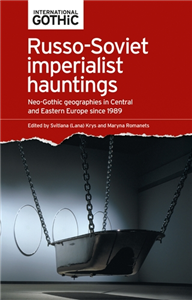
        Russo-Soviet imperialist hauntings attempts to capture some of the ghosts of the colonial and totalitarian past that have been proliferating in international political and cultural landscapes after the collapse of the USSR. By conflating postcolonial, post-totalitarian, postcommunist, and Gothic discourses, it maps virtually untouched aspects of cultural decolonization, focusing on unsettling "hauntings" of unresolved memory traces of Russo-Soviet domination in the former Eastern Bloc countries and Soviet republics. Operating within a vast intertextual field of social, cultural, and ideological discourses, the volume enables a productive exchange across distinct (inter)disciplinary boundaries and represents a range of voices from Europe and North America. The contributors' diverse interests draw on transmedia (literature, visual arts, and film), transnational, and translingual (diasporic literature) approaches, providing insights into a variety of forms that the Gothic has taken in the (late) twentieth and twenty-first centuries, and demonstrating its consistent engagement with history, ideology, and politics.

      • Trusted Partner
        Humanities & Social Sciences
        June 2025

        Revolution in China and Russia

        Reorganizing empires into nation states

        by Luyang Zhou

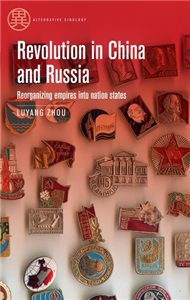
        Most scholars believe that China's nationality policy, like that of other socialist states, imitated the Soviet nationality model, a system which has been termed an "affirmative action empire." This book offers two contributions to the literature which run counter to this convention. First, it argues that the People's Republic of China (PRC) and the Soviet Union (USSR) were different; while the PRC was aimed to build an ideal-typical nation-state, the USSR was an open union of nation-states that was only temporarily confined to a physical territory. Second, while scholars who have noted this difference attribute it to contextual factors, such as ethnic structure, geopolitical status, and Russia's intervention into the Chinese Revolution, this book contends that context shaped the Sino-Soviet difference, yet it did not determine it. Rather, there was significant leeway between the implications of the contextual factors, and what the policy-designers ultimately established. This book probes who held agency, and how these individuals bridged this gap.

      • Trusted Partner
        2024

        Where is Russia Heading?

        by Jens Siegert

        Vladimir Putin has been ruling Russia for 25 years. There is no end in sight to his dictatorship. He relies on repression at home and is waging a war of destruction against a neighbouring country. The conflict with the West has long become a systemic conflict between an illiberal-autocratic ideology and liberal-democratic principles. Nothing will change as long as Putin remains in power. Nevertheless, as far as can be ascertained under unfree conditions, the majority of the population seems to be supporting Putin. Does this mean that too many people in Russia do not want democracy or peace? Will everything remain the same after Putin? Or is there a chance that Russia will eventually take a different, more democratic path? Whatever the outcome of the war in Ukraine, Russia is not going to disappear. We will still have to deal with our big neighbour in the east. This makes it all the more important to focus on longer-term developments. As a recognised expert on Russian history and society, the author outlines what the post-Putin era might look like. His in-depth analysis makes it clear that Russia is partly Putin, but Putin is not everything about Russia.

      • Trusted Partner
        Humanities & Social Sciences
        March 2026

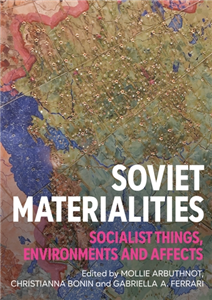
        Soviet materialities

        Socialist things, environments and affects

        by Mollie Arbuthnot, Christianna Bonin, Gabriella Ferrari

        Soviet materialities explores how material transforms our understanding of Soviet culture, from the textures of domestic space in 1960s apartment blocks to Gulag labour on the Moscow canal, and from avant-garde literary theory in the 1920s to conceptual art under perestroika. It starts from the ethos that the material world shapes people and society. Taking a material approach-or a range of material approaches-can therefore illuminate aspects of the cultural production and lived experiences of Soviet socialism that are not reflected in other kinds of historical records. This edited volume brings cutting-edge research by emerging scholars together with the established voices who have broken the ground in this sub-field over the last twenty years and promises to make a major intervention in the study of Soviet history and culture.

      • Trusted Partner
      • Trusted Partner
        Humanities & Social Sciences
        April 2025

        Britain’s 'Mr X’

        Sir Frank Roberts and the making of British foreign policy, 1930-68

        by Jonathan Colman

        Over four decades as a diplomat, Sir Frank Roberts dealt with headline issues, including policy towards Germany during the years of appeasement, the Second World War alliance with the Soviet Union, the origins of the Cold War, NATO affairs, the Berlin and Cuban Missile Crises, European integration, and relations with the Federal Republic of Germany. Collaborating with the renowned American diplomat, George F. Kennan (the cryptonymous author 'X' of an influential 1947 article), his despatches from Moscow in 1946 shaped Britain's Cold War strategy. In 1954 he played an integral part in the diplomacy behind the rearmament of the Federal Republic and her incorporation into NATO, helping to build an enduring structure of transatlantic security. Roberts' career sheds new light on British foreign policy across an era in which Britain slipped from global pre-eminence to regional power status.

      • Trusted Partner
        Humanities & Social Sciences
        February 2000

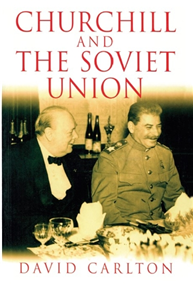
        Churchill and the Soviet Union

        by David Carlton

        In the already vast literature on Churchill, no single work has focused on his changing attitude towards the Soviet Union. This is the first project to isolate just one major theme in Churchill's lifeExplores whether or not Churchill was consistent through forty years and examines the possibility that perceptions of domestic political advantage may have shaped his course more than high-monded and disinterested evaluations of evolving Soviet intentions and capabilitiesChurchill still arouses a great deal of general interest, and a work which challenges a number of preconceptions, as this book does, will undoubtedly appeal to the general readerA clearly argued, revisionist study of Churchill's views about and dealings with the Soviet Union. It will be part of the growing historical literature that seeks to reassess Churchill. ;

      • Trusted Partner
        Humanities & Social Sciences
        May 2025

        The Caucasus Emirate

        Ideology, identity, and insurgency in Russia’s North Caucasus

        by Mark Youngman

        Insurgency has plagued the North Caucasus since the collapse of the Soviet Union. Between 2007 and 2015, rebels waged their struggle under the banner of the Caucasus Emirate (Imarat Kavkaz, IK). This book systematically examines the IK's ideology to explain what the group claimed to be fighting for and against and how it sought to mobilise people behind its cause. It reveals a group with a weakly developed political programme, which aligned itself with global jihadism but consistently prioritised local concerns. It demonstrates the priority rebel leaders afforded to shaping local identities, but also their failure to forge a unified movement or revitalise armed struggle. Re-evaluating the IK's ideology helps us better understand the past and future of armed struggle in the North Caucasus.

      • Trusted Partner
        Humanities & Social Sciences
        October 2022

        Germany's Russia problem

        The struggle for balance in Europe

        by John Lough

        The relationship between Germany and Russia is Europe's most important link with the largest country on the continent. But despite Germany's unparalleled knowledge and historical experience, its policymakers struggle to accept that Moscow's efforts to rebalance Europe at the cost of the cohesion of the EU and NATO are an attack on Germany's core interests. This book explains the scale of the challenge facing Germany in managing relations with a changing Russia. It analyses how successive German governments from 1991 to 2014 misread Russian intentions, until Angela Merkel sharply recalibrated German and EU policy towards Moscow. The book also examines what lies behind efforts to revise Merkel's bold policy shift, including attitudes inherited from the GDR and the role of Russian influence channels in Germany.

      • Trusted Partner
      • Trusted Partner
        Humanities & Social Sciences
        June 2004

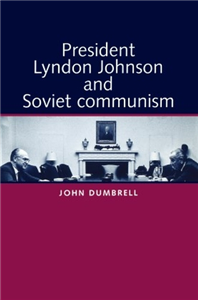
        President Lyndon Johnson and Soviet Communism

        by John Dumbrell

        This major new study fills a significant gap in the academic literature on the Cold War by considering President Lyndon Johnson's policy towards the Soviet Union. The author examines the attitudes of Johnson and his leading advisers toward the Soviet leadership, taking into account the effects of Moscow's growing splits with Beijing, the impact on US-Soviet relations of nuclear issues, the Vietnam War, and clashes over Cuba, the Middle East and Eastern Europe. The author's research is based on detailed scrutiny of archives in Britain and the United States, as well as recently published document collections. His study also examines the President's personal leadership qualities, his mistakes in Vietnam and his success as a peacemaker with Moscow. The book constitutes a major contribution to literature on President Johnson's foreign policy 'beyond Vietnam'. The book will be of interest to students of the Cold War, the Johnson Presidency and of US foreign relations. ;

      • Trusted Partner
        Humanities & Social Sciences
        November 2023

        Intimacy and mobility in an era of hardening borders

        Gender, reproduction, regulation

        by Haldis Haukanes, Frances Pine

        This book is a collection of articles by anthropologists and social scientists concerned with gendered labour, care, intimacy and sexuality, in relation to mobility and the hardening of borders in Europe. Interrogating the relation between physical, geopolitical borders and ideological, conceptual boundaries, it offers a range of vivid and original ethnographic case studies that will capture the imagination of anyone interested in gendered migration, policies of inclusion and exclusion, and regulation of reproduction and intimacy. The book presents ethnographic and phenomenological discussions of people's changing lives as they cross borders, how people transgress and reshape moral boundaries of proper gender and kinship behaviour, and moral economies of intimacy and sexuality. It also focuses on migrants' navigation of social and financial services in their destination countries, putting questions about rights and limitations on citizenship at the core.

      • Trusted Partner
      • Trusted Partner
        Humanities & Social Sciences
        August 2021

        The Red and the Black

        The Russian Revolution and the Black Atlantic

        by David Featherstone, Christian Høgsbjerg

        The Russian Revolution of 1917 was not just a world-historical event in its own right, but also struck powerful blows against racism and imperialism, and so inspired many black radicals internationally. This edited collection explores the implications of the creation of the Soviet Union and the Communist International for black and colonial liberation struggles across the African diaspora. It examines the critical intellectual influence of Marxism and Bolshevism on the current of revolutionary 'black internationalism' and analyses how 'Red October' was viewed within the contested articulations of different struggles against racism and colonialism. Challenging European-centred understandings of the Russian Revolution and the global left, The Red and the Black offers new insights on the relations between Communism, various lefts and anti-colonialisms across the Black Atlantic - including Garveyism and various other strands of Pan-Africanism. The volume makes a major and original intellectual contribution by making the relations between the Russian Revolution and the Black Atlantic central to debates on questions relating to racism, resistance and social change.

      • Trusted Partner
        Humanities & Social Sciences
        February 2018

        How to save politics in a post-truth era

        by Ilan Zvi Baron

      • Trusted Partner

      Subscribe to our

      newsletter