
Your Search Results


-
Promoted Content

 The ArtsJanuary 2026
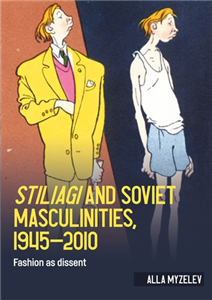
Stiliagi and Soviet masculinities, 1945–2010
Fashion as dissent
by Alla Myzelev
This book provides an in-depth analysis of the Stiliagi, the Soviet Union's pioneering youth subculture from the late 1940s to the early 1960s. Characterized by their distinctive Western-influenced fashion, affinity for jazz, and resistance to Soviet ideological conformity, the Stiliagi represented a significant cultural shift in post-war Soviet society. The book examines how this subculture, through its embrace of alternative masculinities and nonconformist behaviours, challenged prevailing social norms and influenced Soviet cinema, theatre, and broader cultural discourse. Drawing on rigorous research, the book situates the Stiliagi within the broader context of Soviet and Post-Soviet history, arguing that their legacy persisted well beyond their absorption into mainstream culture. Essential reading for scholars of Soviet history, cultural studies, and subcultural movements, this work offers a nuanced understanding of the Stiliagi's enduring impact on Soviet identity and cultural resistance.
-
Promoted Content
 Literature & Literary StudiesMay 2026
Russo-Soviet imperialist hauntings
Neo-Gothic geographies in Central and Eastern Europe since 1989
by Svitlana Krys, Maryna Romanets
Russo-Soviet imperialist hauntings attempts to capture some of the ghosts of the colonial and totalitarian past that have been proliferating in international political and cultural landscapes after the collapse of the USSR. By conflating postcolonial, post-totalitarian, postcommunist, and Gothic discourses, it maps virtually untouched aspects of cultural decolonization, focusing on unsettling "hauntings" of unresolved memory traces of Russo-Soviet domination in the former Eastern Bloc countries and Soviet republics. Operating within a vast intertextual field of social, cultural, and ideological discourses, the volume enables a productive exchange across distinct (inter)disciplinary boundaries and represents a range of voices from Europe and North America. The contributors' diverse interests draw on transmedia (literature, visual arts, and film), transnational, and translingual (diasporic literature) approaches, providing insights into a variety of forms that the Gothic has taken in the (late) twentieth and twenty-first centuries, and demonstrating its consistent engagement with history, ideology, and politics.
-
 Trusted Partner
 Humanities & Social SciencesJune 2025
Revolution in China and Russia
Reorganizing empires into nation states
by Luyang Zhou
Most scholars believe that China's nationality policy, like that of other socialist states, imitated the Soviet nationality model, a system which has been termed an "affirmative action empire." This book offers two contributions to the literature which run counter to this convention. First, it argues that the People's Republic of China (PRC) and the Soviet Union (USSR) were different; while the PRC was aimed to build an ideal-typical nation-state, the USSR was an open union of nation-states that was only temporarily confined to a physical territory. Second, while scholars who have noted this difference attribute it to contextual factors, such as ethnic structure, geopolitical status, and Russia's intervention into the Chinese Revolution, this book contends that context shaped the Sino-Soviet difference, yet it did not determine it. Rather, there was significant leeway between the implications of the contextual factors, and what the policy-designers ultimately established. This book probes who held agency, and how these individuals bridged this gap.
-
Trusted Partner
 Humanities & Social SciencesFebruary 2026
AIDS in Soviet Russia
A story of deception, despair and hope
by Rustam Alexander
The first book to tell the shocking story of the AIDS crisis in Soviet Russia. Throughout the 1980s, as the world was grappling with the escalating crisis of AIDS, Soviet Russia continued to deny there was a problem. Arguing that the disease was limited to foreigners and 'immoral' groups, the government failed to take meaningful action, long past the point other countries had begun to recognise the full scale of the threat. In this ground-breaking book, Rustam Alexander tells the story of AIDS in Soviet Russia. Fixated on disinformation, censorship and the persecution of marginalised communities, the Soviet authorities wasted precious time, allowing the epidemic to strike at the very heart of the nation: its children. Yet, despite the government's failure, a number of brave journalists, doctors and nascent gay groups decided to take matters into their own hands and engage in full-fledged AIDS activism. Tracing the political and social response to AIDS in the final years of the Soviet era, Alexander sheds light on the devastating consequences of government inaction. He draws on personal stories, media reports and archival materials to provide a riveting account of the Russian people's fight against AIDS amid the tumultuous transformations of Gorbachev's perestroika.
-
Trusted Partner
 The ArtsJanuary 2019
Joseph Losey
by Colin Gardner
The career of Wisconsin-born Joseph Losey spanned over four decades and several countries. A self-proclaimed Marxist and veteran of the 1930s Soviet agit-prop theater, he collaborated with Bertholt Brecht before directing noir B-pictures in Hollywood. A victim of McCarthyism, he later crossed the Atlantic to direct a series of seminal British films such as "Time Without Pity," "Eve," "The Servant," and "The Go-Between," which mark him as one of the cinema's greatest baroque stylists. His British films reflect on exile and the outsider's view of a class-bound society in crisis through a style rooted in the European art house tradition of Resnais and Godard. Gardner employs recent methodologies from cultural studies and poststructural theory, exploring and clarifying the films' uneasy tension between class and gender, and their explorations of fractured temporality.
-
Trusted Partner
 Humanities & Social SciencesSeptember 2017
Gender and housing in Soviet Russia
Private life in a public space
by Pamela Sharpe, Lynne Attwood, Penny Summerfield, Lynn Abrams, Cordelia Beattie
This book explores the housing problem throughout the 70 years of Soviet history, looking at changing political ideology on appropriate forms of housing under socialism, successive government policies on housing, and the meaning and experience of 'home' for Soviet citizens. Attwood examines the use of housing to alter gender relations, and the ways in which domestic space was differentially experienced by men and women. Much of Attwood's material comes from Soviet magazines and journals, which enables her to demonstrate how official ideas on housing and daily life changed during the course of the Soviet era, and were propagandised to the population. Through a series of in-depth interviews, she also draws on the memories of people with direct experience of Soviet housing and domestic life. Attwood has produced not just a history of housing, but a social history of daily life which will appeal both to scholars and those with a general interest in Soviet history.
-
Trusted Partner

 2024
2024Where is Russia Heading?
by Jens Siegert
Vladimir Putin has been ruling Russia for 25 years. There is no end in sight to his dictatorship. He relies on repression at home and is waging a war of destruction against a neighbouring country. The conflict with the West has long become a systemic conflict between an illiberal-autocratic ideology and liberal-democratic principles. Nothing will change as long as Putin remains in power. Nevertheless, as far as can be ascertained under unfree conditions, the majority of the population seems to be supporting Putin. Does this mean that too many people in Russia do not want democracy or peace? Will everything remain the same after Putin? Or is there a chance that Russia will eventually take a different, more democratic path? Whatever the outcome of the war in Ukraine, Russia is not going to disappear. We will still have to deal with our big neighbour in the east. This makes it all the more important to focus on longer-term developments. As a recognised expert on Russian history and society, the author outlines what the post-Putin era might look like. His in-depth analysis makes it clear that Russia is partly Putin, but Putin is not everything about Russia.
-
Trusted Partner
 Humanities & Social SciencesMarch 2026
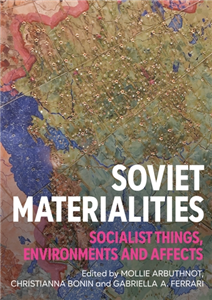
Soviet materialities
Socialist things, environments and affects
by Mollie Arbuthnot, Christianna Bonin, Gabriella Ferrari
Soviet materialities explores how material transforms our understanding of Soviet culture, from the textures of domestic space in 1960s apartment blocks to Gulag labour on the Moscow canal, and from avant-garde literary theory in the 1920s to conceptual art under perestroika. It starts from the ethos that the material world shapes people and society. Taking a material approach-or a range of material approaches-can therefore illuminate aspects of the cultural production and lived experiences of Soviet socialism that are not reflected in other kinds of historical records. This edited volume brings cutting-edge research by emerging scholars together with the established voices who have broken the ground in this sub-field over the last twenty years and promises to make a major intervention in the study of Soviet history and culture.
-
Trusted Partner
 Humanities & Social SciencesMay 2025
The Caucasus Emirate
Ideology, identity, and insurgency in Russia’s North Caucasus
by Mark Youngman
Insurgency has plagued the North Caucasus since the collapse of the Soviet Union. Between 2007 and 2015, rebels waged their struggle under the banner of the Caucasus Emirate (Imarat Kavkaz, IK). This book systematically examines the IK's ideology to explain what the group claimed to be fighting for and against and how it sought to mobilise people behind its cause. It reveals a group with a weakly developed political programme, which aligned itself with global jihadism but consistently prioritised local concerns. It demonstrates the priority rebel leaders afforded to shaping local identities, but also their failure to forge a unified movement or revitalise armed struggle. Re-evaluating the IK's ideology helps us better understand the past and future of armed struggle in the North Caucasus.
-
Trusted Partner
 Humanities & Social SciencesFebruary 2000
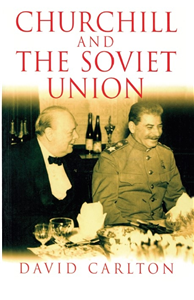
Churchill and the Soviet Union
by David Carlton
In the already vast literature on Churchill, no single work has focused on his changing attitude towards the Soviet Union. This is the first project to isolate just one major theme in Churchill's lifeExplores whether or not Churchill was consistent through forty years and examines the possibility that perceptions of domestic political advantage may have shaped his course more than high-monded and disinterested evaluations of evolving Soviet intentions and capabilitiesChurchill still arouses a great deal of general interest, and a work which challenges a number of preconceptions, as this book does, will undoubtedly appeal to the general readerA clearly argued, revisionist study of Churchill's views about and dealings with the Soviet Union. It will be part of the growing historical literature that seeks to reassess Churchill. ;
-
Trusted Partner
 Humanities & Social SciencesDecember 2006
Socio-ideological fantasy and the Northern Ireland conflict
The Other side
by Adrian Millar, Peter Lawler, Emmanuel Pierre Guittet
Conducting a Lacanian-inspired psychoanalysis of some of the most candid interview materials ever gathered from former IRA members and loyalists, the author demonstrates through a careful examination of their slips of the tongue, jokes, rationalisations and contradictions, that it is the unconscious dynamics of socio-ideological fantasy, i.e. the unconscious pleasure people find in suffering, domination, submission, ignorance, failure and rivalry over jouissance, that lead to the reproduction of antagonism between the Catholic and Protestant communities in Northern Ireland. In the light of this, he concludes that traditional approaches to conflict resolution which overlook the unconscious are doomed to failure and that a Lacanian psychoanalytic understanding of socio-ideological fantasy has great potential for informing the way we understand and study all inter-religious and ethnic conflicts. Whether you find yourself agreeing with the arguments in this book or not, you are sure to find it a welcome change from both the existing, mainly conservative, analyses of the Northern Ireland conflict and traditional approaches to conflict resolution.
-
Trusted Partner
 Business, Economics & LawMay 2021
Regulating homosexuality in Soviet Russia, 1956–91
by Rustam Alexander
-
Trusted Partner
 Humanities & Social SciencesJune 2004
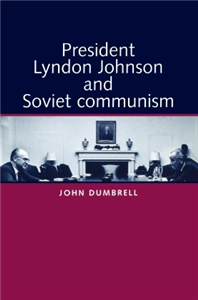
President Lyndon Johnson and Soviet Communism
by John Dumbrell
This major new study fills a significant gap in the academic literature on the Cold War by considering President Lyndon Johnson's policy towards the Soviet Union. The author examines the attitudes of Johnson and his leading advisers toward the Soviet leadership, taking into account the effects of Moscow's growing splits with Beijing, the impact on US-Soviet relations of nuclear issues, the Vietnam War, and clashes over Cuba, the Middle East and Eastern Europe. The author's research is based on detailed scrutiny of archives in Britain and the United States, as well as recently published document collections. His study also examines the President's personal leadership qualities, his mistakes in Vietnam and his success as a peacemaker with Moscow. The book constitutes a major contribution to literature on President Johnson's foreign policy 'beyond Vietnam'. The book will be of interest to students of the Cold War, the Johnson Presidency and of US foreign relations. ;
-
Trusted Partner
 Humanities & Social SciencesOctober 2022
Germany's Russia problem
The struggle for balance in Europe
by John Lough
The relationship between Germany and Russia is Europe's most important link with the largest country on the continent. But despite Germany's unparalleled knowledge and historical experience, its policymakers struggle to accept that Moscow's efforts to rebalance Europe at the cost of the cohesion of the EU and NATO are an attack on Germany's core interests. This book explains the scale of the challenge facing Germany in managing relations with a changing Russia. It analyses how successive German governments from 1991 to 2014 misread Russian intentions, until Angela Merkel sharply recalibrated German and EU policy towards Moscow. The book also examines what lies behind efforts to revise Merkel's bold policy shift, including attitudes inherited from the GDR and the role of Russian influence channels in Germany.
-

 Technology, Engineering & AgricultureMarch 1905
The First Book of Farming
by Charles L. Goodrich
This book is a result of the author's search for these facts and truths as a student and farmer and his endeavor as a teacher to present them in a simple manner to others. The object in presenting the book to the general public is the hope that it may be of assistance to farmers, students and teachers, in their search for the fundamental truths and principles of farming.
-

 Humanities & Social SciencesNovember 1904
Common Sense
Addressed to The Inhabitants of America
by Thomas Paine
Published anonymously in 1776, six months before the Declaration of Independence, Thomas Paine’s Common Sense was a radical and impassioned call for America to free itself from British rule and set up an independent republican government. Savagely attacking hereditary kingship and aristocratic institutions, Paine urged a new beginning for his adopted country in which personal freedom and social equality would be upheld and economic and cultural progress encouraged.
-
Trusted Partner
 Humanities & Social SciencesAugust 2021
The Red and the Black
The Russian Revolution and the Black Atlantic
by David Featherstone, Christian Høgsbjerg
The Russian Revolution of 1917 was not just a world-historical event in its own right, but also struck powerful blows against racism and imperialism, and so inspired many black radicals internationally. This edited collection explores the implications of the creation of the Soviet Union and the Communist International for black and colonial liberation struggles across the African diaspora. It examines the critical intellectual influence of Marxism and Bolshevism on the current of revolutionary 'black internationalism' and analyses how 'Red October' was viewed within the contested articulations of different struggles against racism and colonialism. Challenging European-centred understandings of the Russian Revolution and the global left, The Red and the Black offers new insights on the relations between Communism, various lefts and anti-colonialisms across the Black Atlantic - including Garveyism and various other strands of Pan-Africanism. The volume makes a major and original intellectual contribution by making the relations between the Russian Revolution and the Black Atlantic central to debates on questions relating to racism, resistance and social change.
-
Trusted Partner
 Humanities & Social SciencesMarch 2026
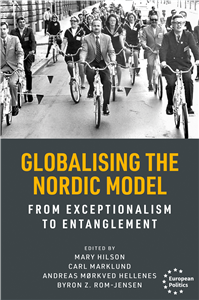
Globalising the Nordic Model
From exceptionalism to entanglement
by Mary Hilson
The five Nordic countries - Denmark, Finland, Iceland, Norway and Sweden - frequently attract attention as examples of a 'Nordic model'. The meanings of the term vary, but especially since the global financial crisis of 2008-9 the Nordic countries have often been portrayed positively, as examples of economic dynamism, innovation and social equality. Studies of these images of the Nordic countries and Nordic region and their international circulations are now a well-established field of research. This volume explores how the Nordic model has been shaped by global entanglements, in exchange not only with Western Europe and North America, but also with the Global South. Drawing on selected case studies, the volume offers new perspectives on the meanings of the Nordic model and Nordic exceptionalism in a global context during the half century since c. 1970.
-
Trusted Partner

 November 2010
Die Pariser Weltausstellung 1889
Bilder von der Globalisierung
by Beat Wyss
Die gelungenste Weltausstellung aller Zeiten war die Exposition Universelle de Paris von 1889. Weit über 32 Millionen Menschen besuchten das gigantische Spektakel mit knapp 62.000 Ausstellern aus 54 Nationen und 17 französischen Kolonien. Das Wahrzeichen der Schau, der Eiffelturm, blieb Paris bis heute erhalten. Einen legendären Ruf erwarb sich auch das offizielle, wöchentlich erscheinende Journal der Weltausstellung. Auf großformatigen, mit Stahlstichen üppig illustrierten Seiten berichtete es von den Sensationen vor Ort, von dreirädrigen selbstfahrenden Karren und ethnologischen Dörfern, in denen es Kamelreiten für die Kinder und Bauchtänze für die Herren gab. Der Schweizer Kunsthistoriker Beat Wyss hat die hundert originellsten Abbildungen ausgewählt. Sie illustrieren, wie die Expo den Erdball auf ein »Weltdorf« zwischen Trocadéro und Champ de Mars schrumpfen lässt, wie räumliche Distanzen abgebaut und dabei kulturelle Differenzen freigelegt werden. Das späte 20. Jahrhundert wird dafür den Begriff der Globalisierung prägen. Beat Wyss zeigt, wie die Gesellschaften seit dem 19. Jahrhundert mit diesem Prozeß umgehen und mit der Verwestlichung der Welt eine Orientalisierung des Westens einhergeht. Dem Leser als Flaneur über die Bühne der Weltausstellung wird klar: Die Expo 1889 belegt nicht nur den aktuellen Zustand einer Zeit, sondern bietet über die spektakuläre Anordnung ihrer Exponate den Vorschein einer gesellschaftlichen Utopie.
-
Trusted Partner
 Humanities & Social SciencesApril 2025
Britain’s 'Mr X’
Sir Frank Roberts and the making of British foreign policy, 1930-68
by Jonathan Colman
Over four decades as a diplomat, Sir Frank Roberts dealt with headline issues, including policy towards Germany during the years of appeasement, the Second World War alliance with the Soviet Union, the origins of the Cold War, NATO affairs, the Berlin and Cuban Missile Crises, European integration, and relations with the Federal Republic of Germany. Collaborating with the renowned American diplomat, George F. Kennan (the cryptonymous author 'X' of an influential 1947 article), his despatches from Moscow in 1946 shaped Britain's Cold War strategy. In 1954 he played an integral part in the diplomacy behind the rearmament of the Federal Republic and her incorporation into NATO, helping to build an enduring structure of transatlantic security. Roberts' career sheds new light on British foreign policy across an era in which Britain slipped from global pre-eminence to regional power status.

