
Your Search Results


-
Promoted Content

 The ArtsMarch 2026
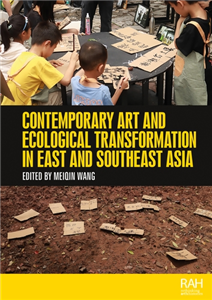
Contemporary art and ecological transformation in East and Southeast Asia
by Meiqin Wang
This anthology, presenting new research from fourteen scholars, delves into the interplay between contemporary art and ecological concerns in East and Southeast Asia. Focused on the concept of artistic remediation, the book unravels the diverse capacities of art to combat systemic anthropogenic destruction to the environment and ecology. At its core, the book articulates the ongoing ecological transformation in art and art history that embraces a paradigm shift in human-nature relationships, emphasizing interconnectedness of all life forms of the Earth. Bridging art studies, activism, and environmental studies, the book examines how artistic practices in the region have engaged with ecocritical reflection, biodiversity advocacy, sustainable practices, and environmental justice, among others. Providing a platform for critical and timely analysis of artistic interventions in the face of existential crises, the book acknowledges diverse voices of scholars who have situated their scholarship in the cultural and artistic specificities of various societies, locales, and communities in the region.
-
Promoted Content
 Humanities & Social SciencesJanuary 2026
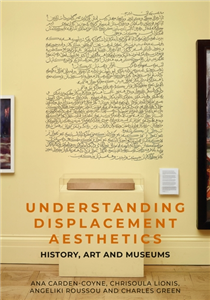
Understanding displacement aesthetics
History, art and museums
by Ana Carden-Coyne, Charles Green, Chrisoula Lionis, Angeliki Roussou
Since the Second World War and the formalisation of the international refugee regime, forced displacement has been marked by a set of aesthetic, practical, and institutional concerns. Understanding Displacement Aesthetics examines how visual culture and art practice constructs and challenges ideas about forced displacement and refugees. The novel framework for 'displacement aesthetics' moves beyond conventional understandings of aesthetics as merely representational, demonstrating the entanglement of visual culture, art practices, and forced displacement in postmigrant contexts. Bringing together the fields of cultural history, art history, and curatorial studies, Understanding Displacement Aesthetics identifies four areas for consideration: visual tropes of refugeedom; language and identity; institutional and artistic responses to displacement; and lived experiences of artists with backgrounds of displacement. Through archival research, visual culture and art, interviews, and collaborative curatorship, Understanding Displacement Aesthetics offers new insight into overcoming the limitations that contexts of displacement can present for artists, art galleries and institutions addressing refugeedom and its legacies.
-
 Trusted Partner
 The ArtsDecember 2007
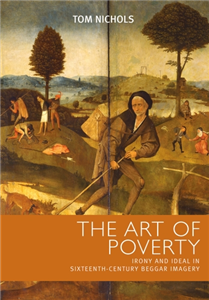
The art of poverty
Irony and ideal in sixteenth-century beggar imagery
by Tom Nichols
The art of poverty is the first book in English to analyse depictions of beggars in sixteenth-century European art. Featuring works from Germany, the Low Countries, Britain, France and Italy, it discusses a diverse body of imagery in many different media, from crude woodcuts to monumental church altarpieces. It develops a striking thesis, arguing that these works largely conformed to two paradoxical, though mutually supportive, representational approaches. The earlier chapters follow the emergence of a trenchantly negative approach in Northern art, in which beggars are shown as vagabonds, whose idleness and thievery threatened the values of sixteenth-century society (especially its growing emphasis on the need to work). In the other predominant visual mode, beggars are exalted as examples of sacred purity. In many Italian religious paintings, beggars are morally exalted with reference to sacred texts, and made formally beautiful with reference to revered artistic models. Though these approaches reflect the impact of religious reform, it is shown that, by the end of the century, they happily co-existed within Protestant and Catholic cultures. The final part of the book is concerned with the issue of artistic style and with the growing tendency of the beggar image to mediate and dissolve the didactic traditions through which it had originally been defined. The art of poverty will be of special interest to scholars and students of Renaissance art history, and its progressive approach and cross-disciplinary theme and perspective will also make it vital reading for those concerned with the development of early modern European culture. ;
-
Trusted Partner
 The ArtsJune 2026
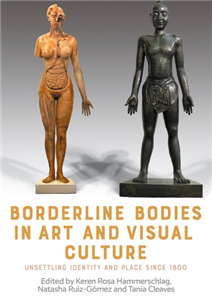
Borderline bodies in art and visual culture
Unsettling identity and place since 1800
by Keren Hammerschlag, Natasha Ruiz-Gómez, Tania Anne Cleaves
Borderline bodies offers original interpretations of visual representations of human bodies as bounded and unbounded, fortified and permeable, mobile and static-subject to borders and able to traverse and challenge them. It also takes as its focus images and objects that might be considered 'borderline' because they sit at the intersection of disciplines or sit outside accepted notions of what constitutes serious 'art.' By mapping the ways human bodies traverse borders and straddle-even dismantle-categories, this volume's essays approach afresh the relationship of bodies to traditional modes of representation, especially in art and medicine, and encourage us to think anew about how we understand the relationship between human corporeality, identity and place. Critical transdisciplinary and transnational analyses of objects and images from a range of geographies shed new light on the themes of: bodies and identity; typologies of the body; racialised bodies; 'normal' and 'abnormal' bodies; encounters between bodies; bodies in transition; bodies and mobility; and the bounded and unbounded human body. The outcome is a fresh approach to depictions of the human body produced for the purposes of artistic and medical education, aesthetic edification, and scientific and professional advancement, which disrupts assumptions about the normative human body perpetuated through Western image-making traditions.
-
Trusted Partner
-
Trusted Partner
 The ArtsApril 2026
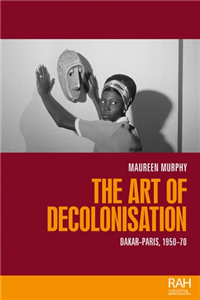
The art of decolonisation
Dakar-Paris, 1950-70
by Maureen Murphy
The art of decolonisation examines how artists challenged colonial legacies and reconfigured power through transnational networks of art and diplomacy. Adopting a global and transhistorical perspective, it explores artistic, political, and institutional relations between France and Senegal during decolonisation and the Cold War. From the emergence of a national modern art in Senegal to contested cultural policies and high-profile exhibitions-such as those featuring Picasso and Soulages in Dakar, or contemporary Senegalese art in Paris-this book traces the circulation of artworks, ideas, and influence across borders. It reveals how visual artists and filmmakers shaped a new artistic geopolitics between 1950 and 1970. Reconsidering the accepted chronology of the 'global turn', The art of decolonisation shows that the roots of global art discourse run deeper than the 1990s, and were already forming during the era of independence struggles.
-
Trusted Partner
 History of art & design styles: c 1800 to c 1900August 2016
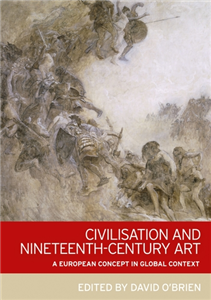
Civilisation and nineteenth-century art
A European concept in global context
by O'Brien
Over the course of the long nineteenth century, Civilisation was the subject of some of the most prominent public mural paintings and sculptures in Europe and the United States, especially those that speculated on the direction of history. It also underpinned Western depictions of non-Western societies and evaluations of social progress and artistic excellence. The essays in this volume explore the ways in which the idea of Civilisation acted as a lens through which Europeans and Americans represented themselves and others, how this concept reshaped understandings of historical and artistic development, and also how it changed and was put to new uses as the century progressed. This collection will prove invaluable to students and academics in both history and art history.
-
Trusted Partner
 Literature & Literary StudiesOctober 2012
Art and Literature of the Second Empire
by David Baguley
This volume explores the characteristics of the art and literature of the Second Empire in France; it examines the attitudes and positioning of artists and writers of the period in relation to a regime of dubious legitimacy, and the ways in which that regime exploited to its advantage the artistic capital available to it. ;
-
Trusted Partner
 The ArtsJanuary 2012
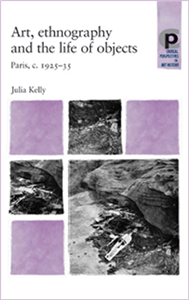
Art, ethnography and the life of objects
Paris, c.1925–35
by Julia Kelly, Marsha Meskimmon, Shearer West, Tim Barringer
In the 1920s and 1930s, anthropology and ethnography provided new and striking ways of rethinking what art could be and the forms which it could take. This book examines the impact of these emergent disciplines on the artistic avant-garde in Paris. The reception by European artists of objects arriving from colonial territories in the first half of the twentieth century is generally understood through the artistic appropriation of the forms of African or Oceanic sculpture. The author reveals how anthropological approaches to this intriguing material began to affect the ways in which artists, theorists, critics and curators thought about three-dimensional objects and their changing status as 'art', 'artefacts' or 'ethnographic evidence'. This book analyses texts, photographs and art works that cross disciplinary boundaries, through case studies including the Dakar to Djibouti expedition of 1931-33, the Trocadéro Ethnographic Museum, and the two art periodicals Documents and Minotaure. Through its interdisciplinary and contextual approach, it provides an important corrective to histories of modern art and the European avant-garde. ;
-
Trusted Partner
 Humanities & Social SciencesMarch 2017
Travellers in Africa
British travelogues, 1850-1900
by Timothy Youngs
Works of travel have been the subject of increasingly sophisticated studies in recent years. This book undermines the conviction with which nineteenth-century British writers talked about darkest Africa. It places the works of travel within the rapidly developing dynamic of Victorian imperialism. Images of Abyssinia and the means of communicating those images changed in response to social developments in Britain. As bourgeois values became increasingly important in the nineteenth century and technology advanced, the distance between the consumer and the product were justified by the scorn of African ways of eating. The book argues that the ambiguities and ambivalence of the travellers are revealed in their relation to a range of objects and commodities mentioned in narratives. For instance, beads occupy the dual role of currency and commodity. The book deals with Henry Morton Stanley's expedition to relieve Emin Pasha, and attempts to prove that racial representations are in large part determined by the cultural conditions of the traveller's society. By looking at Joseph Conrad's Heart of Darkness, it argues that the text is best read as what it purports to be: a kind of travel narrative. Only when it is seen as such and is regarded in the context of the fin de siecle can one begin to appreciate both the extent and the limitations of Conrad's innovativeness.
-
Trusted Partner
 The ArtsFebruary 2026
Caribbean eco-aesthetics
Strategies of survival through contemporary art
by Kate Keohane, Daniella Rose King, Giulia Smith
This edited volume reframes the Caribbean as a paradigm of ecological resilience and creativity by bringing together the voices of contemporary artists and scholars who are at the forefront of environmental activism in the region and across its diasporas. While dominant narratives percolating from the environmental sciences to the mainstream press present the Caribbean as a frontier of planetary disaster, the contributors to this volume show how the region offers radical models for overcoming the environmental challenges of the present. At the heart of this argument lies the history of the Caribbean as a centre for grassroots forms of anti-colonial and anti-capitalist resistance founded upon nature-centred cosmologies and practices. Caribbean Eco-Aesthetics shows how contemporary artists are mobilising this radical heritage in a bid to unlock alternative planetary futures.
-

 The ArtsMarch 1905
Concerning the Spiritual in Art
by Wassily Kandinsky
A pioneering work in the movement to free art from its traditional bonds to material reality, this book is one of the most important documents in the history of modern art. Written by the famous nonobjective painter Wassily Kandinsky (1866–1944), it explains Kandinsky's own theory of painting and crystallizes the ideas that were influencing many other modern artists of the period. Along with his own groundbreaking paintings, this book had a tremendous impact on the development of modern art. Kandinsky's ideas are presented in two parts. The first part, called "About General Aesthetic," issues a call for a spiritual revolution in painting that will let artists express their own inner lives in abstract, non-material terms. Just as musicians do not depend upon the material world for their music, so artists should not have to depend upon the material world for their art. In the second part, "About Painting," Kandinsky discusses the psychology of colors, the language of form and color, and the responsibilities of the artist. An Introduction by the translator, Michael T. H. Sadler, offers additional explanation of Kandinsky's art and theories, while a new Preface by Richard Stratton discusses Kandinsky's career as a whole and the impact of the book. Making the book even more valuable are nine woodcuts by Kandinsky himself that appear at the chapter headings. This English translation of Über das Geistige in der Kunst was a significant contribution to the understanding of nonobjectivism in art. It continues to be a stimulating and necessary reading experience for every artist, art student, and art patron concerned with the direction of 20th-century painting.
-
Trusted Partner

 October 2023
From India to Germany:What My Father's Journey Tells Usabout Migration and the Kindness ofStrangers
by Sunita Sukhana
— An extraordinary story of migration — Contemporary history of the 70s and backgrounds to India, Afghanistan, Iran, Turkey, Bulgaria, the former Yugoslavia, the GDR and the Federal Republic of Germany He was the son of the Sikh priest, a successful 400-meter runner and, eventually, a migrant. In 1979, Bagicha Singh turned his back on his homeland and set off with a head full of dreams on the long, turbulent overland journey from India to Germany. It was the year the Soviet Union invaded Afghanistan and the Islamic Revolution raged in Iran. A year whose aftermath continues to shape the world to this day. More than 40 years later, his daughter tells the story of Bagicha's adventurous journey. The result is a touching document on origin, contemporary history, and the meaning of migration.
-
Trusted Partner
 Humanities & Social SciencesJuly 2025
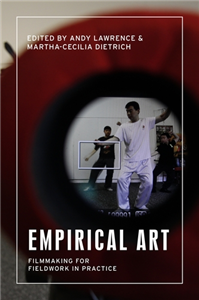
Empirical art
Filmmaking for fieldwork in practice
by Andy Lawrence, Martha-Cecilia Dietrich
Empirical art: Filmmaking for fieldwork in practice is an insightful exploration of what the craft of filmmaking brings to social science research. Providing creative avenues on how to narrate encounters, relationships, and experiences during fieldwork, this comprehensive volume offers a rich tapestry of theoretical explorations and explorative methodologies. Skilfully connecting the worlds of ethnography, art and cinema, the contributors in this book act as a compass for filmmakers and researchers venturing to use a camera and microphone to relate and narrate their research collaborations and fieldsites. Drawing from the authors' extensive experience in disciplines like social anthropology, environmental humanities, and political science, "Empirical Art" breaks down the intricate process of crafting ethnographic films that departs from the researcher's subjectivity. Covering aspects of filmmaking from conceptualisation to production and distribution, readers are equipped with a treasure trove of collaborative techniques, innovative approaches, and ethical considerations necessary to generate and examine storytelling practices in contemporary fields of study. The authors discuss the significance of the multiple roles that technologies of filmmaking play in reflecting on cultural practices, social dynamics, and (beyond) human storytelling and their transformative potentials. Whether a seasoned filmmaker, an aspiring ethnographer, or an academic seeking new dimensions for their research, Empirical Art serves as a guide to integrating visual storytelling, cinema craft and empirical research.
-
Trusted Partner
 Teaching, Language & ReferenceDecember 2017
Sustainable art communities
Contemporary creativity and policy in the transnational Caribbean
by Leon Wainwright, Kitty Zijlmans
This collection sets out a range of perspectives on the challenges that the Caribbean is facing today, showing how the arts hold a crucial role in forging a more sustainable Caribbean community. It forcefully attests to the view that visual art in particular has a specific contribution to make and that this in turn means striving to foster a sustainable arts community that can contend with an environment of uneven infrastructure, opportunity and public awareness. Spanning the scholarly, artistic and professional fields of arts and heritage, this book compares two of the Caribbean's key linguistic regions - the Anglophone and the Dutch - to address the themes of global-local relations, capital, patronage, morality, contestation, sustainability and knowledge exchange. The result is a milestone of collaboration from diverse global settings of the Caribbean and its diaspora, including Jamaica, the Bahamas, Barbados, Suriname, Curaçao, the Netherlands, United Kingdom, Germany and the United States.
-
Trusted Partner
 Humanities & Social SciencesMarch 2017
Air empire
British imperial civil aviation, 1919–39
by Gordon Pirie, Andrew Thompson, John M. MacKenzie
Air empire is a fresh study of civil aviation as a tool of late British imperialism. The first pioneering flights across the British empire in 1919-20 were flag-waving adventures that recreated an era of plucky British maritime exploration and conquest. Britain's development of international air routes and services was approved, organised and celebrated largely in London; there was some resistance in and beyond the subordinate colonies and dominions. Negotiating the financing and geopolitics of regular commercial air service delayed its inception until the 1930s. Technological, managerial and logistical problems also meant that Britain was slow into the air and slow in the air. Propaganda concealed underperformance and criticism. The study uses archival sources, biographies, industry magazines and newspapers to chronicle the disputed progress toward air empire. The rhetoric behind imperial air service offers a glimpse of late imperial hopes, fears, attitudes and style. Empire air service had emotional appeal and symbolic value, but disappointed in practice.
-
Trusted Partner
 Humanities & Social SciencesMarch 2017
Representing Africa
Landscape, exploration and empire in Southern Africa, 1780–1870
by John McAleer, Andrew Thompson, John M. MacKenzie
Southern Africa played a varied but vital role in Britain's maritime and imperial stories: it was one of the most intricate pieces in the British imperial strategic jigsaw, and representations of southern African landscape and maritime spaces reflect its multifaceted position. Representing Africa examines the ways in which British travellers, explorers and artists viewed southern Africa in a period of evolving and expanding British interest in the region. Drawing on a wide range of archival sources, contemporary travelogues and visual images, many of which have not previously been published in this context, this book posits landscape as a useful prism through which to view changing British attitudes towards Africa. Richly illustrated, this book will be essential reading for scholars and students interested in British, African, imperial and exploration history, art history, and landscape and environment studies.
-
Trusted Partner
 Humanities & Social SciencesFebruary 2017
Cultures and caricatures of British imperial aviation
Passengers, pilots, publicity
by Gordon Pirie, Andrew Thompson, John M. MacKenzie
The new activity of trans-continental civil flying in the 1930s is a useful vantage point for viewing the extension of British imperial attitudes and practices. Cultures and caricatures of British imperial aviation examines the experiences of those (mostly men) who flew solo or with a companion (racing or for leisure), who were airline passengers (doing colonial administration, business or research), or who flew as civilian air and ground crews. For airborne elites, flying was a modern and often enviable way of managing, using and experiencing empire. On the ground, aviation was a device for asserting old empire: adventure and modernity were accompanied by supremacism. At the time, however, British civil imperial flying was presented romantically in books, magazines and exhibitions. Eighty years on, imperial flying is still remembered, reproduced and re-enacted in caricature.
-
Trusted Partner
Humanities & Social SciencesJune 2025
Taking travel home
The souvenir culture of British women tourists, 1750–1830
by Emma Gleadhill
In the late eighteenth-century, elite British women had an unprecedented opportunity to travel. Taking travel home uncovers the souvenir culture these women developed around the texts and objects they brought back with them to realise their ambitions in the arenas of connoisseurship, friendship and science. Key characters include forty-three-year-old Hester Piozzi (Thrale), who honeymooned in Italy; thirty-one-year-old Anna Miller, who accompanied her husband on a Grand Tour; Dorothy Richardson, who undertook various tours of England from the ages of twelve to fifty-two; and the sisters Katherine and Martha Wilmot, who travelled to Russia in their late twenties. The supreme tourist of the book, the political salon hostess Lady Elizabeth Holland, travelled to many countries with her husband, including Paris, where she met Napoleon, and Spain during the Peninsular War. Using a methodology informed by literary and design theory, art history, material culture studies and tourism studies, the book examines a wide range of objects, from painted fans "of the ruins of Rome for a sequin apiece" and the Pope's "bless'd beads", to lava from Vesuvius and pieces of Stonehenge. It argues that the rise of the souvenir is representative of female agency, as women used their souvenirs to form spaces in which they could create and control their own travel narratives.
-
Trusted Partner
 Humanities & Social SciencesJanuary 2021
Women art workers and the Arts and Crafts movement
by Zoë Thomas
This book constitutes the first comprehensive history of the network of women who worked at the heart of the English Arts and Crafts movement from the 1870s to the 1930s. Challenging the long-standing assumption that the Arts and Crafts simply revolved around celebrated male designers like William Morris, it instead offers a new social and cultural account of the movement, which simultaneously reveals the breadth of the imprint of women art workers upon the making of modern society. Thomas provides unprecedented insight into how women navigated authoritative roles as 'art workers' by asserting expertise across a range of interconnected cultures: from the artistic to the professional, intellectual, entrepreneurial and domestic. Through examination of newly discovered institutional archives and private papers, Thomas elucidates the critical importance of the spaces around which women conceptualised alternative creative and professional lifestyles.


