Your Search Results

      • Optima Communications

        Lisa Bjerke is the owner and director of Optima Communications. Optima Communications provides customized assessments, coaching, training, and workshops to meet the unique communication needs of each individual, group or organization. Training is facilitated onsite in the workplace or virtually. Lisa has a Master’s degree in Speech-Language Pathology. She is a corporate communication coach working with clients to enhance communication skills. These skills include: active listening, clear verbal expression, emotional intelligence, cultural diversity and communication, and managing difficult conversations.  Lisa is a communication and professionalism coach with the University of Calgary’s Cumming School of Medicine and Post Graduate Medical Education Program. Lisa is a recognized expert in accent assessment and training. She is the author of Accent on Canadian English: a pronunciation program for speakers of English as a second language™, Accent on Canadian English™ e-book, Accent on Clear English™ International e-book and the Accent on Canadian English Pronunciation Assessment Kit™. She is also the creator of the Accent on Clear English™ eCourse  https://acetraining.online

        View Rights Portal
      • Vogel Communications Group

        We accompany our end customers (engineers and / or technicians) as knowledge partners in their professional challenges, show the current state of knowledge and open up new perspectives for them

        View Rights Portal
      • Trusted Partner
        Humanities & Social Sciences
        March 2026

        The dilemma of Authority

        by Allyn Fives

        The moral problem of authority is the challenge of reconciling legitimate authority (the right to rule) with the demands of freedom and rationality. In this book, I argue that authority can have legitimacy, but when it does it generates a moral dilemma, where the obligation to obey comes at some cost to freedom and reason. Hence, not only do I depart from the views of those who insist that authority can never have legitimacy, but also those who maintain that insofar as authority is legitimate it simply satisfies the demands of freedom or rationality. My focus here will be on both what it is that justifies authority (in particular focusing on membership, and the goods of membership) as well what type of reason an authoritative directive is, how it can come into conflict with others reasons, and how those conflicts are resolved.

      • Trusted Partner
        Humanities & Social Sciences
        March 2017

        Britain in China

        by Robert Bickers

        This is a study of Britain's presence in China both at its peak, and during its inter-war dissolution in the face of assertive Chinese nationalism and declining British diplomatic support. Using archival materials from China and records in Britain and the United States, the author paints a portrait of the traders, missionaries, businessmen, diplomats and settlers who constituted "Britain-in-China", challenging our understanding of British imperialism there. Bickers argues that the British presence in China was dominated by urban settlers whose primary allegiance lay not with any grand imperial design, but with their own communities and precarious livelihoods. This brought them into conflict not only with the Chinese population, but with the British imperial government. The book also analyzes the formation and maintenance of settler identities, and then investigates how the British state and its allies brought an end to the reign of freelance, settler imperialism on the China coast. At the same time, other British sectors, missionary and business, renegotiated their own relationship with their Chinese markets and the Chinese state and distanced themselves from the settler British.

      • Trusted Partner
        Humanities & Social Sciences
        May 2009

        Governance as social and political communication

        by Henrik Bang, Martin Hargreaves

        Governance is among the most used of new ideas in the social sciences, most notably in the fields of political science, public administration, sociology, social and political theory. As ever, debates within disciplines rarely transcend disciplinary boundaries. This volume, newly available in paperback, brings together authors from these fields to elaborate on the development of governance analysis in new conceptions of political and democratic communication. It not only seeks to identify, describe and evaluate the contribution of each discipline to a theory of communicative governance, but also lays the foundation of a multidisciplinary framework for studying the mediation in communicative governance of societal concerns for effectiveness, order and participation. The book is theoretical and comparative, drawing on authors and research in Britain, Denmark, France, Germany, the Netherlands and the US. It adopts an anti-foundational approach to deconstruct the essentialist discourses endemic in each discipline and the disciplinary traditions of each country. Notions such as steering and control in public administration, identities and domination in sociology, and the community and self in social and political theory are analysed in depth. The book will demonstrate clearly how the distinctive traditions of each discipline lead them to construct overlapping, loosely coupled, and sometimes incommensurable ideas about the institutions, politics and policies of governance. ;

      • Trusted Partner
        Literature & Literary Studies
        April 2026

        The poetry of suicide

        Lessons in grief from the lives and deaths of poets

        by J. T. Welsch

        A profound exploration of the connection between poetry and suicide. 'Suicides have a special language,' Anne Sexton wrote in her 1964 poem 'Wanting to Die'. But is it a language we can learn to read? In The poetry of suicide, J. T. Welsch interweaves stories of poets who took their own lives with the long history of suicide in his own family, searching for a new way of understanding these difficult deaths. Beginning with Hamlet's 'To be or not to be?', he delves into the work of Dante, Sylvia Plath, Vladimir Mayakovsky and others, asking what it can teach us about suicide's messy reality. Suicide is more like poetry than we realise, Welsch argues. Both are filled with ambiguities, contradictions and unknowable intentions. Both demand and resist interpretation. Recovering the personal dimension often lost in our medicalised public discourse, Welsch finds practical ways of confronting suicide's poem-like difficulties.

      • Trusted Partner

        Negotiating with Confidence –Psychological Strategies and Methods

        With 20 Exercises for Self-Learning

        by T. Fritzsche

        From a psychological perspective, there are many aspects to negotiating. Given the right knowledge of backgrounds and mechanisms, it is an art form possible to get to grips with and put into practice. In an entertaining and informative way, this book introduces the reader to the basics of communication and body language, cooperative negotiation, strategic negotiation, the different personalities of negotiators, and negotiating. Using practical exercises and valuable practical tips, this book takes the reader through the main psychological strategies and methods so he can negotiate in a flexible, goal-oriented, and successful manner.   Target Group: For people who want to improve their negotiating skills.

      • Trusted Partner
        Humanities & Social Sciences
        July 2009

        Romania and the European Union

        How the weak vanquished the strong

        by Tom Gallagher

        According to Tom Gallagher, Romania's predatory rulers, the heirs of the sinister communist dictator Ceausescu, have inflicted a humiliating defeat on the European Union. He argues convincingly that Brussels was tricked into offering full membership to this Balkan country in return for substantial reforms which its rulers now refuse to carry out. This book unmasks the failure of the EU to match its visionary promises of transforming Romania with the shabby reality. Benefiting from access to internal reports and leading figures involved in a decade of negotiations, it shows how Eurocrats were outwitted by unscrupulous local politicians who turned the EU's multi-level decision-making processes into a laughing-stock. The EU's famous 'soft power' turned out to be a mirage, as it was unable to summon up the willpower to insist that this key Balkan state embraced its standards of behaviour in the political and economic realms. The book unravels policy failures in the areas of justice, administrative and agricultural reform and shows how Romania moved backwards politically during the years of negotiations. ;

      • Trusted Partner
        Humanities & Social Sciences
        July 1999

        Britain in China

        by Robert Bickers, Andrew Thompson, John Mackenzie

        This is a study of Britain's presence in China both at its peak, and during its inter-war dissolution in the face of assertive Chinese nationalism and declining British diplomatic support. Using archival materials from China and records in Britain and the United States, the author paints a portrait of the traders, missionaries, businessmen, diplomats and settlers who constituted "Britain-in-China", challenging our understanding of British imperialism there. Bickers argues that the British presence in China was dominated by urban settlers whose primary allegiance lay not with any grand imperial design, but with their own communities and precarious livelihoods. This brought them into conflict not only with the Chinese population, but with the British imperial government. The book also analyzes the formation and maintenance of settler identities, and then investigates how the British state and its allies brought an end to the reign of freelance, settler imperialism on the China coast. At the same time, other British sectors, missionary and business, renegotiated their own relationship with their Chinese markets and the Chinese state and distanced themselves from the settler British. ;

      • Trusted Partner
        Humanities & Social Sciences
        December 2024

        Critical theory and Independent Living

        by Teodor Mladenov

        Critical theory and Independent Living explores intersections between contemporary critical theory and disabled people's struggle for self-determination. The book highlights the affinities between the Independent Living movement and studies of epistemic injustice, biopower, and psychopower. It discusses in depth the activists' critical engagement with welfare-state paternalism, neoliberal marketisation, and familialism. This helps develop a pioneering comparison between various welfare regimes grounded in Independent Living advocacy. The book draws on the activism of disabled people from the European Network on Independent Living (ENIL) by developing case studies of the ENIL's campaigning for deinstitutionalisation and personal assistance. It is argued that this work helps rethink independence as a form of interdependence, and that this reframing is pivotal for critical theorising in the twenty-first century.

      • Trusted Partner
        Humanities & Social Sciences
        April 2005

        Democracy, social resources and political power in the European Union

        by Niilo Kauppi

        In this book Kauppi develops a structural constructivist theory of the European Union and critically analyses, through French and Finnish empirical cases, the political practices that maintain the Union's 'democratic deficit'. Kauppi conceptualises the European Union as both an arena for political contention and a nascent political order. In this evolving, multi-levelled European political field, individuals and groups construct material and symbolic structures of political power, grounded in a variety of social resources such as nationality, culture, and gender. The author shows how the dominance of both executive political resources and domestic political cultures has prevented the development of European democracy. Supranational executive networks have become more autonomous, reinforcing the dominance of the resources they control. At the same time, national political cultures condition the political status of elected institutions such as the European parliament. The book is particularly suited for undergraduate and graduate students in the fields of European Politics, European Union Studies and International Relations. ;

      • Trusted Partner
        Literature & Literary Studies
        May 2023

        Suicide and the Gothic

        by William Hughes, Andrew Smith

        Suicide and the Gothic is the first protracted study of how the act of self-destruction recurs and functions within one of the most enduring and popular forms of fiction. Comprising eleven original essays and an authoritative introduction, this collection explores how the act of suicide has been portrayed, interrogated and pathologised from the eighteenth century to the present. The featured fictions embrace both canonical and the less-studied texts and examine the crisis of suicide - a crisis that has personal, familial, religious, legal and medical implications - in European, American and Asian contexts. Featuring detailed interventions into the understanding of texts as temporally distant as Thomas Percy's Reliques and Patricia Highsmith's crime fictions, and movements as diverse as Wertherism, Romanticism and fin-de-siècle decadence, Suicide and the Gothic provides a comprehensive and compelling overview of this recurrent crisis in fiction and culture.

      • Trusted Partner
        January 2016

        Embodied Communication

        by Maja Storch, Wolfgang Tschacher

        The idea that people can understand each other is based on the assumption that there is such thing as the “correct” meaning of a message that simply needs to be found. According to the theory of embodied communication, however, a message has no fixed meaning that can be extracted or deciphered. There is merely the mutually produced feeling of agreement on a linguistic form, which arises spontaneously and anew from the interaction and which is not present in the beginning. Psychologists Maja Storch and Wolfgang Tschacher have at last supplied a new theory of communication that is in line with the latest research – and that can be applied in real-life situations. In addition to a section on the theory of embodied communication, the book contains detailed practical comments and a workshop section. The practical section describes a selection of everyday situations in which communication skills are called for. The methods can be applied to promote authentic and spontaneous behavior in real life situations. Target Group: Psychologists, communication experts, trainers, coaches, managers, teachers, marketing experts, and anyone who needs to communicate effectively at work or in their private life.

      • Trusted Partner
        July 2025

        TOP 60 Pitfalls in Consultation and Communication

        Rx and OTC

        by Christiane Weber, Christian Schulz

        Forgetting to include billing details for artificial insemination on a prescription, overlooking critical usage instructions for a fentanyl patch or cutting someone off mid-sentence? No need to fall into these traps! This book is a go-to guide for avoiding the common pitfalls of everyday pharmacy practice. From handling the first prescription to ensuring effective communication at the counter – this guide covers 60 common and sensitive issues, presented concisely according to the Pareto principle. • Avoiding common errors – from unclear prescriptions and OTC requests to communication missteps and billing mistakes, this guide highlights the key issues. • The right advice – concise case studies, dos and don‘ts, and communication tips demonstrate best practices that you can apply immediately. • Want to go deeper? Professional insights for situations that require more than just the basics. Master the TOP 60 and answer 80% of customer questions with confidence! Target group: Pharmacy interns, pharmaceutical technicians, pharmacists, returnees

      • Trusted Partner
        Humanities & Social Sciences
        April 2025

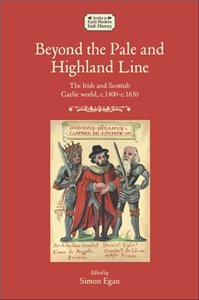
        Beyond the Pale and Highland Line

        The Irish and Scottish Gaelic world

        by Simon Egan

        This book offers important new insights into the history and culture of the Gaelic-speaking world from the mid-fifteenth century through to the reign of James VI and I. Throughout this period, the reach of the English and Scottish crowns within these western regions was limited. The initiative lay with local communities and royal power was contingent upon negotiating with well-established and largely autonomous aristocratic lineages. Moreover, events within this western world could exert a powerful, often unpredictable, influence upon the affairs of the wider archipelago. Using a series of case studies, this collection examines the evolving relationship between Ireland and Scotland in rich detail. It demonstrates how this world interacted with the encroaching English and Scottish states and underlines the importance of paying closer attention to this neglected area of Irish and British history.

      • Trusted Partner
        2021

        Self-medication

        Guidelines for providing pharmaceutical advice

        by Dr. Kirsten Lennecke and Kirsten Hagel

        Minor illness or a serious disease ? Through systematic questioning, pharmacists or pharmaceutical technicians can establish the possibilities and limits of self-medication. Each monograph on the over 100 indications for self-medication includes: - A flow chart: basis for the structured consultation - A brief description: additional information about the symptoms - Recommended medications/groups of medications: the treatment options - Additional advice: individual supportive and alternative treatment options - Specific knowledge for advising particular patient groups: e.g. pregnant women, children and senior citizens New for the 7th edition: Monographs that explore the possibilities of supportive self-medication for indications such as hypertension and diabetes. Information about what to do in the case of poisoning, scabies or inflammation of the nail bed (paronychia) is also provided! The details about active substances, products and additional tips have been updated. The pocket guide has long been the standard for providing advice on self-medication – a “must-have”!

      • Trusted Partner
        Humanities & Social Sciences
        March 2017

        Rethinking settler colonialism

        History and memory in Australia, Canada, Aotearoa New Zealand and South Africa

        by Annie Coombes

        Rethinking settler colonialism focuses on the long history of contact between indigenous peoples and the white colonial communities who settled in Australia, Aotearoa New Zealand, Canada and South Africa. It interrogates how histories of colonial settlement have been mythologised, narrated and embodied in public culture in the twentieth century (through monuments, exhibitions and images) and charts some of the vociferous challenges to such histories that have emerged over recent years. Despite a shared familiarity with cultural and political institutions, practices and policies amongst the white settler communities, the distinctiveness which marked these constituencies as variously, 'Australian', 'South African', 'Canadian' or 'New Zealander', was fundamentally contingent upon their relationship to and with the various indigenous communities they encountered. In each of these countries these communities were displaced, marginalised and sometimes subjected to attempted genocide through the colonial process. Recently these groups have renewed their claims for greater political representation and autonomy. The essays and artwork in this book insist that an understanding of the political and cultural institutions and practices which shaped settler-colonial societies in the past can provide important insights into how this legacy of unequal rights can be contested in the present. It will be of interest to those studying the effects of colonial powers on indigenous populations, and the legacies of imperial rule in postcolonial societies.

      • Trusted Partner
        2021

        Self-medication in Pregnancy and Breast-feeding

        Counselling handbook

        by Dr. Annette Abhau

        Cough, hay fever or herpes are at least as troublesome during pregnancy and breast-feeding as under normal “conditions” - and yet everything is different. Physiological changes to the body in pregnancy and lactation, together with the vulnerability of the unborn baby or infant, set particular requirements when selecting the correct, safe medication. Especially in the area of self-medication, the needs of pregnant and breast-feeding women for information are great and call for competent advice! This comprehensive handbook is the key: General information about pharmacotherapy, supplementary measures, vaccinations, questions about diet and infections in pregnancy and lactation creates a broad knowledge base. The core feature of the book are the traffic light tables, with precise recommendations for medicinal products for all types of treatment. All the important indications for selfmedication in pregnancy and lactation are listed and the tables are supported by detailed explanations of the individual assessments. The sections “Advice from medical specialists” are particularly useful, with additional tips from gynaecologists and “Footnotes” with relevant information on the use of prescription- only medicines – and as the ultimate practical tool: the enclosed sales counter leaflets with all traffic light tables to enable quick reference for first-class advice!

      • Trusted Partner
        Humanities & Social Sciences
        December 2013

        The House of Lords

        by Donald Shell

        The House of Lords has undergone significant change in recent years. The exclusion of the great majority of the hereditary peers in 1999 was intended as the first step in a two-stage reform process. But further reform has proved difficult to achieve and remains a matter of considerable controversy. Meanwhile, the present House has become more assertive, and is now widely recognised as making a substantial contribution to the overall work of parliament. This book, available in paperback for the first time, examines the role of the contemporary House. Who are the peers, and who among the total of over 700 are the active peers? How does the House work, and how effective is it in revising legislation and in scrutinising the work of government? Why has fundamental reform of the House been so long delayed, and what are the main arguments about reform today? These are among the questions discussed in this timely volume, which seeks to locate discussion about the House of Lords in the wider context of a clear understanding of the developing British constitution. This book will be of great value to students and academics in British politics, as well as to serious journalists and researchers. ;

      • Trusted Partner
        Humanities & Social Sciences
        January 2025

        Framing

        The social art of influence

        by Mikael Klintman

        A smart, incisive toolkit for understanding how the framing of information influences the way we think about it. In today's chaotic media landscape, working out who and what to believe is a daunting task. Lies and misinformation are only part of the problem - often the way a story is presented has just as much effect on us as what the story is. In Framing, sociologist Mikael Klintman offers a cutting-edge toolkit for exposing and analysing the rhetoric that saturates our everyday lives. Combining insights from the social sciences, economics and evolutionary biology, he lays out a four-part approach to understanding how information is 'framed' for us, built around the key elements of texture, temperature, position and size. Demonstrating this approach through an array of real-world examples, from climate change denial to the subtle messaging of caviar ads, Klintman reveals how canny communicators mislead us without relying on overt deception. At the same time, he probes the deeper evolutionary and cultural roots of our susceptibility to frames.

      Subscribe to our

      newsletter