
Your Search Results


-
Promoted Content

 Literature & Literary StudiesJuly 2025
Strange matter
Medieval disruptions of time
by Martin Bleisteiner, Jan-Peer Hartmann, Andrew James Johnston
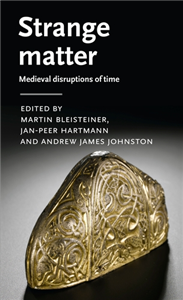
Medieval and early modern texts reflect a fascination with material objects, from ancient heirlooms to ingenious automata. Often imbued with power or beauty, these objects carry an uncanny sense of otherness, their mysterious origins evoking wonder and suggesting temporal and spatial distance. Acting as repositories of temporal alterity, such artefacts bridge the past and present in profound ways. This volume, featuring contributions from experts in literature and art history, explores how texts from these periods use material objects to engage with temporal otherness. From everyday items to marvellous creations, objects challenge distinctions between human and material, natural and cultural. Whether examining the hybrid status of Hector's body in Lydgate's Troy Book or the temporal agency of humble bubbles, the chapters illuminate the vibrant networks connecting people and objects. By highlighting the 'hybridity' of matter, the book offers fresh insights into Bruno Latour's critique of nature-culture divides.
-
Promoted Content
 Humanities & Social SciencesMarch 2026
US cultural diplomacy after the Cold War
Decline, recovery, and fall
by Jeffrey H. Michaels, Giles Scott-Smith
In the decades following the USSR's collapse, the US has gone from unrivalled hegemon to a position of relative decline. With America 'triumphant' after 1991, its culture, like its diplomatic, military and economic power, remained unmatched. Such favourable circumstances seemed to undercut the need for cultural diplomacy. Why should the US government sell a product that was already selling so well? After 9/11, however, it was apparent the US image was less popular than previously assumed. To reverse this negative image, cultural diplomacy was revived. Despite being beset by internal and external challenges, US officials supported various cultural initiatives and partnerships to promote the American brand globally. Along the way, cultural diplomacy has made use of new forms of expression to promote American culture and build positive foreign relations. The arrival of the second Trump administration in 2025 has clearly signalled an end to using cultural diplomacy to further causes of empowerment and diversity, making the future uncertain for this field of activity.
-
 Trusted Partner
 Humanities & Social SciencesMarch 2026
The cultural politics of food in South Africa
Media, nourishment, inequality
by Mehita Iqani, Sarah Gibson
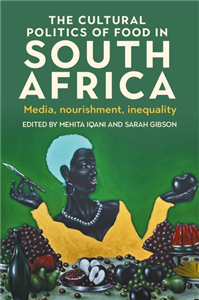
Food is both a material system of nourishment, necessary for human survival, and a communicative system that signifies multiple meanings across human cultures. This book explores the cultural politics of food in the South African context, bringing together a range of disciplinary perspectives on the links between media, nourishment, and inequality. The chapters all highlight the multiplicity of meanings that food has in South African society. These include historical perspectives on the impact of colonialism, migration and apartheid had on food and foodways in South Africa; sociological interventions on food and society; aesthetic practices in relation to food; and mediated food cultures in South Africa. Taken together, the book critically explores the multiple ways in which food is never just food, and always linked to complex and shifting modalities of meaning and knowledge in the South African context.
-
Trusted Partner
 The ArtsJune 2026
Confessions of monuments
Commemorating and representing the Turkish nation-state in the early twentieth century
by Emin Artun Ozguner
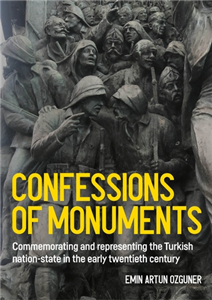
Following the dissolution of the Ottoman Empire in the early 1920s, an emerging nation state built a particular relationship with the Ottoman past. In its simultaneous disavowal and inheritance of it, this was the new Republic of Turkey, founded in 1923. Nation-states are areas of ideological contestation. However, they are equally visible and tangible. This is thanks to the making of a new world of artefacts in build or print that represent and commemorate them in many, often contradicting ways through design practices. This book offers a thorough account of this new Turkish material world through the trajectories of commemoration; from public monuments, print media, and festive illumination to temporary and permanent architecture from the onset of the 1908 Young Turk revolution to the demise of Turkey's founding single-party regime in the late 1950s. If objects are silent actors of history, their confessions await.
-
Trusted Partner
 Humanities & Social SciencesSeptember 2001
Railways and culture in Britain
The epitome of modernity
by Ian Carter, Jeffrey Richards
The nineteenth-century's steam railway epitomised modernity's relentlessly onrushing advance. In Railways and culture in Britain Ian Carter delves into the cultural impact of train technology, and how this was represented in British society. Why, for example, did Britain possess no great railway novel? The book's first half tests that assertion by comparing fiction and images by some canonical British figures (Turner, Dickens, Arnold Bennett) with selected French and Russian competitors: Tolstoy, Zola, Monet, Manet. The second half proposes that if high cultural work on the British steam railway is thin, then this does not mean that all British culture ignored this revolutionary artefact. Detailed discussions of comic fiction, crime fiction and cartoons reveal a popular fascination with railways tumbling from vast (and hitherto unexplored) stores of critically overlooked genres. A final chapter contemplates cultural correlations of the steam railway's eclipse. If this was the epitome of modernity, then does the triumph of diesel and electric trains, of cars and planes, signal a decisive shift to postmodernity? ;
-
Trusted Partner
 Humanities & Social SciencesMarch 2016
Leisure and cultural conflict in twentieth-century Britain
by Jeffrey Richards, Brett Bebber, Allison Abra, Brad Beaven, Brett Bebber, Kelly Boyd
This collection of essays addresses research trends in the history of British leisure while also presenting a wide range of articles on cultural conflict and leisure in the twentieth century. It includes innovative research on a number of topics, including television, cinema, the circus, women's leisure, dance, football and drug culture. It provides an excellent entry to leisure studies and history, while addressing the contributions of other disciplines and exploring key historiographical trends. Three broad topics structure the collection; cultural contestation and social conflict in leisure; regulation and standardisation; and national identity embodied in leisure and popular culture. The book will be useful to students and educators of twentieth-century and British history, as it offers accessible and topical studies that pique historical curiosity. In addition, historians, sociologists and cultural analysts of the twentieth century will find it essential for understanding pleasure and recreation in twentieth-century British society. ;
-
Trusted Partner
 Social & cultural historyJuly 2012
Leisure and cultural conflict in twentieth-century Britain
by Allison Abra, Brad Beaven, Brett Bebber, Kelly Boyd
This collection of essays addresses research trends in the history of British leisure while also presenting a wide range of articles on cultural conflict and leisure in the twentieth century. It includes innovative research on a number of topics, including television, cinema, the circus, women's leisure, dance, football and drug culture. It provides an excellent entry to leisure studies and history, while addressing the contributions of other disciplines and exploring key historiographical trends. Three broad topics structure the collection; cultural contestation and social conflict in leisure; regulation and standardisation; and national identity embodied in leisure and popular culture. The book will be useful to students and educators of twentieth-century and British history, as it offers accessible and topical studies that pique historical curiosity. In addition, historians, sociologists and cultural analysts of the twentieth century will find it essential for understanding pleasure and recreation in twentieth-century British society.
-
Trusted Partner
 Humanities & Social SciencesSeptember 2016
Lifelong learning, the arts and community cultural engagement in the contemporary university
by Michael Osborne, Darlene Clover, Kathy Sanford
-
Trusted Partner
 Humanities & Social SciencesDecember 2024
British culture after empire
Race, decolonisation and migration since 1945
by Josh Doble, Liam Liburd, Emma Parker
British culture after Empire is the first collection of its kind to explore the intertwined social, cultural and political aftermath of empire in Britain from 1945 up to and beyond the Brexit referendum of 2016, combining approaches from the fields of history, English and cultural studies. Against those who would deny, downplay or attempt to forget Britain's imperial legacy, the various contributions expose and explore how the British Empire and the consequences of its end continue to shape Britain at the local, national and international level. As an important and urgent intervention in a field of increasing relevance within and beyond the academy, the book offers fresh perspectives on the colonial hangovers in post-colonial Britain from up-and-coming as well as established scholars.
-
Trusted Partner

 Clinical psychology
Cultural and Ethnic Diversity
How European Psychologists Can Meet the Challenges
by Alexander Thomas
Culture and diversity are both challenge and opportunity. This volume looks at what psychologists are and can be doing to help society meet the challenges and grasp the opportunities in education, at work, and in clinical practice. The increasingly international and globalized nature of modern societies means that psychologists in particular face new challenges and have new opportunities in all areas of practice and research. The contributions from leading European experts cover relevant intercultural issues and topics in areas as diverse as personality, education and training, work and organizational psychology, clinical and counselling psychology, migration and international youth exchanges. As well as looking at the new challenges and opportunities that psychologists face in dealing with people from increasingly varied cultural backgrounds, perhaps more importantly they also explain and discuss how psychologists can deepen and acquire the intercultural competencies that are now needed in our professional lives. Target Group: psychotherapists / clinical psychologists / mental health professionals
-
Trusted Partner
 The ArtsJanuary 2019
The cultural politics of contemporary Hollywood film
by Chris Beasley, Heather Brook
-
Trusted Partner
 Lifestyle, Sport & LeisureAugust 2016
Culture in Manchester
Institutions and urban change since 1850
by Janet Wolff, Mike Savage
This book brings together studies of cultural institutions in Manchester from 1850 to the present day, giving an unprecedented account of the city's cultural evolution. These bring to light the remarkable range of Manchester's contribution to modern cultural life, including the role of art education, popular theatre, religion, pleasure gardens, clubs and societies. The chapters show the resilience and creativity of Manchester's cultural institutions since 1850, challenging any simple narrative of urban decline following the erosion of Lancashire's industrial base, at the same time illustrating the range of activities across the social classes. This book will appeal to everyone interested in the cultural life of the city of Manchester, including cultural historians, sociologists and urban geographers, as well as general readers with interests in the city. It is written by leading international authorities, including Viv Gardner, Stephen Milner, Mike Savage, Bill Williams and Janet Wolff.
-
Trusted Partner
 Humanities & Social SciencesJune 2024
Pandemic culture
by Ben Walmsley, Abigail Gilmore, Dave O'Brien
-
Trusted Partner
 The ArtsSeptember 2019
Queer Objects
by Chris Brickell, Judith Collard
Queer lives give rise to a vast array of objects: the things we fill our houses with, the gifts we share with our friends, the commodities we consume at work and at play, the clothes and accessories we wear, and the analogue and digital technologies we use to communicate with one another. But what makes an object queer? The sixty-three chapters in Queer Objects consider this question in relation to lesbian, gay and transgender communities across time, cultures and space. In this unique international collaboration, well-known and newer writers traverse world history to write about items ranging from ancient Egyptian tomb paintings and Roman artefacts to political placards, snapshots, sex toys and the smartphone. Fabulous, captivating, transgressive.
-
Trusted Partner
 Humanities & Social SciencesNovember 2024
Culture is bad for you
by Orian Brook, Dave O'Brien, Mark Taylor
-
Trusted Partner
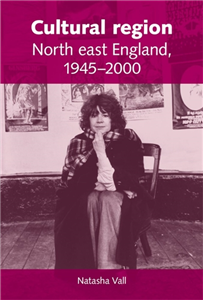 Humanities & Social SciencesFebruary 2011
Cultural Region
North east England 1945–2000
by Natasha Vall
This book is the first historical assessment of English regional cultural policy. With its dialect and striking modern icons such as the Angel of the North, the north east has been described as England's most distinctive region. This study reveals the impact of the new cultural institutions that emerged after 1945 upon a region with deeply rooted vernacular traditions. The creation of the regional arts board and the development of regional broadcasting as well as the national efforts to manage the northern economic problems presented challenges for vernacular culture. In the ensuing battle between provincial and metropolitan values the north east as a modern cultural region took shape. The concluding chapters detail the cultural regeneration of the urban riversides, a much vaunted example of successful culture-led regeneration. This volume is essential for anyone with an interest in the formation of cultural identities, the development of regional government arts policies, urban regeneration and cultural and social history. ;
-
Trusted Partner
 Literature & Literary StudiesJune 2001
Bakhtin and cultural theory
Second edition
by Ken Hirschkop, David Shepherd
An important collection of essays which treats Bakhtin as a provocative theorist whose work must be tested, explored and compared with the work of others. Contributors assess Bakhtin's contribution to difficult issues of colonialism, feminism, reception theory and theories of the body, amongst others. New articles explore the origins, previously unacknowledged, of Bakhtin's theory of language and provide a vivid account of the dramatic scandal surrounding Bakhtin's thesis on Rabelais. Contains dramatic new material, drawn from post-perestroika sources, which demythologizes the image of this important writer. A new bibliographical essay and introduction bring the English-language reader up-to-date with the progress of Bakhtin studies in Russia. ;
-
Trusted Partner
 Psychology
Developing Anti-Racist Cultural Competence
by Rehman Abdulrehman
Learn to understand how you see others with this no-nonsense,practical guide• Teaches cultural humility• Provides practical guidance• Addresses internalized racismIn today’s society, anti-racist cultural competence is an essentialskill and not something meant only to be addressedby some. Issues tied to resolving racism and understandingand including diverse cultural points of view remain highlyconflictual – and the ability to deal with these issues effectivelyis often hindered by fear, anxiety, and a misunderstandingof what it means to be culturally competent withoutmaking people feel like outsiders. While many other modelsof cultural competence approach the issue as though lookinginto a fishbowl, this book views the issue as everyoneswimming in the water together, as part of a common ecosystemand community.
-
Trusted Partner
 Humanities & Social SciencesFebruary 2017
Country houses and the British Empire, 1700–1930
by Stephanie Barczewski
Country houses and the British empire, 1700-1930 assesses the economic and cultural links between country houses and the Empire between the eighteenth and twentieth centuries. Using sources from over fifty British and Irish archives, it enables readers to better understand the impact of the empire upon the British metropolis by showing both the geographical variations and its different cultural manifestations. Barczewski offers a rare scholarly analysis of the history of country houses that goes beyond an architectural or biographical study, and recognises their importance as the physical embodiments of imperial wealth and reflectors of imperial cultural influences. In so doing, she restores them to their true place of centrality in British culture over the last three centuries, and provides fresh insights into the role of the Empire in the British metropolis.
-
Trusted Partner
 Humanities & Social SciencesFebruary 2023
Policing race, ethnicity and culture
by Jan Beek, Thomas Bierschenk, Annalena Kolloch, Bernd Mayer

