Your Search Results

      • My First Discovery Paperbacks

        A captivating non-fiction series for children aged 3 to 6, that awakens their interest in wonders of the physical, natural and human world. Transparent overlay pages reveal hidden surprises and facilitate understanding.

        View Rights Portal
      • Kawmiah distributing company

        The National Company for Distribution (Kawmiah distributing company) is one of the national press institutions working in the field of publishing, distribution, printing and journalism, and it has many cultural and intellectual publications through Dar Al Shaab and Dar Al Taawon, and it is of great importance in the paper book market in Egypt and the Arab world with its capabilities in the fields of publishing, distribution and printing And from promising cadres capable of presenting the best publications in various cultural and intellectual fields.

        View Rights Portal
      • Trusted Partner
        Humanities & Social Sciences
        January 2026

        The Gulf monarchies after the Arab Spring

        by Cinzia Bianco

      • Trusted Partner
      • Trusted Partner
        Humanities & Social Sciences
        May 2026

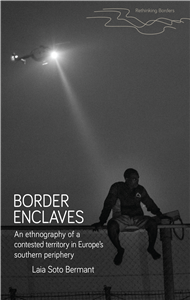
        Border enclaves

        Melilla and the making of Europe’s southern periphery

        by Laia Soto Bermant

        Border enclaves examines the Spanish enclave of Melilla as a prism for understanding Europe's contemporary dislocations. Based on over a decade of ethnographic research, it explores how borders are enforced, contested and inhabited in a city suspended between Africa and Europe, colonial legacies and modern regimes. Through a polyphonic narrative following smugglers, migrants, teachers and politicians, it reveals how everyday practices and symbolic performances shape life in the enclave. Selective visibility-who is seen or erased-structures authority and exclusion. Situating Melilla within broader processes like Spain's colonial history and Europe's border restructuring, the book argues that its fragmented sovereignties and external dependencies make it a paradigmatic site for grasping Europe's precarious margins. It calls for an ethnographic lens attuned to dislocation as both lived experience and analytic tool.

      • Trusted Partner
      • Trusted Partner
        Humanities & Social Sciences
        April 2017

        Britain and the formation of the Gulf States

        Embers of empire

        by Shohei Sato, Andrew Thompson, John M. MacKenzie

        This book offers new insight into the end of the British Empire in the Middle East. It takes a fresh look at the relationship between Britain and the Gulf rulers at the height of the British Empire, and how its effects are still felt internationally today. Over the last four decades, the Persian Gulf region has gone through oil shocks, wars and political changes, and yet the basic entities of the southern Gulf states have remained largely in place. Drawing on extensive multi-archival research in the British, American and Gulf archives, this book illuminates a series of negotiations between British diplomats and the Gulf rulers that inadvertently led Bahrain, Qatar and the UAE to take their current shapes. The story addresses the crucial question of self-determination versus 'better together', a dilemma pertinent to anyone interested in the transformation of the modern world.

      • Trusted Partner
        Humanities & Social Sciences
        December 2024

        Iran, Saudi Arabia and the United States

        Power, identity and strategy in the Persian Gulf triangle

        by Luíza Cerioli

        This book offers a nuanced snapshot of the complex geopolitical dynamics in the Persian Gulf, underlining the interaction between Iran, Saudi Arabia, and the US. Examining their interwoven relations since the 1970s, Luíza Cerioli's framework reveals how changes in US-Saudi ties have ripple effects on Iran-US and Iran-Saudi relations and vice versa. Using a historical lens, she explores how enduring US-Saudi connections hinge on order expectations, delves into the cognitive factors shaping US-Iran enmity and traces the source of oscillation in the Saudi-Iran ties. Employing Neoclassical Realism, the book investigates status-seeking, national identities and leadership preferences, offering a deeper understanding of the region's multipolar system. By combining International Relations and Middle East Studies, Cerioli's work contributes to both fields, unravelling the intricate interplay between international structures, regional nuances and agency in shaping Persian Gulf geopolitics.


      • Trusted Partner
      • Trusted Partner
        August 2009

        Fragmented Dhaka

        Analysing everyday life with Henri Lefebvre’s Theory of Production of Space

        by Bertuzzo, Elisa T.

      • Trusted Partner
      • Trusted Partner
        December 2011

        Split-Brain-Forschung und ihre Folgen

        Medizin – Geschichte – Populärwissenschaft

        by Lieb, Kathrin

      • Trusted Partner
        Children's & YA

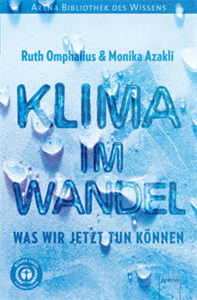
        Climate Change. What We Can Do Now

        by Ruth Omphalius/ Monika Azakli

        “There is no Planet B!” More and more young people are worried about the future of Planet Earth. Climate change is heating not only the planet but also people’s emotions. But what exactly is climate? And why are the changes threatening the lives of both polar bears and us humans. In simple language but with solid science, the authors explain the most important aspects of climate, from the greenhouse effect to the Gulf Stream. Current developments are described as well, and the scientific background is supplemented by gripping reports. The book also offers a glimpse of the future: what will happen if we go on in the same way as now? How can climate change be halted? This makes for riveting reading – and not just for young activists.

      • Trusted Partner
        Humanities & Social Sciences
        December 2023

        Precision

        by James Patton Rogers

      • Trusted Partner
        Literature & Literary Studies
        December 2009

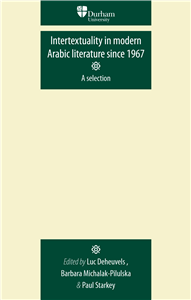
        Intertextuality in modern Arabic literature since 1967

        by Luc Deheuvels, Mike Thompson, Barbara Michalak-Pikulska, Paul Starkey

        This volume of essays is the first to be dedicated to the subject of intertextuality in modern Arabic literature. Beginning with a general overview of the topic by Roger Allen, it brings together essays on a range of writers from all parts of the Arab world, including, among others, Edwar al-Kharrat, Sa'd Allah Wannus, Najib Mahfuz, Rabi' Jabir, Salim Matar and the recently deceased Sudanese writer al-Tayyib Salih, whose seminal work Season of Migration to the North heralded a new phase in the modern Arabic literary tradition. The volume, which also includes two essays on aspects of intertextuality in Gulf literature, also discusses transformations of popular medieval literature such as the Alf Layla wa-Layla (the Thousand and One Nights) in modern Arabic literature. ;

      • Trusted Partner
        Humanities & Social Sciences
        January 2017

        The West must wait

        County Galway and the Irish Free State, 1922–32

        by Una Newell

        The West must wait presents a new perspective on the development of the Irish Free State. It extends the regional historical debate beyond the Irish revolution and raises a series of challenging questions about post-civil war society in Ireland. Through a detailed examination of key local themes - land, poverty, politics, emigration, the status of the Irish language, the influence of radical republicans and the authority of the Catholic Church - it offers a probing analysis of the socio-political realities of life in the new state. This book opens up a new dimension by providing a rural contrast to the Dublin-centred views of Irish politics. Significantly, it reveals the level of deprivation in local Free State society with which the government had to confront in the west. Rigorously researched, it explores the disconnect between the perceptions of what independence would deliver and what was achieved by the incumbent Cumann na nGaedheal administration.

      • Trusted Partner
        Medicine
        November 2024

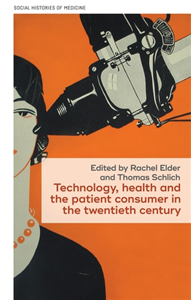
        Technology, health and the patient consumer in the twentieth century

        by Rachel Elder, Thomas Schlich

        Technology and consumerism are two characteristic phenomena in the history medicine and healthcare, yet the connections between them are rarely explored by scholars. In this edited volume, the authors address this disconnect, noting the ways in which a variety of technologies have shaped patients' roles as consumers since the early twentieth century. Chapters examine key issues, such as the changing nature of patient information and choice, patients' assessment of risk and reward, and matters of patient role and of patient demand as they relate to new and changing technologies. They simultaneously investigate how differences in access to care and in outcomes across various patient groups have been influenced by the advent of new technologies and consumer-based approaches to health. The volume spans the twentieth and twenty-first centuries, spotlights an array of medical technologies and health products, and draws on examples from across the United States and United Kingdom.

      • Trusted Partner
        Humanities & Social Sciences
        February 2025

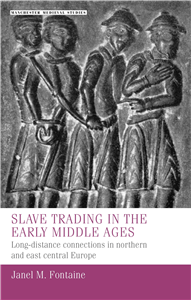
        Slave trading in the Early Middle Ages

        Long-distance connections in northern and east central Europe

        by Janel M. Fontaine

        This book examines slave trading in northern and eastern central Europe from the seventh century through the eleventh century, tracing its growth, climax, and decline. Demand from the Islamic world in the ninth and tenth centuries prompted changes in warfare, trade logistics, and administrative responses to slavery in the slaving zones centred on the British Isles and the Czech lands. This study establishes slave trading as a core driver of connectivity and presents a model for this practice in politically fragmented areas of Europe.

      • Trusted Partner
        2022

        Covid, Influenza and more

        How do I strengthen my immune system?

        by Uwe Gröber and Prof. Dr. med. Michael F. Holick

        Many patients are confused in the coronavirus crisis and ask what they can do to prevent themselves and their family from contracting the SARS-Cov-2 virus. There are now several studies that prove the influence of micronutrients such as zinc, selenium and various vitamins on the immune system and specifically on the course of viral diseases. In this brochure, successful author Uwe Gröber, pharmacist and head of the Academy for Micronutrient Medicine in Essen, has compiled his recommendations for strengthening the immune system. Here you can learn -why micronutrients may be considered for combatting the coronavirus, -how the micronutrients are dosed and applied, and -what effects micronutrients have on the immune system. This strengthens the immune system in the fight against the coronavirus!

      • Trusted Partner
        Humanities & Social Sciences
        January 2026

        Surviving repression

        The Egyptian Muslim Brotherhood after the 2013 coup

        by Lucia Ardovini

        Surviving repression tells the story of the Muslim Brotherhood following the 2013 coup d'état in Egypt. The Brotherhood gained legal recognition and quickly rose to power after the 2011 Arab uprisings, but its subsequent removal from office marked the beginning of the harshest repression of its troubled history. Forced into exile, the Brotherhood and its members are now faced with a monumental task as they rebuild this fragmented organisation. Drawing on extensive fieldwork and interviews with current and former members of the Brotherhood, the book explores this new era in the movement's history, emphasising first-hand experiences, perspectives and emotions to better understand how individual responses to repression are affecting the movement as a whole. Surviving repression offers a unique insight into the main strategic, ideological and organizational debates dividing the Brotherhood.

      Subscribe to our

      newsletter