Your Search Results

      • Books Everywhere

        Books-everywhere provides support for selling rights and co-editions to publishing houses that would like their titles to reach an international market. Books-everywhere also provides consultancy services, including market and customer research, for both publishers and individuals who are investigating international markets. Our approach is personal and focused on an in depth understanding of customer needs and our response is rapid and efficient.

        View Rights Portal
      • Thekla Verlag

        We are a publisher from Germany with a selected list of children's and young adult books.

        View Rights Portal
      • Trusted Partner
      • Trusted Partner
        Anthropology
        January 2014

        Ageing selves and everyday life in the north of England

        Years in the making

        by Cathrine Degnen

        Seeking to explore what it means to grow older in contemporary Britain from the perspective of older people themselves, this richly detailed ethnographic study engages in debates over selfhood and people's relationships with time. Based on research conducted in a former coal mining village in South Yorkshire, England, Cathrine Degnen explores how the category of 'old age' comes to be assigned and experienced in everyday life through multiple registers of interaction, including that of social memory, in a postindustrial context of great social transformation. Challenging both the notion of a homogenous relationship with time across generations and the idea of a universalised middle-aged self, Degnen argues that the complex interplay of social, cultural and physical attributes of ageing means that older people can come to have a different position in relation to time and to the self than younger people, unseating normative conventions about narrative and temporality.

      • Trusted Partner
        Anthropology
        March 2017

        Ageing selves and everyday life in the north of England

        Years in the making

        by Series edited by Alexander Smith, Cathrine Degnen

        Seeking to explore what it means to grow older in contemporary Britain from the perspective of older people themselves, this richly detailed ethnographic study engages in debates over selfhood and people's relationships with time. Based on research conducted in a former coal mining village in South Yorkshire, England, Cathrine Degnen explores how the category of 'old age' comes to be assigned and experienced in everyday life through multiple registers of interaction, including that of social memory, in a postindustrial context of great social transformation. Degnen argues that the complex interplay of social, cultural and physical attributes of ageing means that older people can come to have a different position in relation to time and to the self than younger people, unseating normative conventions about narrative and temporality.

      • Trusted Partner
      • Trusted Partner
        Humanities & Social Sciences
        January 2012

        The business of everyday life

        Gender, practice and social politics in England, c.1600–1900

        by Beverly Lemire, Pamela Sharpe, Penny Summerfield, Lynn Abrams, Cordelia Beattie, Kim Latham

        From 1600 to 1900 a growing consumerism fired the English economy, shaping the priorities of individuals, and determining the allocation of resources within families. Everyday business might mean making a trip to the pawnbroker, giving a loan to a trusted friend of selling off a coat, all to make ends meet. Both women and men engaged in this daily budgeting, but women's roles were especially important in achieving some level of comfort and avoiding penury. In some communities, the daily practices in place in the seventeenth century persisted into the twentieth, whilst other groups adopted new ways, such as using numbers to chart domestic affairs and turning to the savings banks that appeared in the nineteenth century. In the material world of the past and in the changing habits of earlier generations lie crucial turning points. This book explores these previously under-researched patterns and practices that gave shape to modern consumer society. ;

      • Trusted Partner
        Business, Economics & Law
        June 2025

        Everyday humanitarianism in Cambodia

        by Anne-Meike Fechter

      • Trusted Partner
      • Trusted Partner
        2022

        Talking to Customersin Pharmacies

        A conversation guidefor newcomers and old hands

        by Dr Kirsten Lennecke, Illustrated by Barbara Kohm

        The basis for successful advice is having a sound knowledge of the effect and application of medicines, but also an instinct for the individual needs and characteristics of the person asking for your help. This skill can be trained! Entertaining explanations and numerous case examples taken from everyday pharmacy practice help with this. They show how pharmacy staff can react empathetically, avoid misunderstandings, and manage delicate situations with confidence. The 5th edition has become more colourful! This applies not only to the illustrations, but also to the team and customers of our model pharmacy. A personality model with distinctive colours representing the different characters promises exciting insights. Good communication creates satisfied customers who want to come back again and again!

      • Trusted Partner
        Humanities & Social Sciences
        May 2020

        The politics of everyday China

        by Neil Collins, David O'Brien

      • Trusted Partner
        Literature & Literary Studies
        June 2021

        Passing into the present

        Contemporary American fiction of racial and gender passing

        by Sinead Moynihan

        This book is the first full-length study of contemporary American fiction of passing. Its takes as its point of departure the return of racial and gender passing in the 1990s in order to make claims about wider trends in contemporary American fiction. The book accounts for the return of tropes of passing in fiction by Phillip Roth, Percival Everett, Louise Erdrich, Danzy Senna, Jeffrey Eugenides and Paul Beatty, by arguing meta-critical and meta-fictional tool. These writers are attracted to the trope of passing because passing narratives have always foregrounded the notion of textuality in relation to the (il)legibility of "black" subjects passing as white. The central argument of this book, then, is that contemporary narratives of passing are concerned with articulating and unpacking an analogy between passing and authorship. The title promises to inaugurate dialogue on the relationships between passing, postmodernism and authorship in contemporary American fiction.

      • Trusted Partner
        The Arts
        September 2025

        Art as worldmaking

        Critical essays on realism and naturalism

        by Malcolm Baker, Andrew Hemingway

        Introduction : Realism and its others in the 21st century: Why Realism won't go away - Andrew Hemingway Part I: Theory 1. The figure as double agent: realism and abstraction in European post-war art - Briony Fer 2. Realism's Credibility Problem - Joshua Shannon 3. If only; only if ... - Adrian Rifkin Part II: Sculpture 4. Confronting the Veristic Sculptural Portrait - Malcolm Baker 5. Sculpture, Realism and the Neo-classical Ideal - Martina Droth 6. Elasticity and Victorian Sculptural Form - Caroline Arscott 7. Image of the People: Charles Ray's Recent Work - Anne M. Wagner Part III: Garden Design 8. Of Gardens and Persons: the English Engagement with China's Garden Design - Martin Powers 9. Traditional Views. Conservative Anti-Naturalism and Landscape Aesthetics in France around 1900 - Neil McWilliam Part IV: Painting and Photography 10. Willem Kalf on Reflexykonst and the Aesthetics of Transformation in Still Life - Celeste Brusati 11. Democratic light: phenomenology and the worldliness of painting - Brendan Prendeville 12. The Visibility of Labor - T.J. Clark 13. Body and Soul in the work of Thomas Eakins and F. Holland Day - Rebecca Zurier Part V: Photography and Conema 14. Photography as counter forensics - Steve Edwards 15. Woman, War and Social Documentary Photography in South Africa - Tamar Garb 16. Antonioni's Blow-Up (1966): photography and film - Lisa Tickner Part VI: Post-Media / Contemporary Practice 17. Peter Dreher's Everyday Realism - Alistair Rider 18. From grey and rainy Vermont - Thomas Crow 19. 'Every day, something happens to us': Realism at the crossroads - Gail Day Index

      • Trusted Partner
        Psychology

        ACT: Acceptance and Commitment Therapy

        With ACT Questionnaires for Clinical Assessment, 100 Questions

        by Paolo Moderato, Giovambattista Presti, Francesco dell’Orco

        Acceptance and Commitment Therapy (ACT) is a psychotherapeutic interven­tion based on experimental evidence. Its goal is to help people implement concrete behaviors in accordance with their values ­ even in the presence of diffcult or interfering events. The au­thors clearly describe how ACT works and provide useful guidance for clinical practice. Soon the concepts of fusion and defusion become familiar and the Hexafex a way of thinking rather than appearing as a mere scheme. Accept­ance and commitment replace refusal and renunciation: this is the innovative therapeutic challenge of ACT. This manual, enriched with metaphors and exercises that can be used in a therapeutic session, is intended for reading by specialists by tackling the themes of this approach with rigor and depth, taking the reader step by step into the heart of ACT. The appendix contains seven ACT questionnaires for clinical assessment.

      • Trusted Partner
        The Arts
        March 2017

        Images of the army

        The military in British art, 1815-1914

        by J. W. M. Hichberger

        In an age when engraving and photography were making artistic images available to a much wider public, artists were able to influence public attitudes more powerfully than ever before. This book examines works of art on military themes in relation to ruling-class ideologies about the army, war and the empire. The first part of the book is devoted to a chronological survey of battle painting, integrated with a study of contemporary military and political history. The chapters link the debate over the status and importance of battle painting to contemporary debates over the role of the army and its function at home and abroad. The second part discusses the intersection of ideologies about the army and military art, but is concerned with an examination of genre representations of soldiers. Another important theme which runs through the book is the relation of English to French military art. During the first eighty years of the period under review France was the cynosure of military artists, the school against which British critics measured their own, and the place from which innovations were imported and modified. In every generation after Waterloo battle painters visited France and often trained there. The book shows that military art, or the 'absence' of it, was one of the ways in which nationalist commentators articulated Britain's moral superiority. The final theme which underlies much of the book is the shifts which took place in the perception of heroes and hero-worship.

      • Trusted Partner
        Humanities & Social Sciences
        June 2021

        Feeling the strain

        A cultural history of stress in twentieth-century Britain

        by Jill Kirby

        Examining the popular discourse of nerves and stress, this book provides a historical account of how ordinary Britons understood, explained and coped with the pressures and strains of daily life during the twentieth century. It traces the popular, vernacular discourse of stress, illuminating not just how stress was known, but the ways in which that knowledge was produced. Taking a cultural approach, the book focuses on contemporary popular understandings, revealing continuity of ideas about work, mental health, status, gender and individual weakness, as well as the changing socio-economic contexts that enabled stress to become a ubiquitous condition of everyday life by the end of the century. With accounts from sufferers, families and colleagues it also offers insight into self-help literature, the meanings of work and changing dynamics of domestic life, delivering a complementary perspective to medical histories of stress.

      • Trusted Partner
      • Trusted Partner
      • Trusted Partner
        The Arts
        July 2025

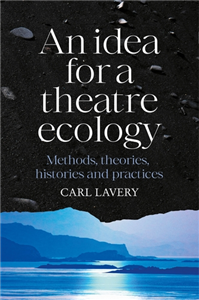
        An idea for a theatre ecology

        Methods, theories, histories and practices

        by Carl Lavery

        An Idea for a Theatre Ecology is the first book in the discipline of Theatre and Performance Studies to provide a rigorous and coherent theory of the ecology that is immanent to the theatrical medium. Over six clearly written chapters, the book provides a genealogy, outlines a method, provides a lexicon and demonstrates an alternative practice of ecoperformance analysis grounded in the figure of the archipelago. Focusing on Antonin Artaud's theatre of cruelty, the book argues that theatre has no need to provide ecological messages nor to transform itself into a platform for the narration of ecological stories. Instead, more is to be gained, environmentally and politically, by concentrating on the power of images, gestures and voices to create corporeal affects and sensations that implicate the spectators in a terrestrial event.

      • Trusted Partner
        Medicine
        August 2025

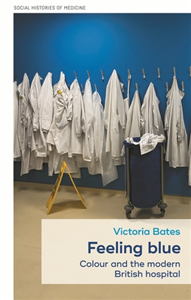
        Feeling blue

        Colour and the modern British hospital

        by Victoria Bates

        Feeling blue is the first book-length history of colour in modern hospitals. It examines colour in relation to six key themes - hygiene, emotion, humanisation, homeliness, play, consumerism - which are tied together by the idea of the 'modern' hospital. The book does not simply describe changes to the appearance of hospitals over time, but instead thinks expansively about the role of colour in shaping how hospitals felt. It uses colour to understand the layered meanings of modernity in twentieth-century Britain, and its relationship to the 'mundane' or everyday life of hospitals.

      Subscribe to our

      newsletter