
Your Search Results

-
Promoted Content

 The ArtsJune 2017
Gothic television
by Helen Wheatley
Gothic television is the first full length study of the Gothic released on British and US television. An historical account, the book combines detailed archival research with analyses of key programmes, from Mystery and Imagination and Dark Shadows, to The Woman in White and Twin Peaks, and uncovers an aspect of television drama history which has, until now, remained critically unexplored. While some have seen television as too literal or homely a medium to successfully present Gothic fictions, Gothic television argues that the genre, in its many guises, is, and has always been, well-suited to television as a domestic medium, given the genre's obsessions with haunted houses and troubled families. This book will be of interest to lecturers and students across a number of disciplines including television studies, Gothic studies, and adaptation studies, as well as to the general reader with an interest in the Gothic, and in the history of television drama.
-
Promoted Content
 Literature & Literary StudiesMay 2026
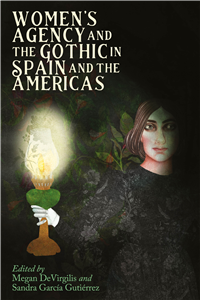
Women’s Agency and the Gothic in Spain and the Americas
by Megan DeVirgilis, Sandra García Gutiérrez
This volume has emerged to fulfill two main purposes: Primarily, to constitute the first collaborative work that traces the relationship between the Gothic and Women in Spain and the Americas, but also, to surpass the term 'Female Gothic,' coined by Ellen Moers, by transferring the focus towards women and their agency as writers, readers and characters. This volume functions as a manifesto per se to open new avenues into understanding how women have interacted with the Gothic between the nineteenth and twenty-first centuries in Spain and the Americas. The question, we determine, is not simply about identity, but rather about agency. We define women's agency as the total capacity of characters, authors and readers to act freely within a social framework in relation to gothic texts. In our exploration of authorship, we reject the claim that the Gothic is a simplistic literary genre, instead sustaining that the plasticity of the Gothic has enabled it to survive for centuries; by shifting from a genre to a mode, it has surpassed literary forms and invaded all kinds of media: from film to music and merchandise such as clothing and pop culture collectables, fostering an authentic goth fandom.
-
 Trusted Partner
 Literature & Literary StudiesJuly 2022
Nordic Gothic
by Maria Holmgren Troy, Johan Hõglund, Yvonne Leffler, Sofia Wijkmark
Nordic Gothic traces Gothic fiction in the Nordic region from its beginnings in the nineteenth century, with a main focus on the development of Gothic from the 1990s onwards in literature, film, TV and new media. The volume gives an overview of Nordic Gothic fiction in relation to transnational developments and provides a number of case studies and in-depth analyses of individual narratives. It creates an understanding of this under-researched cultural phenomenon by showing how the narratives make visible cultural anxieties haunting the Nordic countries, their welfare systems, identities and ideologies. Nordic Gothic examines how figures from Nordic folklore function as metaphorical expressions of Gothic themes and Nordic settings are explored from perspectives such as ecocriticism and postcolonialism. The book will be of interest to researchers and post- and- undergraduate students in various fields within the Humanities.
-
Trusted Partner
 The ArtsDecember 2025
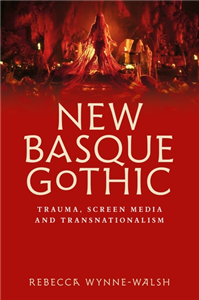
New Basque Gothic
Trauma, screen media and transnationalism
by Rebecca Wynne-Walsh
This monograph addresses the twenty-first century upsurge in Gothic screen media emanating from the Autonomous Basque Community, Euskadi, in Northern Spain. The book focuses on online video sharing, streaming and social media platforms, demonstrating the impact of multi-national co-production and distribution on the development of Basque film production; looking to the future of regional production in the digital era. This monograph fills a critical gap, presenting Basque Gothic screen media as a regionalist challenge to national models of cinema and identity. Wynne-Walsh establishes Basque Gothic as an expression of transgenerational trauma engendered by a history of state-suppression and socio-political violence. This regional iteration of the mode is addressed as a window into community perception and projection. While this project centres a Basque case study, it establishes a model for the reimagination of critical approaches to global, twenty-first century screen cultures.
-
Trusted Partner
-
Trusted Partner
 Literature & Literary StudiesSeptember 2025
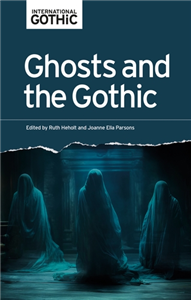
Ghosts and the Gothic
by Ruth Heholt, Joanne Ella Parsons
Ghosts have long been connected with the Gothic, but until now there has not been a book dedicated to the subject. This collection examines ghostly presences (and absences) in both classic and lesser-known Gothic texts from the beginning of the genre to the present in a global context. Arguing that the undead, in the form of ghosts, are intrinsic to the Gothic mode, essays in the collection question the place of manifested spirits. The Gothic has always been 'political', and essays in this collection examine some of the most relevant issues facing us today: from the destruction of the natural environment, to questions of 'freedom', to gender politics.
-
Trusted Partner
 Literature & Literary StudiesDecember 2025
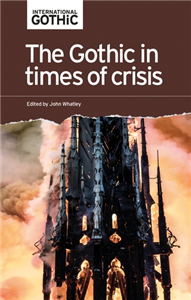
The Gothic in times of crisis
by John Whatley
The Gothic in times of crisis reflects contemporary society, showing how the Gothic modes continually resets its own forms to encompass each new reality, each new apocalypse, each new plague or crisis. This collection expands oncurrent scholarship to show how the Gothic challenges our understanding of both older and recent crises and, in turn, disturbs all genre complacencies to expose and confront the problems and contradictions in what our world has been, has become, or is in danger of becoming. This collection explores Gothic's current relevance to the contestations of ideas and the underlying and visible conflicts it dramatizes across a wide range of media. In various ways, it reveals what happens to Gothic modes now they confront the increasingly Gothic realities of our times, sometimesby recalling earlier crises and ideological contestations leading up to them.
-
Trusted Partner
 Literature & Literary StudiesMay 2023
Suicide and the Gothic
by William Hughes, Andrew Smith
Suicide and the Gothic is the first protracted study of how the act of self-destruction recurs and functions within one of the most enduring and popular forms of fiction. Comprising eleven original essays and an authoritative introduction, this collection explores how the act of suicide has been portrayed, interrogated and pathologised from the eighteenth century to the present. The featured fictions embrace both canonical and the less-studied texts and examine the crisis of suicide - a crisis that has personal, familial, religious, legal and medical implications - in European, American and Asian contexts. Featuring detailed interventions into the understanding of texts as temporally distant as Thomas Percy's Reliques and Patricia Highsmith's crime fictions, and movements as diverse as Wertherism, Romanticism and fin-de-siècle decadence, Suicide and the Gothic provides a comprehensive and compelling overview of this recurrent crisis in fiction and culture.
-
Trusted Partner
-
Trusted Partner
 Literature & Literary StudiesFebruary 2020
Nordic Gothic
by Maria Holmgren Troy, Johan Hõglund, Yvonne Leffler, Sofia Wijkmark, Jerrold Hogle
-
Trusted Partner
-
Trusted Partner
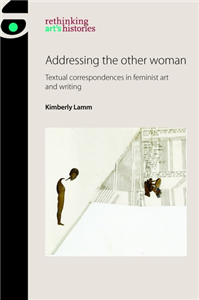 The ArtsDecember 2024
Addressing the other woman
Textual correspondences in feminist art and writing
by Kimberly Lamm
This book analyses how three artists - Adrian Piper, Nancy Spero and Mary Kelly - worked with the visual dimensions of language in the 1960s and 1970s. These artists used text and images of writing to challenge female stereotypes, addressing viewers and asking them to participate in the project of imagining women beyond familiar words and images of subordination. The book explores this dimension of their work through the concept of 'the other woman', a utopian wish to reach women and correspond with them across similarities and differences. To make the artwork's aspirations more concrete, it places the artists in correspondence with three writers - Angela Davis, Valerie Solanas, and Laura Mulvey - who also addressed the limited range of images through which women are allowed to become visible.
-
Trusted Partner
-
Trusted Partner
-
Trusted Partner
-
Trusted Partner
-
Trusted Partner
 Literature: history & criticismFebruary 2017
The Gothic and death
by Series edited by Elisabeth Bronfen. Edited by Carol Davison
The Gothic and death offers the first ever published study devoted to the subject of the Gothic and death across the centuries. It investigates how the multifarious strands of the Gothic and the concepts of death, dying, mourning and memorialisation ('the Death Question') - have intersected and been configured cross-culturally to diverse ends from the mid-eighteenth century to the present day. Drawing on recent scholarship in such fields as Gothic Studies, film theory, Women's and Gender Studies and Thanatology Studies, this interdisciplinary collection of fifteen essays by international scholars combines an attention to socio-historical and cultural contexts with a rigorous close reading of works, both classic and lesser known. This area of enquiry is considered by way of such popular and uncanny figures as corpses, ghosts, zombies and vampires, and across various cultural and literary forms such as Graveyard Poetry, Romantic poetry, Victorian literature, nineteenth-century Italian and Russian literature, Anglo-American film and television, contemporary Young Adult fiction and Bollywood film noir.
-
Trusted Partner
-
Trusted Partner
-
Trusted Partner
 The ArtsJune 2017
Contemporary Australian cinema
An introduction
by Jonathan Rayner
Provides an introduction to the products and context of the new Australian film industry which arose toward the end of the 1960s. Traces the development of Australian film, in terms of prominent directors and stars, consistent themes, styles and evolving genres. The evolution of the film genres peculiar to Australia, and the adaptation of conventional Hollywood forms (such as the musical and the road movie) are examined in detail through textual readings of landmark films. Films and trends discussed include: the period film and Picnic at Hanging Rock; the Gothic film and the Mad Max trilogy; camp and kitsch comedy and the Adventures of Pricilla, Queen of the Desert. The key issue of the revival (the definition, representation and propagation of a national image) is woven through analysis of the new Australian cinema.



