
Éditions de la Pastèque
Livres Canada Books
View Rights Portal

Pastrengo is a Milan-based literary agency founded on September 2016 by Francesco Sparacino and Michele Turazzi. Pastrengo represents Italian authors of fiction (commercial and literary, young adult) and non fiction.
View Rights Portal

This collection brings together scholars from disciplines including Children's Literature, Classics, and History to develop fresh approaches to children's culture and the uses of the past. It charts the significance of historical episodes and characters during the long nineteenth-century (1750-1914), a critical period in children's culture. Boys and girls across social classes often experienced different pasts simultaneously, for purposes of amusement and instruction. The book highlights an active and shifting market in history for children, and reveals how children were actively involved in consuming and repackaging the past: from playing with historically themed toys and games to performing in plays and pageants. Each chapter reconstructs encounters across different media, uncovering the cultural work done by particular pasts and exposing the key role of playfulness in the British historical imagination.

This book explores the psychic, cultural and political ramifications of memory within the Irish Troubles. It investigates the traumatic impact of the violence perpetrated since 1969; the antagonistic cultural narratives of memory fashioned and mobilised in this context within public and private arenas; and the conflicts, paradoxes and contradictions involved in 'coming to terms with the past' both before and during the Irish peace process initiated in 1993-94. The study focuses on personal and collective remembrance within two particular locations: the Unionist communities along the Irish Border, and nationalist Derry. It traces the formation from below of competing public narratives, one concerned with the 'ethnic cleansing' of Protestants by the Irish Republican Army, the other with British state violence on Bloody Sunday; and analyses their subjective roots in specific experiences of fear and loss, their role in ideological struggle, and their complicated relation to private, familial and individual remembering. ;
 Trusted Partner
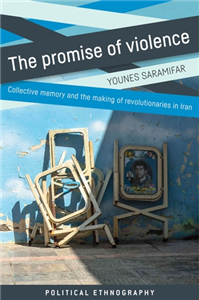
Revolutionaries in Iran choose to identify memories of the Iran-Iraq War as their 'collective' memory to mark the war era as the temporal reference in history - the time of times, or sometimes even a time beyond time. Can a sole event and its violence truly become - for some - the all-encompassing, constituting element of history and memory? This book pursues this question and follows revolutionaries in the maze of 'collective' memory to offer a temporal account of the breakdown of happenings - as well as the mending of happenings through the force of remembrance.
Trusted Partner
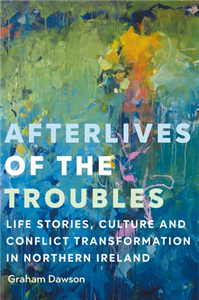
Focusing on experiential life stories across a range of forms and practices, this book investigates subjectivity, culture and the cultural politics of representation as a neglected dimension of conflict transformation in the Northern Irish peace process. Interdisciplinary critical perspectives from historical cultural studies, oral history and popular-memory theory inform close interpretive engagement with life stories in their cultural, historical and geographical contexts. This enables exploration of the complex temporal dynamics of 'post-conflict' subjectivities in the lengthening 'afterlife' of the Troubles, where feelings attached to conflict experiences are not 'past' but haunt the present, and memory-work carries future-oriented desires for truth, justice and reconciliation. Through case studies responding to the evolving peace process through this prism of life-storytelling, Afterlives maps a contested history of legacy policy-making and approaches to 'dealing with the past', from devolution in 2005-7 through to the Legacy and Reconciliation Act of 2023.
Trusted Partner


The situation in our society is precarious. The ecological shocks are omnipresent. The mere continuation of our lifestyles fixated on expansion and self-development has long since reached its limits. As if intoxicated by ourselves, we consume our world voraciously and without restraint. We need moderation and frugality that lead us out of the ecological and social dead ends and hold both the individual and Politics to account. We are by no means powerless and are perfectly capable of leading a life that offers prospects for a humane future. However, our idea of freedom needs urgent correction. For this endeavour to succeed, we need the courage to face reality and the willingness, in a spirit of solidarity, to say goodbye to a false life and join the alliance of renunciation and freedom. Then we will be free – differently and better.
Trusted Partner

 Trusted Partner

It is time to counter the numerous utopias, myths and established narratives of the future of nutrition with a fact-based scenario. This book shows where the natural limits of what is currently technologically feasible lie and how the global diversity of food cultures will ensure the survival of humanity in the future. It exposes the great promises of meat substitutes from the laboratory as well as vegan renunciation scenarios, and shows a realistic path for the future of global nutrition along the lines of the United Nations’ 17 Sustainable Development Goals.
Trusted Partner
Trusted Partner
Trusted Partner

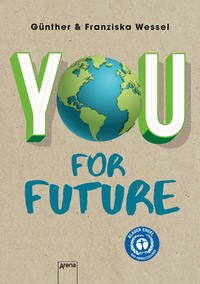
‘We will not stop demonstrating,’ writes Franziska Wessel in a guest column in the Berliner Zeitung. Franziska is pursuing a goal. Decisive measures must finally be taken to protect the climate. While that is not happening she spends every Friday on the streets, gives interviews and puts pressure on politicians. But climate change isn’t the only thing threatening our future. There is so much suffering, injustice and destruction in the world. Something must be done about it. And as a climate activist, Franziska knows exactly how to be active. Together with her father, the journalist and author, Günther Wessel, she explains: How do I start a petition? How do I organise a campaign? How does lobbying work? So that everyone knows how they can make things happen.
Trusted Partner

The dream of the ideal city is as old as the city itself. Since real cities often develop chaotically, the idea of perfecting them, even tearing them down if necessary, and rebuilding them according to the prevailing patterns of thought is an obvious one. The latest manifestation of this utopia is the smart city - the intelligent city, packed with the latest technology and extensively digitised. But will air taxis and hyperloops, ubiquitous sensors, access control systems and data-driven management really make the city of the future a better place to live? Are they the answer to the enormous challenges facing today's fast-growing metropolises? Or will the supposed administrative paradise ultimately mutate into a digital juggernaut?
Trusted Partner
 Trusted Partner
Trusted Partner
Trusted Partner
 Trusted Partner
Trusted Partner
Trusted Partner
Trusted Partner
Trusted Partner


Do you struggle with thoughts and feelings that make life difficult? Have you tried all sorts of ways of dealing with this without getting anywhere? Do you feel that life is passing you by? Acceptance and commitment therapy (ACT), which this book describes in a clear and entertaining way, provides new and very enlightening insights into the causes of human suffering. At the same time, ACT shows how we can improve the way we handle the difficult aspects of being human, while also developing our abilities and strengths. This title shows how using the described simple but effective methods can lead you to a happier, better life. Target Group: people who want to utilize their potential more fully, people interested in acceptance and commitment therapy, people practicing or interested in psychotherapy (psychologists, doctors, coaches, social workers)
Trusted Partner
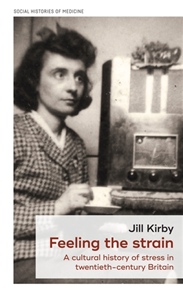
Examining the popular discourse of nerves and stress, this book provides a historical account of how ordinary Britons understood, explained and coped with the pressures and strains of daily life during the twentieth century. It traces the popular, vernacular discourse of stress, illuminating not just how stress was known, but the ways in which that knowledge was produced. Taking a cultural approach, the book focuses on contemporary popular understandings, revealing continuity of ideas about work, mental health, status, gender and individual weakness, as well as the changing socio-economic contexts that enabled stress to become a ubiquitous condition of everyday life by the end of the century. With accounts from sufferers, families and colleagues it also offers insight into self-help literature, the meanings of work and changing dynamics of domestic life, delivering a complementary perspective to medical histories of stress.
Trusted Partner
 Trusted Partner



