
Polperro Heritage Press
Polperro Heritage Press is an independent British publisher, established in 1995. Recent titles from Polperro Press have included biographies, guides and a growing list of Cornish local history titles.
View Rights Portal
Polperro Heritage Press is an independent British publisher, established in 1995. Recent titles from Polperro Press have included biographies, guides and a growing list of Cornish local history titles.
View Rights Portal
A brazilian publishing house focused on selfhelp literature, esoterism and masonry and children's books. Our mission is to offer through words moments of unwinding and tranquility attached to a philosophical and esoteric learning experience. In this special edition of the Frankfurt Book Fair we will be displaying our new releases in the children's literature section, such as The Dreamy Dragon and The crystal Egg, by the brazillian actress and writer Norma Blum.
View Rights Portal

Written by an interdisciplinary team of scholars, this authoritative text presents an engaging narrative of the way politics features in heritage conservation and management. New international case studies illustrate how notions of identity, social class and nationhood may be woven into the provision of official heritage, and how heritage may be seen to be less about upholding truth or authenticity and more about delivering political objectives. Aimed primarily at students in heritage studies and professionals in heritage industries, this book is one of three in the Understanding Global Heritage series.
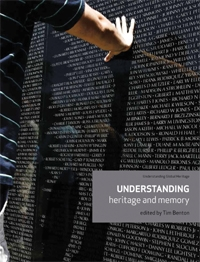
Written by an interdisciplinary team of scholars, this authoritative text explores the emotive issues surrounding the commemoration of war and atrocity, and the profound challenges for conservators posed by 'virtual', 'intangible' and 'multicultural' heritage. New international case studies demonstrate that while interest in the memorialisation of the great national upheavals of the last century has never been more acute, many of the problems of conserving the past in diverse and disparate societies remain to be resolved. Aimed primarily at students in heritage studies and professionals in heritage industries, this book is one of three in the Understanding Global Heritage series.
 Trusted Partner
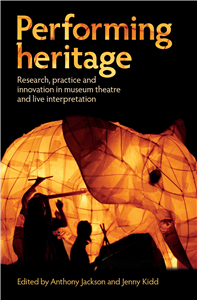
Performing Heritage is the first book to bring together the range of voices, debates and practices that constitute the fields of museum theatre and live interpretation. Inspiring and challenging in its scope and level of debate, Performing Heritage crosses the disciplines of performance and museum/heritage studies and offers remarkable and timely insights into the processes, outcomes and potential of this rich and rapidly developing practice - and in a variety of international contexts. The book productively brings together academic research and professional practice, and will be essential reading for all those interested in, and concerned with the future of, 'heritage' and its interpretation. ;
Trusted Partner

Written by an interdisciplinary team of scholars, this authoritative text explores how heritage is delivered and consumed in a global world, and the ever-increasing ways in which heritage is actively valued. New international case studies see heritage as social action, as performance, and as a vehicle for innovations in tourism, challenging the notion that only official heritage practices can successfully select and interpret our links with the past. Aimed primarily at students in heritage studies and professionals in heritage industries, this book is one of three in the Understanding Global Heritage series.
Trusted Partner
Trusted Partner
Trusted Partner
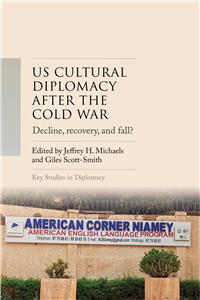
In the decades following the USSR's collapse, the US has gone from unrivalled hegemon to a position of relative decline. With America 'triumphant' after 1991, its culture, like its diplomatic, military and economic power, remained unmatched. Such favourable circumstances seemed to undercut the need for cultural diplomacy. Why should the US government sell a product that was already selling so well? After 9/11, however, it was apparent the US image was less popular than previously assumed. To reverse this negative image, cultural diplomacy was revived. Despite being beset by internal and external challenges, US officials supported various cultural initiatives and partnerships to promote the American brand globally. Along the way, cultural diplomacy has made use of new forms of expression to promote American culture and build positive foreign relations. The arrival of the second Trump administration in 2025 has clearly signalled an end to using cultural diplomacy to further causes of empowerment and diversity, making the future uncertain for this field of activity.
Trusted Partner
Trusted Partner

Contemporary French cinema is an essential introduction to popular French film of the last 35 years. It charts recent developments in all genres of French cinema with analyses of over 120 movies, from Les Valseuses to Caché. Reflecting the diversity of French film production since the New Wave, this clear and perceptive study includes chapters on the heritage film, the thriller and the war movie, alongside the 'cinéma du look', representations of sexuality, comedies, the work of women film makers and le jeune cinéma. Each chapter introduces the public reception and critical debates surrounding a given genre, interwoven with detailed accounts of relevant films. Confirmed as a major contribution to both Film Studies and French Studies, this book is a fascinating volume for students and fans of French film alike.
Trusted Partner

Contemporary French cinema is an essential introduction to popular French film of the last 35 years. It charts recent developments in all genres of French cinema with analyses of over 120 movies, from Les Valseuses to Caché. Reflecting the diversity of French film production since the New Wave, this clear and perceptive study includes chapters on the heritage film, the thriller and the war movie, alongside the 'cinéma du look', representations of sexuality, comedies, the work of women film makers and le jeune cinéma. Each chapter introduces the public reception and critical debates surrounding a given genre, interwoven with detailed accounts of relevant films. Confirmed as a major contribution to both Film Studies and French Studies, this book is a fascinating volume for students and fans of French film alike.
Trusted Partner

At the intersection of heritage, design history and contemporary art, this book offers new perspectives on the way historical interiors are encountered by, and viewed and presented for, present-day audiences. Many studies have highlighted the historical significance and meanings embedded in the landscape, architecture, decoration and objects to be found within houses and homes. But what about the social meanings of these spaces? Central to this book is the idea that in reflecting, remaking and reimagining historical interiors, the contributions of artists, designers and craftspeople should be foregrounded in constructing ideas of authenticity, transparency, and materiality in the making process. The chapters present a range of case studies that reflect upon on how historical interiors are remade and reimagined by looking in and out; at how a reassembling of spaces ought to avoid 'a shrinking definition of the social itself' (Latour, 2005). Surveying a range of interior 'types' from a number of historical periods, the book includes contributions from practitioners, scholars and makers. From digital reconstructions of a seventeenth-century Belgian constcamer to the interior and exterior worlds of specific historical figures, including Charles Rennie Mackintosh and Beatrix Potter, the book considers how these spaces have powerful significance for contemporary audiences, particularly in ways that are relatable to shared experiences of work, leisure, family, community, power and politics. This book will be of interest to scholars of the history of interiors and collections, museology, archaeology, architectural history, art, and design history, as well as curators and caretakers of historical sites, spaces and objects.
Trusted Partner
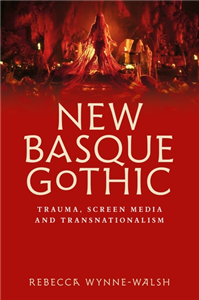
This monograph addresses the twenty-first century upsurge in Gothic screen media emanating from the Autonomous Basque Community, Euskadi, in Northern Spain. The book focuses on online video sharing, streaming and social media platforms, demonstrating the impact of multi-national co-production and distribution on the development of Basque film production; looking to the future of regional production in the digital era. This monograph fills a critical gap, presenting Basque Gothic screen media as a regionalist challenge to national models of cinema and identity. Wynne-Walsh establishes Basque Gothic as an expression of transgenerational trauma engendered by a history of state-suppression and socio-political violence. This regional iteration of the mode is addressed as a window into community perception and projection. While this project centres a Basque case study, it establishes a model for the reimagination of critical approaches to global, twenty-first century screen cultures.
Trusted Partner
Trusted Partner
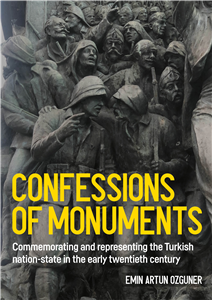
Following the dissolution of the Ottoman Empire in the early 1920s, an emerging nation state built a particular relationship with the Ottoman past. In its simultaneous disavowal and inheritance of it, this was the new Republic of Turkey, founded in 1923. Nation-states are areas of ideological contestation. However, they are equally visible and tangible. This is thanks to the making of a new world of artefacts in build or print that represent and commemorate them in many, often contradicting ways through design practices. This book offers a thorough account of this new Turkish material world through the trajectories of commemoration; from public monuments, print media, and festive illumination to temporary and permanent architecture from the onset of the 1908 Young Turk revolution to the demise of Turkey's founding single-party regime in the late 1950s. If objects are silent actors of history, their confessions await.
Trusted Partner
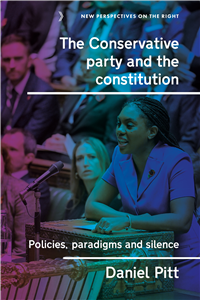
The Conservative Party and the Constitution examines the profound influence on Britain's constitutional framework over nearly two centuries. Through rigorous analysis, it traces how Tory leaders navigated parliamentary reform, devolution, and Brexit, balancing tradition with pragmatic adaptation. Drawing on exclusive interviews, archival records, and historical sources, the book reveals the Party's statecraft and offers fresh insights into the Conservatives' role in shaping modern governance. Essential for historians, political scientists, and those engaged with British politics, this study illuminates the dynamic interplay of power, ideology, and constitutional change, making it a vital contribution to understanding Britain's constitutional history.
Trusted Partner
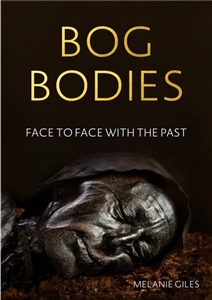
The 'bog bodies' of north-western Europe have captured the imaginations of poets and archaeologists alike, allowing us to come face-to-face with individuals from the past. Their exceptional preservation permits us to examine minute details of their lives and deaths, making us reflect poignantly on our own mortality. But, as this book argues, the bodies must be resituated within a turbulent world of endemic violence and change. Reinterpreting the latest continental research and new discoveries, and featuring a ground-breaking 'cold case' forensic study of Worsley Man, Manchester Museum's 'bog head', it brings the bogs to life through both natural history and folklore, revealing them as places that were rich and fertile yet dangerous. The book also argues that these remains do not just pose practical conservation problems but also philosophical dilemmas, compounded by the critical debate on if - and how - they should be displayed.
Trusted Partner
Streaming Privilege examines how today's serial television plays a powerful role in legitimating the 'new Gilded Age' of extreme inequality. Through a sharp cultural analysis, the book reveals popular culture's obsession with wealth and dynastic families - and how it helps to sustain economic divides. Focusing on four major series - Downton Abbey, The Crown, Succession and Yellowstone - the book explores what today's most-watched television dramas reveal about contemporary attitudes toward wealth. At the heart of the book is a concern with the intersection of family, wealth and morality. As dynastic structures once again dominate economy, stories of wealthy families offer a cultural lens through which audiences make sense of economic disparities. The book shows how television does not merely reflect inequality but actively shapes our understandings of it. Streaming Privilege is essential reading for scholars and students in media studies, cultural studies and economic sociology - as well as for general readers interested in how popular culture influences our perceptions of inequality.
Trusted Partner
 Trusted Partner
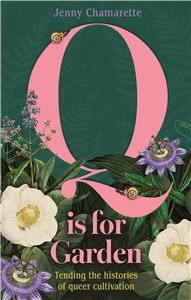
A bold, tender exploration of how queerness and nature entwine - and what happens when we step beyond the binaries that fence us in. There is a Q in garden, but you can't always see it. When Jenny Chamarette faced a devastating health crisis, they found themselves unmoored from the rules of gender, sexuality and productivity. In a small South London garden, Jenny began to imagine another way of living: porous, unruly, rooted in the lessons of soil and plant life. Gardens, like identities, are usually bounded - but what if those limits can be re-drawn? Blending memoir and cultural criticism, this book asks whether the categories we inherit - colonial, patriarchal, conventions of sexuality and gender - still serve us, or whether they confine us. From illness and recovery to queer love and ecological wonder, Q is for garden invites readers to reimagine how we inhabit land, culture and each other. An eloquent work of nature writing and queer thought, Q is for garden digs into the rich history of queer gardeners, botanists, artists and agriculturalists. It offers a hopeful vision of belonging, if we are curious enough to unearth it.
Trusted Partner

Is deafness a disability to be prevented or the uniting trait of a cultural community to be preserved? Combining the history of eugenics and genetics with deaf and disability history, this book traces how American heredity researchers moved from trying to eradicate deafness to embracing it as a valuable cultural diversity. It looks at how deafness came to be seen as a hereditary phenomenon at all, how eugenics became part of progressive reform at schools for the deaf, and how, from the 1950s on, more sociocultural approaches to disability and minority led to new cooperative projects between professionals and local signing deaf communities. Analysing the transformative effects of exchange between researchers and objects of research, this book offers new insight to changing ideas about medical ethics, reproductive rights, the meaning of scientific progress and cultural diversity.



