
Highline Verlag
Highline is a young and creative and publisher specializing in high-quality children’s books. The book series „The adventures of little Charlie“ is particularly popular among dog lovers of all ages.
View Rights Portal
Highline is a young and creative and publisher specializing in high-quality children’s books. The book series „The adventures of little Charlie“ is particularly popular among dog lovers of all ages.
View Rights Portal
Highlights for Children is a multi-media brand that has nurtured children for more than 70 years. Our books and digital products - puzzles, trade and educational - are devoted to helping children around the world become their best selves.
View Rights Portal
Knowledge Diplomacy examines particular and cultural antecedents to the development of the field; and its predominance in western thinking and critiques. Crucially, it does so not just from the perspective of scholars but also by consciously drawing on the perspectives of practitioners. The development of Knowledge Diplomacy allows for increased understanding of the role of research, innovation and higher education institutions as actors in international relations; shaping knowledge as they do. As such Knowledge Diplomacy presents a meaningful means of understanding how understanding knowledge impacts scholars, students and decisions makers as those who use knowledge in their practice.

Since the early 2000s, Turkey has shown an unprecedented interest in its diaspora. This book provides the first in-depth examination of the institutionalisation of Turkey's diaspora engagement policy since the Justice and Development Party's rise to power in 2002, the Turkish diaspora's new role as an agent of diplomatic goals, and how Turkey's growing sphere of influence affects intra-diaspora politics and diplomatic relations with Europe. The book is based on fieldwork in Turkey, France and Germany, and interviews conducted with diaspora organisation leaders and policymakers. Diasporas have become transformative for relations at the state-to-state level and blur the division between the domestic and the foreign. A case study of Turkey's diasporas is significant at a time when emigrants from Turkey form the largest Muslim community in Europe and when issues of diplomacy, migration and citizenship have become more salient than ever.
 Trusted Partner

This book focuses on current policy discourse in Higher Education, with special reference to Europe. It discusses globalisation, Lifelong Learning, the EU's Higher Education discourse, this discourse's regional ramifications and alternative practices in Higher Education from both the minority and majority worlds with their different learning traditions and epistemologies. It argues that these alternative practices could well provide the germs for the shape of a public good oriented Higher Education for the future. It theoretically expounds on important elements to consider when engaging Higher Education and communities, discussing the nature of the term 'community' itself. Special reference is accorded to the difference that lies at the core of these ever-changing communities. It then provides an analysis of an 'on the ground project' in University community engagement, before suggesting signposts for further action at the level of policy and provision. This book is relevant to United Nations Sustainable Development Goal 4, Quality education
Trusted Partner

This book analyses the international phenomenon of private peace entrepreneurs. These are private citizens with no official authority who initiate channels of communication with official representatives from the other side of a conflict in order to promote a conflict resolution process. It combines theoretical discussion with historical analysis, examining four cases from different conflicts: Norman Cousins and Suzanne Massie in the Cold War, Brendan Duddy in the Northern Ireland conflict and Uri Avnery in the Israeli-Palestinian conflict. The book defines the phenomenon, examines the resources and activities of private peace entrepreneurs and their impact on the official diplomacy, and examines the conditions under which they can play an effective role in peace-making processes. This book is relevant to United Nations Sustainable Development Goal 16, Peace, justice and strong institutions.
Trusted Partner
In the decades following the USSR's collapse, the US has gone from unrivalled hegemon to a position of relative decline. With America 'triumphant' after 1991, its culture, like its diplomatic, military and economic power, remained unmatched. Such favourable circumstances seemed to undercut the need for cultural diplomacy. Why should the US government sell a product that was already selling so well? After 9/11, however, it was apparent the US image was less popular than previously assumed. To reverse this negative image, cultural diplomacy was revived. Despite being beset by internal and external challenges, US officials supported various cultural initiatives and partnerships to promote the American brand globally. Along the way, cultural diplomacy has made use of new forms of expression to promote American culture and build positive foreign relations. The arrival of the second Trump administration in 2025 has clearly signalled an end to using cultural diplomacy to further causes of empowerment and diversity, making the future uncertain for this field of activity.
Trusted Partner
 Trusted Partner
The first comprehensive account of the public and cultural diplomacy campaigns carried out by the US in Yugoslavia during the height of the Cold War, this book examines the political role of culture in US-Yugoslav bilateral relations and the fluid links between information and propaganda. Tito allowed the US Information Agency and the State Department's cultural programmes to enter Yugoslavia, liberated from Soviet control. The exchange of intellectual and political personnel helped foster the US-Yugoslav relationship, yet it posed severe ideological challenges for both sides. By providing new insights into porous borders between freedom and coercion in Tito's regime, this book shows how public diplomacy acted as an external input for Yugoslav liberalisation and dissident movements. Using extensive archival research and interviews, Konta analyses the links between information and propaganda, and the unintended effects of propaganda beyond the control of producers and receivers.
Trusted Partner

Despite the essential role diplomatic training plays in the everyday workings of international relations, international law and in the various multilateral organisations, this practice has received little critical attention in the humanities, social and political sciences. Bringing together detailed accounts of the histories, development and contemporary practices of diplomatic training with insights from key practitioners, this edited collection places training centrally within our understanding of international relations. It argues that diplomatic training both reflects and reproduces hegemonic power relations, whilst at the same time offering opportunities to contest them, and imagine alternative futures. The book includes a substantive introduction, nine full-length chapters from a range of disciplinary and regional perspectives drawing on archival research, oral history, interviews, and ethnographic methods, and four 'interventions': reflection pieces from trainers and directors of training programmes. It offers a globe-spanning, interdisciplinary account of the politics of diplomatic training and appeals to both scholarly and practitioner audiences.
Trusted Partner
Richard Haass and Mitchell Reiss, as autonomous diplomats in the George W. Bush State Department, were able to alter US intervention in Northern Ireland and play critical roles in the post-1998 peace process. Their contributions have not been fully appreciated or understood. The restoration of Northern Ireland's power-sharing government in 2007 was made possible by State Department-led intervention in the peace process. There are few references to Northern Ireland in work examining the foreign policy legacy of the George W. Bush presidency. Moreover, the ability to control US foreign policy towards the region brought one of George W. Bush's Northern Ireland special envoys into direct diplomatic conflict with the most senior actors inside the British government. This book will uncover the extent of this fall-out and provide original accounts on how diplomatic relations between these old allies became so fraught.
Trusted Partner
Trusted Partner
 Trusted Partner
Aid for Dominance addresses the analytic weaknesses of mainstream analysis of foreign aid, which often focuses on its material dimensions. The book underscores the constitutive relationship between foreign aid as a material resource and the diplomatic discourses and practices that constitute complex bilateral relations between donor and recipient states. Written by two leading scholars of contemporary United States and Chinese foreign policies in the Global South, Aid for Dominance offers a pioneering, theoretically conscious, and empirically rich account of the two great powers' grand strategies in the global development sector. By deploying a multidisciplinary and comparative analysis, this book draws from a wide range of evidentiary materials from primary sources, including data from fieldwork interviews, government documents, local and international newspapers, speeches by high-ranking government officials and diplomats, and secondary data from scholarly publications and policy papers.
Trusted Partner
 Trusted Partner

In the first monograph to fully examine the intersecting networks of Jacobites and travellers to the continent, Filet considers how small states used official diplomacy and deployed soft power - embodied by educational academies - to achieve foreign policy goals. This work uses little-known archival materials to explain how and why certain small states secretly supported the Jacobite cause during the crucial years surrounding the 1715 rising, while others stayed out of Jacobite affairs.At the same time, the book demonstrates how early modern small states sought to cultivate good relations with Britain by attracting travellers as part of a wider trend of ensuring connections with future diplomats or politicians in case a Stuart restoration never came.This publication therefore brings together a study of Britain, small states, Jacobitism, and educational travel, in its nexus at continental academies.
Trusted Partner
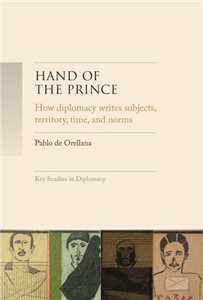
This book is dedicated to how diplomacy makes, develops, and trades in knowledge. It proposes an approach to examine how diplomatic knowledge production describes what diplomats see, how these descriptions develop, and whether they were convincing to one's own policymakers or even those of other actors. These descriptions are vital: actors can be inserted into global categories Communism or Terrorism that beget significant security, relational and policy consequences. Diplomacy and policy constitute the world we inhabit based on what policymakers made of descriptions, assessments, and analysis. Such is the power of knowing who we and the others are.
Trusted Partner

Universities have a key role to play in contributing to environmental development and combating climate change. The chapters within this volume detail the challenges faced by higher education institutions in considering environmental sustainability, and provide both a broad view of university engagement and a detailed examination of various projects. As part of this series in association with the Place and Social Capital and Learning (PASCAL) International Observatory, the three key PASCAL themes of place management, lifelong learning and the development of social capital are considered throughout the book. While universities have historically generated knowledge outside of specific local contexts, this book argues that it is particularly important for them to engage with the local community and to consider diverse perspectives and assets when looking at issues within an ecological context. The chapters in this volume provide new perspectives and frames of reference for transforming universities by engaging in the development of resilient communities.
Trusted Partner
Trusted Partner
This book focuses on current policy discourse in Higher Education, with special reference to Europe. It discusses globalisation, Lifelong Learning, the EU's Higher Education discourse, this discourse's regional ramifications and alternative practices in Higher Education from both the minority and majority worlds with their different learning traditions and epistemologies. It argues that these alternative practices could well provide the germs for the shape of a public good oriented Higher Education for the future. It theoretically expounds on important elements to consider when engaging Higher Education and communities, discussing the nature of the term 'community' itself. Special reference is accorded to the difference that lies at the core of these ever-changing communities. It then provides an analysis of an 'on the ground project' in University community engagement, before suggesting signposts for further action at the level of policy and provision.
Trusted Partner
 Trusted Partner



