Your Search Results

      • Progressive International Agencies (Pvt.) Ltd.

        We came up with an idea to boost children with low English vocabulary at a very young age, most of out books are in English language our prime topics are Numbers, Opposites, fruites and vegetables, vehicles and etc. Our main target audience are children form the age of 1-5.

        View Rights Portal
      • SPCK The Society for Promoting Christian Knowledge/InterVarsity Press (IVP) UK

        SPCK is the UK’s leading independent Christian publisher. We are known for our history and theological tradition of supporting the church with works of practical and pastoral benefit. Today we are a recognised market-leader publishing in the areas of theology and Christian spirituality and are developing into other areas. We publish leading authors such as Tom Wright, Rowan Williams, Paula Gooder, Alister McGrath, Janet Morley and Catherine Fox.   Inter-Varsity Press (IVP) publishes Christian books that are true to the Bible and that communicate the gospel, develop discipleship and strengthen the church for its mission throughout the world. We publish evangelical Christian books for the church and the world, including for academic audiences under the imprint Apollos. As a British publisher, we aim to be at the centre of the UK evangelical church's conversation with itself and with the wider world. We also seek to have a global reach and impact through worldwide distribution, licensing and partnerships.

        View Rights Portal
      • Trusted Partner
        Humanities & Social Sciences
        June 2025

        Private property and the fear of social chaos

        by Aidan Beatty

      • Trusted Partner

        Is the Brain Rational?

        The Findings of a Neuropsychologist

        by L. Jäncke

        This book takes the reader on a fascinating journey, demonstrating in an understandable and entertaining way how the brain affects our thoughts, actions, and feelings - and that this sometimes only peripherally involves reason. It shows, that the subconscious actually exists and how it affects us, how we arrive at both right and wrong decisions, how our memory works, how fragile it can be, and yet also how robust. Using insightful experiments and the latest research results, including many examples, this book presents the reader what an incredibly impressive thinking organ the brain actually is – even if it is not a purely “rational machine”.   Target Group: For people interested in the results of research into the workings of the brain in the areas of decision-making, memory, and consciousness.

      • Trusted Partner
        Humanities & Social Sciences
        July 2018

        Order and conflict

        Anthony Ascham and English political thought (1648–50)

        by Peter Lake, Marco Barducci, Anthony Milton, Jason Peacey, Alexandra Gajda

        This book provides a careful and systematic analysis of Anthony Ascham's career and writings for the first time in English. During the crucial period between the Second Civil War and the establishment of the English Republic, when he served as official pamphleteer of the Parliament and the republican government, Ascham put forward a complex argument in support of Parliament's claims for obedience which drew on the political thought of Grotius, Hobbes, Selden, Filmer and Machiavelli. He combined ideas taken from these authors and turned them into a powerful instrument of propaganda to be deployed in the service of the political agenda of his Independent patrons in Parliament. This investigation of Ascham's works brings together an intellectual analysis of his political thought and an exploration of the interaction between politics, propaganda and political ideas.

      • Trusted Partner
        Business, Economics & Law
        March 2026

        Musicians and copyright

        A history of collective rights management in the music industry

        by Véronique Pouillard, Marius Buning, Mala Loth

        Musicians and Copyright explores the role of Collective Management Organizations (CMOs) in shaping the music industry from the mid-nineteenth century to today. Edited by VéroniquePouillard, Marius Buning, and Mala Loth, the book traces the development of CMOs and their impact on copyright and cultural production. Through historical analysis, it examines the challenges CMOs have faced, from colonial contexts to European integration and the digital age, and shows how CMOs have navigated regulatory changes, technological shifts, and internal politics. Offering a detailed history of these important institutions, Musicians and Copyright is a valuable resource for anyone interested in the intersection of music, law, and the cultural industries.

      • Trusted Partner
        Humanities & Social Sciences
        September 2025

        Writing power

        Intellectuals, legitimacy, and the making of knowledge

        by Sarah Victoria Alexandra Burton

        Writing power radically rethinks the place of the canon and canonicity as objects and concepts in contemporary academia and the everyday intellectual practices of academics. It is distinctive in its demonstration of how academics' engagements with canons shape their writing practices but also how scholars' writing practices, spaces, proclivities, and desires shape the canon and changing ideas of value in canonicity. The book thinks through frequently discussed problems of legitimacy and knowledge production from fresh perspectives of lived experience and the everyday to offer new insights into the politics of knowledge in contemporary social sciences.

      • Trusted Partner
        Humanities & Social Sciences
        April 2024

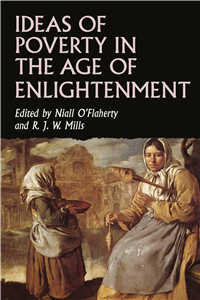
        Ideas of poverty in the Age of Enlightenment

        by Niall O’Flaherty, Robin Mills

        This collection of essays examines the ways in which poverty was conceptualised in the social, political, and religious discourses of eighteenth-century Europe. It brings together experts with a wide range of expertise to offer pathbreaking discussions of how eighteenth-century thinkers thought about the poor. Because the theme of poverty played important roles in many critical issues in European history, it was central to some of the key debates in Enlightenment political thought throughout the period, including the controversies about sovereignty and representation, public and private charity, as well as questions relating to crime and punishment. The book examines some of the most important contributions to these debates, while also ranging beyond the canonical Enlightenment thinkers, to investigate how poverty was conceptualised in the wider intellectual culture, as politicians, administrators and pamphlet writers grappled with the issue.

      • Trusted Partner
        Humanities & Social Sciences
        July 2021

        Post-everything

        An intellectual history of post-concepts

        by Herman Paul, Adriaan van Veldhuizen

        Postmodern, postcolonial and post-truth are broadly used terms. But where do they come from? When and why did the habit of interpreting the world in post-terms emerge? And who exactly were the 'post boys' responsible for this? Post-everything examines why post-Christian, post-industrial and post-bourgeois were terms that resonated, not only among academics, but also in the popular press. It delves into the historical roots of postmodern and poststructuralist, while also subjecting more recent post-constructions (posthumanist, postfeminist) to critical scrutiny. This study is the first to offer a comprehensive history of post-concepts. In tracing how these concepts found their way into a broad range of genres and disciplines, Post-everything contributes to a rapprochement between the history of the humanities and the history of the social sciences.

      • Trusted Partner
        Business, Economics & Law
        October 2020

        Design Thinking Navigator

        Kartenset zur kreativen Projektarbeit

        by Mayer, Lena; Osann, Isabell; Szymanski, Caroline; Taheri, Mana

        Design Thinking: Solve problems together, user-centered and iterative, develop innovations and have fun doing so! - Practical cards for innovation project work with change of perspective- Consistently customer-oriented and iterative- Targeted use of the maps in project planning and implementation with Design Thinking- Pragmatic, compact and wonderfully descriptive- Suitable for the most diverse questions or problems- With folding poster for targeted use of maps in project planning and decorative at the workplace- From the authors "Design Thinking Quick Start

      • Trusted Partner
        Business, Economics & Law
        October 2004

        Qualities of food

        by Mark Harvey, Andrew McMeekin, Alan Warde

        In this book, the complexity and the significance of the foods we eat are analysed from a variety of perspectives, by sociologists, economists, geographers and anthropologists. Chapters address a number of intriguing questions: how do people make judgments about taste? How do such judgments come to be shared by groups of people?; what social and organisational processes result in foods being certified as of decent or proper quality? How has dissatisfaction with the food system been expressed? What alternatives are thought to be possible? The multi-disciplinary analysis of this book explores many different answers to such questions. The first part of the book focuses on theoretical and conceptual issues, the second part considers processes of formal and informal regulation, while the third part examines social and political responses to industrialised food production and mass consumption. Qualities of food will be of interest to researchers and students in all the social science disciplines that are concerned with food, whether marketing, sociology, cultural studies, anthropology, human nutrition or economics.

      • Trusted Partner
        October 2020

        Simple Food!

        Anti the Food Frenzy in Our Minds

        by Thomas A. Vilgis

        This book follows a unique path in the ubiquitous food debate: it leads us on the trail of the origins of our food culture, from the Neolithic period to the present day. Thomas A. Vilgis has compiled a guide that combines scientific with cultural or sociological aspects. How did Stone Age man poach food? Which cereal varieties were cultivated first? What is the mysterious umami flavour all about? The cultural historical excursion gets interactive with plenty of recipes for those curious to test Kimchi with birch leaves or red cabbage in their dessert.

      • Trusted Partner
        March 2020

        No Place for Taste

        Food Myths and the Rapid Change of Food Culture

        by Manfred Kriener

        This book is not a manual but provides an information kit so we can find our way intelligently and make decisions. Nutrition is a constant talking point, but often there is a lack of knowledge and judgement. Amidst this confusion of facts, Manfred Kriener clarifies the rapid change of our food culture. He covers the entire range from the vegan trend to insect food, from aquaculture to cultured meat. Kriener also focuses on the various obscure quality seals, chaotic labelling on the wine rack and our inconsistency as consumers. The new world of food in eleven chapters, spicy at times, but plenty of food for thought and to whet the appetite.

      • Trusted Partner
        February 2005

        Mind Time

        Wie das Gehirn Bewusstsein produziert

        by Benjamin Libet, Jürgen Schröder

        Fast nichts ist uns Menschen so wichtig wie unser subjektives, bewußtes Innenleben – und doch wissen wir relativ wenig über seine Genese.Benjamin Libet gehört zu den Pionieren auf dem Gebiet der Bewußtseinsforschung und hat zahlreiche Experimente durchgeführt, die gezeigt haben, wie das Gehirn Bewußtsein produziert. In seinem 2004 erschienenen und jetzt auf deutsch vorliegenden Buch Mind Time präsentiert er erstmals eine eigene Deutung seiner berühmten »Libet-Experimente«, die die aktuelle Debatte über die Bedeutung der Hirnforschung für unser Menschenbild überhaupt erst angestoßen haben.Im Zentrum der Experimente steht der Nachweis, daß jedem bewußten Prozeß ein unbewußter, jedoch meßbarer Prozeß zeitlich vorausgeht. Diese zeitliche Differenz – die Mind Time – läßt den Schluß zu, daß unbewußte Prozesse in unserem Gehirn unser Bewußtsein steuern und nicht umgekehrt das Bewußtsein »Herr im Haus« ist. Die vermeintlichen freien Willensakte etwa sind längst initiiert, bevor uns ein Handlungswunsch überhaupt gegenwärtig ist. Libet behandelt die weitreichenden Folgen seiner Entdeckung nicht nur für die Willensfreiheit, sondern auch für die Identität der Person und die Beziehung zwischen Geist und Gehirn. Klar und verständlich dargestellt, ermöglichen Libets Experimente und Theorien es sowohl Spezialisten als auch interessierten Laien, an einem der spannendsten Forschungsprogramme dieser Tage teilzuhaben – der Erforschung des menschlichen Bewußtseins.

      • Trusted Partner
        Literature & Literary Studies
        March 2013

        The Intellectual and Cultural World of the Early Modern Inns of Court

        by Edited by Jayne Archer, Elizabeth Goldring and Sarah Knight

        This is a collection of essays on an important but overlooked aspect of early modern English life: the artistic and intellectual patronage of the Inns of Court and their influence on religion, politics, education, rhetoric, and culture from the late fifteenth through the early eighteenth centuries. This period witnessed the height of the Inns' status as educational institutions: emerging from fairly informal associations in the fourteenth century, the Inns of Court in the fifteenth and sixteenth centuries had developed sophisticated curricula for their students, leading to their description in the early seventeenth century as England's 'third university'. Some of the most influential politicians, writers, and divines - as well as lawyers - of Tudor and Stuart England passed through the Inns: men such as Edward Hall, Richard Hooker, John Webster, John Selden, Edward Coke, William Lambarde, Francis Bacon, and John Donne. This is the first interdisciplinary publication on the early modern Inns of Court, bringing together scholarship in history, art history, literature, and drama. The book is lavishly illustrated and provides a unique collection of visual sources for the architecture, art, and gardens of the early modern Inns ;

      • Trusted Partner
        2020

        Interactions between Medicines and Food

        by Prof. Dr. Martin Smollich and Dr. Julia Podlogar

        Interactions between medicines and foodstuffs may be just as clinically relevant as interactions between individual drugs. A single meal contains several hundred potentially interacting compounds that, in an individual patient, may be the deciding factor as to whether a treatment is successful or not. The resulting, sometimes serious risks are not known to most patients – nor to many physicians and pharmacists. This practical handbook enables anyone interested in applied pharmacotherapy to keep abreast of the complex field of drug interactions. The authors – proven experts in clinical pharmacology and pharmaconutrition – describe the most important interactions and give concrete recommendations for action. Tables and overviews permit fast access to potentially problematic combinations. This completely updated edition now also includes information about fruit juices and curcumin as well as a new chapter on food interactions in oncology.

      • Trusted Partner
        June 2007

        Mind Time

        Wie das Gehirn Bewusstsein produziert

        by Benjamin Libet, Jürgen Schröder, Stephen M. Kosslyn

        Fast nichts ist uns Menschen so wichtig wie unser subjektives, bewußtes Innenleben – und doch wissen wir relativ wenig über seine Genese. Benjamin Libet gehört zu den Pionieren auf dem Gebiet der Bewußtseinsforschung und hat zahlreiche Experimente durchgeführt, die gezeigt haben, wie das Gehirn Bewußtsein produziert. In »Mind Time« präsentiert er erstmals eine eigene Deutung seiner berühmten »Libet-Experimente«, die die aktuelle Debatte über die Bedeutung der Neurowissenschaften für unser Menschenbild überhaupt erst angestoßen haben. Dieses Buch gehört zu den zentralen Arbeiten der modernen Hirnforschung.

      • Trusted Partner
        Humanities & Social Sciences
        March 2026

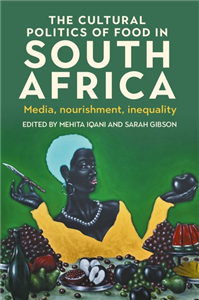
        The cultural politics of food in South Africa

        Media, nourishment, inequality

        by Mehita Iqani, Sarah Gibson

        Food is both a material system of nourishment, necessary for human survival, and a communicative system that signifies multiple meanings across human cultures. This book explores the cultural politics of food in the South African context, bringing together a range of disciplinary perspectives on the links between media, nourishment, and inequality. The chapters all highlight the multiplicity of meanings that food has in South African society. These include historical perspectives on the impact of colonialism, migration and apartheid had on food and foodways in South Africa; sociological interventions on food and society; aesthetic practices in relation to food; and mediated food cultures in South Africa. Taken together, the book critically explores the multiple ways in which food is never just food, and always linked to complex and shifting modalities of meaning and knowledge in the South African context.

      • Trusted Partner
        Humanities & Social Sciences
        July 2014

        Reforming food in post-Famine Ireland

        Medicine, science and improvement, 1845–1922

        by Ian Miller

        Reforming food in post-famine Ireland: Medicine, science and improvement, 1845-1922 is the first dedicated study of how and why Irish eating habits dramatically transformed between the famine and independence. It also investigates the simultaneous reshaping of Irish food production after the famine. Adopting an interdisciplinary approach, the book draws from the diverse methodological disciplines of medical history, history of science, cultural studies, Irish studies, gender studies and food studies. Making use of an impressive range of sources, it maps the pivotal role of food in the shaping of Irish society onto a political and social backdrop of famine, Land Wars, political turbulence, the First World War and the struggle for independence. It will be of interest to historians of medicine and science as well as historians of modern Irish social, economic, political and cultural history. ;

      • Trusted Partner
        Humanities & Social Sciences
        November 2020

        The free speech wars

        by Charlotte Lydia Riley

      Subscribe to our

      newsletter