Your Search Results

      • Dylan-Related-Books (Agentur für englishsprachige Dylan-Autoren und Literatur)

        Dylan-Related-Books is a literature agency only for books with a relation to the artist and the many different themes, which he´s able to connect with his songs. It´s about the aim to bring this special field in writing to a German readership, which might get the lyrics in a song, but have some struggle to get through a sophisticated analysis of a song. Dylan-Related-books is also a network of and for Dylan-authors and presents the new books of the Dylan-Kosmos in a series of musical readings, the ONE-MORE-CUP-OF-COFFEE-READINGS. To realize these projects, especially during the culture cutting times of Corona the agency is running a Crowdfunding-Campain which is explore on startnext.com/one-more-cup-of-coffee-reading

        View Rights Portal
      • Agriculture & International Development

        Textbooks, research and professional titles in Agriculture and International Development

        View Rights Portal
      • Trusted Partner
        Humanities & Social Sciences
        September 2019

        The genesis of international mass migration

        by Eric Richards

      • Trusted Partner
        Business, Economics & Law
        January 2026

        International organisations, non-State actors, and the formation of customary international law

        by Sufyan Droubi, Jean d'Aspremont

        This volume offers new practical and theoretical perspectives on one of the most complex questions regarding the formation of international law, namely that actors other than states contribute to the making of customary international law. Notwithstanding the International Law Commission's valuable contribution, the making of customary international law remains riddled with acute practical and theoretical controversies that continue to be intensively debated. Making extensive reference to the case-law of international law courts and tribunals, as well as the most recent scholarly work on customary international law, this volume provides a comprehensive study of the contribution of international organisations and non-state actors to the formation of customary international law. With innovative tools and guidance for law students, legal scholars, and researchers in law, as well as legal practitioners, advisers, judges, arbitrators, and counsels, this collection is essential reading for those wishing to understand and address contemporary questions of international law-making.

      • Trusted Partner
        Humanities & Social Sciences
        November 2024

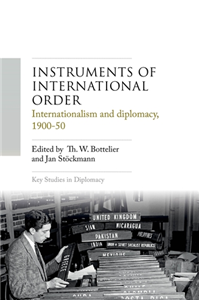
        Instruments of international order

        Internationalism and diplomacy, 1900-50

        by Thomas W. Bottelier, Jan Stöckmann

        During the first half of the twentieth century, world politics was reshaped in pursuit of a new international order. The ideological foundations of the 'new diplomacy' (and its fate during the interwar period) are well known. This book instead examines the practices of internationalism and diplomacy from the First Hague Conference of 1899 to the aftermath of the Second World War. By focusing on these practices, such as disarmament regimes or public diplomacy, and their use as instruments to build international order(s), it emphasises the constructed, contested, and experimental character of what subsequently became a standard repertoire of international politics. Essays from a range of interdisciplinary scholars address well-established principles such as self-determination, and also less prominent practices such as small arms control or parliamentary inquiry. The book makes a major contribution to the growing historiography on twentieth-century internationalism.

      • Trusted Partner
        Humanities & Social Sciences
        June 2026

        Instruments of international order

        Internationalism and diplomacy, 1900-50

        by Th. W. Bottelier, Jan Stöckmann

        During the first half of the twentieth century, world politics was reshaped in pursuit of a new international order. The ideological foundations of the 'new diplomacy' (and its fate during the interwar period) are well known. This book instead examines the practices of internationalism and diplomacy from the First Hague Conference of 1899 to the aftermath of the Second World War. By focusing on these practices, such as disarmament regimes or public diplomacy, and their use as instruments to build international order(s), it emphasises the constructed, contested, and experimental character of what subsequently became a standard repertoire of international politics. Essays from a range of interdisciplinary scholars address well-established principles such as self-determination, and also less prominent practices such as small arms control or parliamentary inquiry. The book makes a major contribution to the growing historiography on twentieth-century internationalism.

      • Trusted Partner
        Humanities & Social Sciences
        July 2016

        Romantic narratives in international politics

        by Alexander Spencer

      • Trusted Partner
        Business, Economics & Law
        May 2025

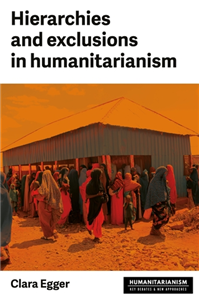
        Hierarchies and exclusion in humanitarianism

        by Clara Egger, Andrea Schneiker

        While humanitarians generally present themselves as 'do-gooders' and use this image to gather support and funding, this edited volume addresses hierarchies and exclusions in humanitarianism - an issue that has gained increased attention. Contributions analyse how hierarchies, power asymmetries and exclusion emerge, are maintained and can ultimately be challenged in humanitarian governance. Leading scholars on humanitarianism coming from a variety of disciplinary fields such as international relations, philosophy, organisational science and management, and sociology analyse exclusion dynamics at the individual, organisational and structural levels. Authors thereby combine data from a diverse range of methods, including ethnography, survey and statistical analysis. The volume informs current efforts to increase inclusiveness and equity in humanitarian practice.

      • Trusted Partner
        Business, Economics & Law
        January 2026

        Latin America and international investment law

        A mosaic of resistance

        by Sufyan Droubi, Cecilia Juliana Flores Elizondo

        Latin America has been a complex laboratory for the development of international investment law. While some governments and non-state actors have remained true to the Latin American tradition of resistance towards the international investment law regime, other governments and actors have sought to accommodate said regime in the region. Consequently, a profusion of theories and doctrines, too often embedded in clashing narratives, has emerged. In Latin America, the practice of international investment law is the vivid amalgamation of the practice of governments sometimes resisting and sometimes welcoming mainstream approaches; the practice of lawyers assisting foreign investors from outside and within the region; and the practice of civil society, indigenous peoples and other actors in their struggle for human rights and sustainable development. Latin America and international investment law describes the complex roles that governments have played vis-à-vis foreign investors and investments; the refreshing but clashing forces that international organizations, corporations, civil society, and indigenous peoples have brought to the field; and the contribution that Latin America has made to the development of the theory and practice of international investment law, notably in fields in which the Latin American experience has been traumatic: human rights and sustainable development. Latin American scholars have been contributing to the theory of international investment law for over a century; resting on the shoulders of true giants, this volume aims at pushing this contribution a little further.

      • Trusted Partner
      • Trusted Partner
      • Trusted Partner
        Humanities & Social Sciences
        February 2026

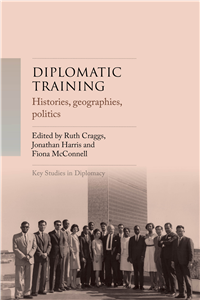
        Diplomatic training

        Histories, geographies, politics

        by Ruth Craggs, Jonathan Harris, Fiona McConnell

        Despite the essential role diplomatic training plays in the everyday workings of international relations, international law and in the various multilateral organisations, this practice has received little critical attention in the humanities, social and political sciences. Bringing together detailed accounts of the histories, development and contemporary practices of diplomatic training with insights from key practitioners, this edited collection places training centrally within our understanding of international relations. It argues that diplomatic training both reflects and reproduces hegemonic power relations, whilst at the same time offering opportunities to contest them, and imagine alternative futures. The book includes a substantive introduction, nine full-length chapters from a range of disciplinary and regional perspectives drawing on archival research, oral history, interviews, and ethnographic methods, and four 'interventions': reflection pieces from trainers and directors of training programmes. It offers a globe-spanning, interdisciplinary account of the politics of diplomatic training and appeals to both scholarly and practitioner audiences.

      • Trusted Partner
        Humanities & Social Sciences
        April 2024

        Divided Isles

        Solomon Islands and the China Switch

        by Edward Acton Cavanough

        In 2019, Solomon Islands made international headlines when the country severed its decades-old alliance with Taiwan in exchange for a partnership with Beijing. The decision prompted international condemnation and terrified Australian security experts, who feared Australia's historical Pacific advantage would come unstuck. This development is often framed as another example of China's inevitable capture of the region - but this misrepresents how and why the decision was made, and how Solomon Islanders have skilfully leveraged global angst over China to achieve extraordinary gains. Despite Solomon Islands' importance to Australia, local readers know little about the country, a fragile island-nation stretching over a thousand islands and speaking seventy indigenous languages. In Divided Isles, Edward Cavanough explains how the switch played out on the ground and its extraordinary potential consequences. He speaks with the dissidents and politicians who shape Solomon Islands' politics, and to the ordinary people whose lives have been upended by a decision that has changed the country - and the region - forever.

      • Trusted Partner
        Humanities & Social Sciences
        March 2026

        Artificial Intelligence and international security

        Redefining arms races and contemporary warfare

        by Arshin Adib-Moghaddam, Alena Vieira, Mohammad Eslami

        As artificial intelligence continues to transform modern warfare, the rapid development of AI-driven weaponry presents profound ethical, legal, and security challenges. Artificial Intelligence and International Security: Redefining Arms Races and Contemporary Warfare offers a critical examination of this emerging arms race, exploring issues of arms control, international law, diplomacy, and long-term security. Bringing together expert perspectives, this volume assesses the risks and implications of autonomous weapon systems while proposing solutions to ensure ethical AI deployment. Through a comprehensive analysis of this urgent issue, it seeks to contribute to global debates and inform policies that foster peace, stability, and the responsible use of AI in warfare.

      • Trusted Partner
        Humanities & Social Sciences
        July 2025

        International Relations in a multipolar Middle East

        by Francesco Belcastro, Edward Wastnidge

        This volume explores the international relations of today's Middle East, a region that has become increasingly multi-polar. The tumult following the Arab Uprisings has expanded the arenas competed over by regional powers, global actors and non-state players. The United States, once seemingly intent on a hegemonic 'Pax Americana' has stepped back, leaving powers such as Russia, China, India and the EU, with opportunities to increase their reach and expand their influence. Meanwhile, regional rivalries and alliances have continued to shape conflict and cooperation in the Middle East. As global politics moves towards a new, multipolar era, this volume sheds important light on how this transition will impact on the region. Comprised of two macro sections that offer theoretical reflections and empirical case studies, this volume is essential reading for scholars of the politics and international relations of the Middle East.

      • Trusted Partner
      • Trusted Partner
        Humanities & Social Sciences
        December 2009

        Managing EU-US relations

        Actors, institutions and the new translatlantic agenda

        by Rebecca Steffenson

        This book examines developments in EU-US political and economic relations in the 1990s. It contributes to the existing literature by combining knowledge about actors and institutions to outline the transatlantic decision-making process. It focuses not only on how states co-operate but how they effectively govern the transatlantic marketplace and the international political order through transatlantic institutions. Studying transatlantic governance enables us to understand not only how domestic, or EU level, decision-making structures affect transatlantic decisions but also how transatlantic decisions affect domestic institutions. In short, employing decision-making structures as an analytical approach helps us identify who governs and how, and who or what determines policy outcomes. This book is the result of a comprehensive research project and it includes detailed case studies on EU-US efforts to fight people-trafficking, EU-US regulatory co-operation in the form of Mutual Recognition Agreements and the transatlantic trade dispute over bananas. The book is aimed at anyone with an interest in what transatlantic relations entail outside the confines of NATO security. ;

      • Trusted Partner
        Humanities & Social Sciences
        September 2023

        International law in Europe, 700–1200

        by Jenny Benham

        Was there international law in the Middle Ages? Using treaties as its main source, this book examines the extent to which such a system of rules was known and followed in the period 700 to 1200. It considers how consistently international legal rules were obeyed, whether there was a reliance on justification of action and whether the system had the capacity to resolve disputed questions of fact and law. The book further sheds light on issues such as compliance, enforcement, deterrence, authority and jurisdiction, challenging traditional ideas over their role and function in the history of international law. International law in Europe, 700-1200 will appeal to students and scholars of medieval Europe, international law and its history, as well as those with a more general interest in warfare, diplomacy and international relations.

      • Trusted Partner
      • Trusted Partner

      Subscribe to our

      newsletter