
Phileas Fogg Agency
Agency representing picture books projects, Foreign rights for publishers of picture books, representation of portfolios, contract consultancies.
View Rights Portal
Agency representing picture books projects, Foreign rights for publishers of picture books, representation of portfolios, contract consultancies.
View Rights Portal
The University of the Philippines Press (or the U.P. Press) is the official publishing house for all constituent units of the U.P. system, and is the first university press in the country. It is mandated to encourage, publish, and disseminate scholarly, creative, and scientific works that represent distinct contributions to knowledge in various academic disciplines, which commercial publishers would not ordinarily undertake to publish.
View Rights Portal

Looking at contemporary film and television, this book explores how popular genres frame our understanding of on-screen performance. Previous studies of screen performance have tended to fix upon star actors, directors, or programme makers, or they have concentrated upon particular training and acting styles. Moving outside of these confines, this book provides a truly interdisciplinary account of performance in film and television and examines a much neglected area in our understanding of how popular genres and performance intersect on screen. Each chapter concentrates upon a particular genre or draws upon generic case studies in examining the significance of screen performance. Individual chapters examine contemporary film noir, horror, the biopic, drama-documentary, the western, science fiction, comedy performance in 'spoof news' programmes and the television 'sit com' and popular Bollywood films.
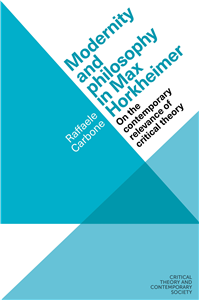
This book shows that Max Horkheimer's program of critical theory and his research throughout his career as a university professor and thinker are rooted in the cogency of philosophical questions and an in-depth knowledge of the historical development of philosophical problems in their close correlation with the socio-economic framework which shaped the 'bourgeois society' and the Modern Era. Indeed, his analyses of modern philosophers allows us to understand how the bourgeoisie seeks legitimisation and consolidation of its position, partly through the voices of its thinkers. In this way, in his investigation of early modern philosophy problems, and through constant dialogue with his colleagues Adorno, Marcuse, Pollock and Fromm, Horkheimer expresses a profound awareness of the critical force inherent in thought which, admittedly, is ever vulnerable to crisis and weakening, but which can always be reactivated.
 Trusted Partner
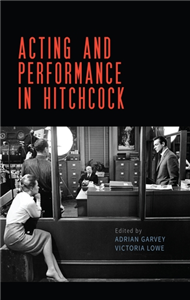
Hitchcock's professed disdain for actors is belied by the extraordinary range and depth of performances featured in his films. It might even be argued that many stars gave their richest and most complex performances in his work. Hitchcock's films are also imbued with the theme of performance, as when his fugitive men and errant women assume fragile new identities and move between roles. Actors and other performers also often feature as characters. However, the exhaustive academic literature on Hitchcock has to date produced surprisingly little work about acting and performance in his films. The collection includes contributions from a range of leading scholars on Hitchcock, performance, stardom, and British Cinema, including Charles Barr, David Greven, Mark Glancy, Lucy Bolton, Lawrence Napper and Michael Williams, and an interview with leading composers/accompanists Neil Brand and Stephen Horne on scoring performance in Silent Hitchcock.
Trusted Partner

This electronic version has been made available under a Creative Commons (BY-NC-ND) open access license. This book is about science in theatre and performance. It explores how theatre and performance engage with emerging scientific themes from artificial intelligence to genetics and climate change. The book covers a wide range of performance forms from Broadway musicals to educational theatre, from Somali drama to grime videos. It features work by pioneering companies including Gob Squad, Headlong Theatre and Theatre of Debate as well as offering fresh analysis of global blockbusters such as Wicked and Urinetown. The book offers detailed description and analysis of theatre and performance practices as well as broader commentary on the politics of theatre as public engagement with science. Science in performance is essential reading for researchers, students and practitioners working between science and the arts within fields such as theatre and performance studies, science communication, interdisciplinary arts and health humanities.
Trusted Partner
In fresh readings of Theodor W. Adorno, Giorgio Agamben, Hannah Arendt, Judith Butler, Barbara Cassin, Michel Foucault, Werner Hamacher, Martin Heidegger, and many more, Gotman rearticulates the foundations of broadly western philosophical thinking to carve out a shadowy space of recalcitrant thought 'in dark times'. At once indebted to the legacy of critique and enmeshed in affective and performative approaches to language, anti-theatricality, critical race theory and gender studies, she weaves a poetic mesh of intimate fragments, reflections on what it means to think and to write, as she puts it, after spectacle. Almost but not quite a straight work of philosophy, distinctly literary and performative in its anti-genre, this book twists and turns, swerves and cuts, to show the work of thinking as an intimate act - a theatre of angles and openings, adjacencies and reverberations.
Trusted Partner
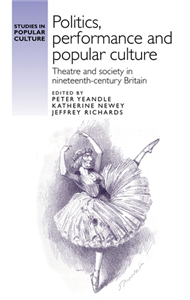
This collection brings together studies of popular performance and politics across the nineteenth century, offering a fresh perspective from an archivally grounded research base. It works with the concept that politics is performative and performance is political. The book is organised into three parts in dialogue regarding specific approaches to popular performance and politics. Part I offers a series of conceptual studies using popular culture as an analytical category for social and political history. Part II explores the ways that performance represents and constructs contemporary ideologies of race, nation and empire. Part III investigates the performance techniques of specific politicians - including Robert Peel, Keir Hardie and Henry Hyndman - and analyses the performative elements of collective movements.
Trusted Partner
 Trusted Partner
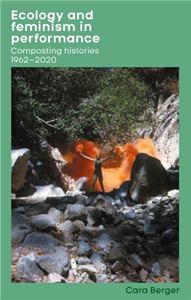
This book provides a vital new history of feminist performance through an ecological lens. It argues that from the 1960s to the present, artists have used performance to challenge the linked oppression of women and nature. Proposing 'composting' as a new method for writing feminist history, the study moves beyond linear narratives to trace regenerative connections between generations of practitioners. It provides sustained analysis of genres from land art to postdramatic theatre, re-evaluating the work of canonical figures while examining how contemporary artists continue to address these urgent themes. By placing ecofeminism in dialogue with feminist new materialism, queer ecology, and transecological thought, this study demonstrates how performance has been a crucial site for imagining more just and sustainable futures in an age of environmental crisis.
Trusted Partner
 Trusted Partner


— Philosophy for beginners — For philosophy enthusiasts — A pleasant read This truly brilliant book tells of the sometimes sublime, sometimes exhilarating efforts of philosophers to maintain their attitude in everyday life without forgetting the meaning of their own words – and how they ultimately failed to do so. The minor, sometimes bizarre events in the lives of the great philosophers fit so aptly in the picture of the respective philosophy that one has to assume they could have been conceived to keep the associated intellectual giant in a strange and memorable mood. A book of cheerful science, full of wit, narrative and linguistic eloquence.
Trusted Partner
Trusted Partner
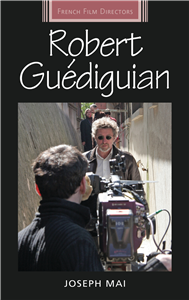
Intervening at the crossroads of philosophy, politics, and cinema, this book argues that the career of Robert Guédiguian is the result of one of the most original and coherent projects in contemporary French cinema: to make a committed, historically-conscious cinema, in a local space, over a long period of time, but most especially with friends. The account starts with in-depth consideration of friendship and its relation to philosophy, politics, time, and space. The book chronologically traces this project as it begins in Guédiguian's hometown, the Communist-leaning Marseille. It further unfolds through the political transformations of the 1980s Left and the local activism and utopias of the 1990s, and spreads into Guédiguian's varied explorations of genre and register. Close analysis is accompanied with historical and social contextualization, but also with a consistent return to the underlying, radical and philosophically rich project.
Trusted Partner
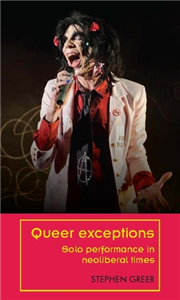
Queer exceptions is a study of contemporary solo performance in the UK and Western Europe that explores the contentious relationship between identity, individuality and neoliberalism. With diverse case studies featuring the work of La Ribot, David Hoyle, Oreet Ashery, Bridget Christie, Tanja Ostojic, Adrian Howells and Nassim Soleimanpour, the book examines the role of singular or 'exceptional' subjects in constructing and challenging assumed notions of communal sociability and togetherness, while drawing fresh insight from the fields of sociology, gender studies and political philosophy to reconsider theatre's attachment to singular lives and experiences. Framed by a detailed exploration of arts festivals as encapsulating the material, entrepreneurial circumstances of contemporary performance-making, this is the first major critical study of solo work since the millennium.
Trusted Partner
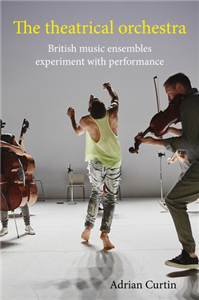
The Theatrical Orchestra analyses experimental performances by British music ensembles in the twenty-first century. Orchestras are reconceiving how concerts are programmed and presented, how musicians perform, where performance can occur, and the role of the audience in the co-creation of the live event. They are embracing theatricality, thereby realising music more fully as a multi-sensory performance art. This book explains how and why orchestras are thinking theatrically about performance, and uses the work of British music ensembles as exemplars. It analyses performances by Aurora Orchestra, London Contemporary Orchestra, London Sinfonietta, Manchester Collective, Multi-Story Orchestra, Paraorchestra, Scottish Ensemble, and Southbank Sinfonia. The book bridges musicology and theatre studies to analyse the theatrical orchestra on the concert stage and beyond, addressing such topics as visuality, storytelling, physical performance, site-engaged performance, and immersive performance.
Trusted Partner
The first in a new annual series, Women, Theatre and Performance that will consist of themed volumes on diverse aspects of women's engagement with theatre and performance. Ranging across three hundred years the essays in this volume address key questions in women's theatre history and retrieve a number of hitherto 'hidden' histories of women performers. Resituates women's, largely neglected, creative contribution within theatre and cultural history and seeks to challenge orthodox readings of both history and text. Topics include: Susanna Centlivre and the notion of intertheatricality; gender and theatrical space; the repositioning of women performers such as Wagner's Muse, Willhelmina Schröder-Devrient, the Comédie Français' 'Mademoiselle Mars', Mme Arnould-Plessey, and the actresses of the Russian serf theatre. ;
Trusted Partner
Each chapter in this important critical reader tackles the theory and practice of modern performance work, and enables students and teachers to see what is at stake in analysing dance, drama, music and videos using contemporary critical theories. Including Elizabeth Wright on psychoanalysis, Baz Kershaw on the politics of performance, Jatinder Verma on multiculturalism, E. Ann Kaplan on MTV and video, Lizabeth Goodman on feminism and AIDS, Stephen Connor on postmodernism and many others. ;
Trusted Partner
This volume analyses major French plays of the 1830s, focusing on their theatricality, and on the ways in which they expose the workings of the theatre rather than conceal them. Through an examination of performance within these plays, the study posits that the stage is a privileged site of demonstration, a literal 'proving ground' that lends a physical reality to abstract values announced in the text and shared or questioned by the audience. Negotiating between the literary study of drama and performance theory, this work breaks new ground in nineteenth-century theatre scholarship while proposing a fresh direction in the study of text and performance. The limits of performance 'challenges conventional wisdom', offering 'a novel take on the mal du siècle, that thematic hardy perennial of French Romanticism and the nineteenth century in general', combined with 'eminently readable and, therefore, compelling' analysis of plays - 'a thought-provoking addition to work in the field' (Glyn Hambrook, Modern and Contemporary France, November 2008). ;
Trusted Partner
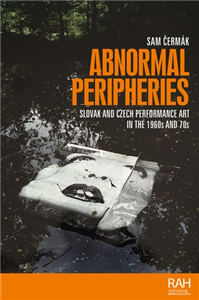
This book traces an early history of performance art from the former Czechoslovakia, which emerged in the 1960s and 1970s in the context of the Prague Spring and the subsequent policy of Normalization that brought on cultural censorship, prosecution, and state violence against artists. The book draws on Czech and Slovak scholarship as well as primary research in archives, interviews, and fieldwork to dispel misreadings of visual and cultural idioms in pre-existing Anglophone scholarship about the region. Although the former Soviet Bloc is often equated with repression and lack of experimental art in public spaces, performance artists within the former Socialist Czechoslovakia often used public, semi-public and clandestine spheres to create their performances. By analysing both works of established artists such as Aktual, Alex Mlynárcik, Petr Stembera, Jan Mlcoch, as well as under-theorised practitioners including Luba Lauffová, Karel Miler, Temporary Society of Intense Living, and Crusaders School of Pure Humour with no Joke, this book analyses how performance can survive and sometimes even thrive on the background of a politically oppressive regime. Cermak tells a unique story of localised resistance to a monolithic public sphere through artistic intervention, a closely knit community, artistic exchange, and agonistic reframing of socialism as a philosophy rather than state ideology.
Trusted Partner
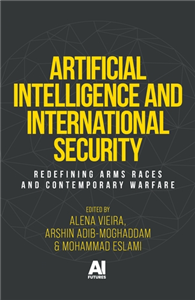
As artificial intelligence continues to transform modern warfare, the rapid development of AI-driven weaponry presents profound ethical, legal, and security challenges. Artificial Intelligence and International Security: Redefining Arms Races and Contemporary Warfare offers a critical examination of this emerging arms race, exploring issues of arms control, international law, diplomacy, and long-term security. Bringing together expert perspectives, this volume assesses the risks and implications of autonomous weapon systems while proposing solutions to ensure ethical AI deployment. Through a comprehensive analysis of this urgent issue, it seeks to contribute to global debates and inform policies that foster peace, stability, and the responsible use of AI in warfare.
Trusted Partner

This book offers insights into some of the digital innovations, structural adaptations and analogue solutions that enabled live performance in the UK to survive through the COVID-19 pandemic. It provides evidence of values-led policies and practices that have improved the wellbeing of the creative workforce and have increased access to live performance. Through sections that address digital innovations, workforce resilience and programming live performances outdoors and in community settings, this book provides practical insights into the challenges live performance faced during the pandemic. It shows how, in order to survive, individuals and companies within the sector drew on the creativity and resourcefulness of its workforce, and on new and existing networks. In these accounts, the pandemic functioned as catalyst for technological innovations, stock-taking regarding exploitative industry structures, and a re-valuing of the role of live performance for community-building.


