Your Search Results

      • Trusted Partner
        2022

        Pharmacology for Midwives

        Principles, theory and practice

        by Dr. Philipp Kircher, Elisabeth Remplik and Dr. Peter Killian

        Midwives use drugs on their own authority, or guide and support pregnant and breastfeeding women in their therapy. At the same time, the giving of drugs during pregnancy and lactation frequently entails a balancing act between medical need and experience on the one hand and often the absence of studies with evidence of harmlessness and safety on the other. Anyone who wants to make the correct decisions and deal responsibly with this dilemma can only do so on the basis of solid knowledge. This new reference book provides ideal preparation and imparts the necessary information: - General advice on the handling of drugs and the principles of pharmacology - Description of common drug substances and particular aspects of their use in pregnancy, childbirth and lactation - Treatment options from complementary medicine and phytotherapy - Advice about correct diet The clear and concise presentation of facts as well as numerous illustrations make it easier to understand and grasp the content. Text boxes highlight important elements or refer the reader to interesting additional information: The textbook and reference work for students, practical training and everyday work!

      • Trusted Partner
        2020

        Mutschler’s Drug Actions

        Pharmacology – Clinical Pharmacology – Toxicology

        by Prof. Dr. Dr. Gerd Geisslinger, Dr. Sabine Menzel, Prof. Dr. Thomas Gudermann, Prof. Dr. Burkhard Hinz and Prof. Dr. Peter Ruth. Founded by Prof. Dr. Dr. Dres. h.c. Ernst Mutschler

        For half a century, “Mutschler” has been the standard reference work on pharmacology and toxicology – always forward-looking and at the cutting edge. The 11th edition continues this approach: ■ Up-to-the-minute: new drugs, including biologicals, relevant guidelines in the context of evidence-based medicine ■ Clearly structured: completely new layout with the focus on indication-related pharmacotherapy; uniformly constructed concise chapters ■ Well-illustrated: with many figures and tables, completely revised ■ Easy to remember: readily understandable explanations – even of complex issues ■ Critical: objective, independent assessment of the clinical value of drugs and drug groups ■ Comprehensive: with short introductions into the principles of anatomy, physiology and pathophysiology in the individual chapters ■ Reliable: full coverage of the subjects usually tested in the medical and pharmaceutical state examinations   The proven source for complete knowledge about the actions of drugs: for students and practitioners.

      • Trusted Partner
        Health & Personal Development

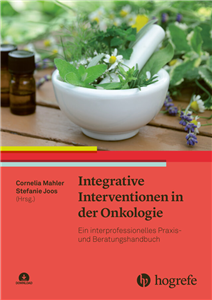
        Integrative Interventions in Oncology

        An Interprofessional Practice and Counselling Manual

        by Cornelia Mahler / Stefanie Joos (Eds.)

        Relief for body and mind – this handbook brings together proven, non-pharmacological interventions to support people living with cancer. From phytotherapy to compresses and lifestyle advice, it offers evidence-based tools for managing 21 symptoms and includes 88 illustrated “Infozepte” to guide patient care and communication. • Integrative treatments from acupressure to herbal teas • Practical support for 21 cancer-related symptoms • 88 illustrated guides for patient counseling and care

      • Trusted Partner
        2020

        OTC Questions: Contraception

        Pill, ring, condoms and more

        by Cornelia Schweizer

        Does the coil interfere with MRI? Is a latex allergy the reason for condom intolerance? Does the contraceptive patch stay on whilst swimming? The subject of contraception raises far more questions in the pharmacy than those about the price of a particular contraceptive pill. This book brings together questions from customers about the basic principles, problems and risks of the different methods of contraception: ■ Natural family planning ■ Barrier methods ■ Intrauterine devices (IUD) ■ Hormonal contraceptives ■ Morning after pill (emergency pill) With the aid of patient- and customer-friendly formulated answers and a clarification of the pharmacological and medical background, all questions about the pill, ring, condoms and more can be faced without any problems!

      • Trusted Partner
        April 2025

        Morning-After Pill

        Emergency contraception advice

        by Maren Kelm

        Missed a pill, broken condom or unprotected sex – when every minute counts, swift action is essential! Since 2015, women in Germany have been able to go directly to the pharmacy – saving valuable time otherwise spent visiting a doctor. This guide equips pharmacy staff with the essential knowledge to provide safe, informed support during sensitive consultations: • Background and key facts: legal, physiological, and pharmacological information on emergency contraception • Counselling support: decision-making flowcharts, communication tips and FAQs • Case examples: guidance for borderline situations • Tools and aids: QMS info, check-list and Federal Pharmacy Chamber (BAK) guidelines, English-language tips and useful contacts Now in its second, updated edition, this guide is an essential everyday resource for pharmacy staff providing emergency contraception advice. Target group: Pharmacists, pharmaceutical technicians, pharmacy interns

      • Trusted Partner
        2021

        Psychotropic Drugs in General Practice

        How to recognise, understand and treat patients successfully

        by PD Dr. Daniel Schüpbach and Dr. Otto Dietmaier

        The purpose of this book is to support general practitioners in finding the optimum, guideline-compliant therapy for their patients. The focus is on the clinical pictures of depression, psychosis as well as anxiety and sleep disorders and the handling of psychiatric emergencies. The reader will learn everything about the epidemiology, aetiology, diagnosis and medical treatment of these diseases, about switching therapy and about treatment in pregnancy and lactation. All the available psychotropic drugs and their pharmacological properties are described in detail – including key specific features of active substances and drug safety aspects. The table of substances in the appendix provides a clear summary of the information and simplifies the choice of the appropriate drug. The extras: - 13 factsheets with concise, summarised information to cope with tricky situations in the practice - The authors take the current treatment guidelines from Germany, Austria and Switzerland into account and name examples of proprietary medicinal products in the three countries.

      • Trusted Partner
        2023

        Drug Products in Nursing and Care Practice

        Safe handling of medication

        by Dr. Ulrich Räth and Friedhelm Kamann

        The assessment of nursing and care needs and the organisation and quality assurance of nursing care are key tasks performed by nursing staff. This also includes administering medication, something which requires sound organisation, control, implementation and documentation. Nurses observe whether medication is taken consistently, has the desired effect, and whether undesirable side effects occur. The drug product as a „special commodity“ – whether in inpatient long-term care, in outpatient care, or in hospital – requires special knowledge concerning - correct storage, - the pharmacological effect, and - appropriate application. This book is geared towards the diseases and symptoms of people requiring nursing or care. All the important facts concerning the use of medicines are presented here in an understandable manner, focusing on the essentials. Numerous illustrations and practical tips provide the link to everyday nursing care. It is the ideal textbook and reference work for nursing and care assistants as well as nursing professionals.

      • Trusted Partner
      • Trusted Partner
        Humanities & Social Sciences
        March 2017

        Materials and medicine

        by Pratik Chakrabarti

      • Trusted Partner
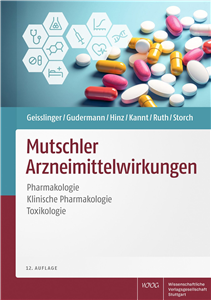
        October 2025

        Mutschler’s Drug Actions

        Pharmacology – clinical pharmacology – toxicology

        by Gerd Geisslinger, Thomas Gudermann, Burkhard Hinz, Aimo Kannt, Peter Ruth, Ursula Storch

        For over 50 years, the ‘Mutschler’ has served students and professionals as a well-founded standard in pharmacology, clinical pharmacology and toxicology. As customary, the 12th edition is clear, practical and evidence-based – featuring new active substances, biologics, drug classes and current guide- lines. The indication-based organisation, concise chapter structure and over 1,400 structural formulas furthermore enable a deep understanding of mechanisms of action at the cellular and molecular levels. The basics of anatomy, physiology, pathophysiology and drug effects are clearly explained within the relevant chapters. The critical evaluation of each substance’s therapeutic benefit and side-effect profile supports a well-informed and differen- tiated approach to the use of medicine. Didactically well-conceived and supported by numerous illustrations and tables, this work offers a reliable foundation for clinical practice, professional training and study – with comprehensive coverage of the examination material for the medical and pharmaceutical state examinations. The ‘Mutschler’ is for anyone who not only uses medicines, but also seeks to understand them. Target group: Students of medicine, pharmacy, dentistry, biology, biochemistry, chemistry, molecular medicine, medical computing and psychology as well as physicians, particularly in general practice and internal medicine, pharmacists, dentists, biologists, biochemists and chemists

      • Trusted Partner
        2020

        Biogenic Drugs

        Textbook of pharmaceutical biology

        by Prof. Dr. Eberhard Teuscher, Prof. Dr. Ulrike Lindequist and Prof. Dr. Matthias F. Melzig. In collaboration with Dr. Elke Langner, Prof. Dr. Timo Niedermeyer and Dr. Alexander Wenig

        The new Teuscher covers the range of relevant areas of biogenic drug substances and medicinal products. In its time-honoured way, it conveys knowledge about the ■ Nature, origin and processing of crude drugs ■ Structure, biosynthesis and metabolism of the constituents ■ Preparation, pharmacology and use of the active substances ■ Dosage and side effects of the medicinal products derived from them The book deals with both classically produced and genetically engineered antibiotics, hormones, enzymes as well as blood and immunological products. Completely new chapters discuss cytokines, gene therapy, use of stem cells and traditional Chinese medicine. For generations, the textbook and companion for both students and fully qualified professionals!

      • Trusted Partner
        2022

        Cannabis

        Prescribing aid for physicians

        by Dr. Franjo Grotenhermen and Dr. Klaus Häußermann

        The therapeutic use of cannabis follows the maxim: Start low, go slow! That is how to reach the optimum dose and efficacy with minimum side effects. But this balancing act requires relevant information. Our authors, recognised cannabis experts, have put everything important together in one place: - Indications and routes of administration - Effects, interactions and side effects - Selection and prescription of suitable cannabis-based medicines - Practical tips, e.g. about travelling or driving and road use The 4th edition includes updates on the legal situation, the pharmacology of the endocannabinoid system and of cannabidiol. Directions for use and tips for patients taking cannabis have been added, together with the new prescribing modalities for physicians as well as a list of available cannabis products. This prescribing aid covers the expanded range of cannabis-based medicines and the current legal position.

      • Trusted Partner
        2020

        Interactions between Medicines and Food

        by Prof. Dr. Martin Smollich and Dr. Julia Podlogar

        Interactions between medicines and foodstuffs may be just as clinically relevant as interactions between individual drugs. A single meal contains several hundred potentially interacting compounds that, in an individual patient, may be the deciding factor as to whether a treatment is successful or not. The resulting, sometimes serious risks are not known to most patients – nor to many physicians and pharmacists. This practical handbook enables anyone interested in applied pharmacotherapy to keep abreast of the complex field of drug interactions. The authors – proven experts in clinical pharmacology and pharmaconutrition – describe the most important interactions and give concrete recommendations for action. Tables and overviews permit fast access to potentially problematic combinations. This completely updated edition now also includes information about fruit juices and curcumin as well as a new chapter on food interactions in oncology.

      • Trusted Partner
        2021

        Drugs in Pregnancy and Lactation

        Guidelines for physicians and pharmacists

        by Prof. Dr. Klaus Friese, Prof. Dr. Klaus Mörike Prof. Dr. Gerd Neumann and Dr. Wolfgang E. Paulus

        The risks in connection with the unborn child and infant when prescribing and dispensing medicinal products are adequately known. However, a sound knowledge of safety issues and precise recommendations – rather than the blanket forgoing of medicinal treatment – is crucial for providing expert, professional advice. To meet this special responsibility, a reliable source of information is essential. The now ninth edition of this standard reference work provides the necessary professional knowledge not only for all physicians and pharmacists who wish to support their pregnant and breast-feeding patients through competent advice, but also for midwives: - Information about embryonal development and developmental disorders - Well over 1000 drug substances with all important medicinal products, assessed individually - Classification according to FDA and ADEC - Differentiated risk assessment, based on current literature - Personal recommendations of the experienced and well-known team of authors from the realms of gynaecology, paediatric medicine and clinical pharmacology. The new edition contains many new assessments from current studies.

      • Trusted Partner
        2024

        Intoxicating Drugs

        Known and new psychoactive substances

        by Prof. Dr. Niels Eckstein

        Intoxicating? Intoxicating drugs are as old as mankind itself. Whether herbal or produced synthetically in a laboratory, their variety is almost limitless. And every year, more substances are added to the list. Niels Eckstein, who is a Professor of Drug Regulatory Affairs and Pharmacology and a long-standing expert in the narcotics scene, explores the abysses of the darknet and dealer hell, provides insider information, conducts interviews with dealers and producers, and offers profound insights into the bizarre, parallel world of intoxicating substances. At the same time, the author takes a thorough look at the chemistry of the different substance classes and the neurobiological basis of addiction. He also covers production and assesses the danger and addiction potential of designer drugs, BTM, NPS, medicinal drugs and doping substances. This book outlines the political and sociopolitical dimensions of the use of psychoactive substances, classifies them legally, describes risks, approaches, and help strategies, highlights routes out of drug problems and alternatives to drug prohibition, and comments on the opioid crisis in the United States and the „war on drugs.“ “I don‘t care how it‘s regulated: if he wants it and can pay for it, he gets it. If I get caught, I‘ll go to jail for a few years, whether it‘s for a kilo of coke, meph or testo, it doesn‘t matter.“ – In an interview with a dealer

      Subscribe to our

      newsletter