Your Search Results

      • The University of South Carolina Press

        Established in 1944,the University of South Carolina Press is one of the oldest and most distinguished publishing houses in the South. With well over 1,000 books available in print and digital formats, and publishing approximately fifty new books annually, the Press enhances and expands the scholarly reputation and worldwide visibility of the University of South Carolina.In helping the University fulfill its mission of research and teaching and outreach, the Press publishes a wide range of critically acclaimed works in the following subjects: Southern History, African American Studies, Civil Rights, and South Carolina. In addition, the Press publishes long-running scholarly series in Literary Studies and Rhetoric/Communication. Our editorial profile aligns with several of the institutional strengths of the University and underscores the Press’s mission to serve teachers and learners and readers in the academy and the broader culture, both in North America and around the globe.

        View Rights Portal
      • Trusted Partner

        China South Publishing & Media Group Co., Ltd.

        China South Publishing & Media Group (CNS)is among the leading publishers in China in terms of market value and profit. Its business comprises publishing, printing, distribution, and newspapers, as well as television stations and networks.

        View Rights Portal
      • Trusted Partner
        Literature & Literary Studies
        January 2013

        Eleventh-century Germany

        The Swabian chronicles

        by I. Robinson

        Three of the most important chronicles of eleventh-century Germany were composed in the south-western duchy of Swabia. The chronicles reveal how between 1049 and 1100 the centripetal attraction of the reform papacy became the dominant fact of intellectual life in German reformed monastic circles. In the abbey of Reichenau Herman 'the Lame' composed a chronicle of the reign of Emperor Henry III (1039-56). His pupil, Berthold of Reichenau, continued his master's work, composing a detailed account of 1076-1079 in Germany. Bernold, a clergyman of Constance, continued the work of Herman and Berthold in a text containing the fullest extant account of 1080-1100. Herman's waning enthusiasm for the monarchy and growing interest in the newly reformed papacy were intensified in Berthold's chronicle, and writing in the new context of the reformed monasteries of south-western Germany, Bernold preached total obedience to the Gregorian papacy. The Swabian chronicles are an indispensable resource to the student of the changing loyalties and conflicts of eleventh-century Germany.

      • Trusted Partner
        Humanities & Social Sciences

        Brazil in the world

        The international relations of a South American giant

        by Dr. Sean W. Burgess

        Brazil has suddenly become a country of interest to the West, playing a critical role in global economic talks at the G20 and WTO, brokering North-South relations through its new international economic geography, and stepping into regional and global security questions through its activities in Haiti, Paraguay and the nuclear question in Iran. This book explains why Brazil is taking an increasingly prominent international role, how it conducts and plans its regional and global interactions, and what the South American giant intends to do with its rising international influence. The book is written for the non-specialist, providing students and other interested readers with a well-organized, concise introduction to the fundamentals of the foreign policy of an emerging Twenty-First Century power.

      • Trusted Partner
        Literature & Literary Studies
        July 2021

        Worlding the south

        by Sarah Comyn, Porscha Fermanis

      • Trusted Partner
      • Trusted Partner
        Teaching, Language & Reference
        February 2012

        Workers, state and development in Brazil

        Powers of labour, chains of value

        by Benjamin Selwyn

        How do changing class relations contribute to processes of capitalist development? Within development studies the importance of class relations is usually relegated to lesser status than the roles of states and markets in generating and allocating resources. This book argues that the changing class relations are central to different patterns of capitalist development and that processes and outcomes of class struggle co-determine the form that development takes. Workers, State and Development in Brazil, nominated for the International Political Economy Group (IPGG) Book Prize 2013 and now available in paperback, illuminates these claims through a detailed empirical investigation of class dynamics and capitalist development in North East Brazil's São Francisco valley. It details how workers in the valley's export grape sector have won significant concessions from employers, contributing to a progressive pattern of regional capitalist development. The book will appeal to students and researchers interested in processes of capitalist development, agrarian political economy and international political economy. ;

      • Trusted Partner
        The Arts
        October 2013

        Photography and documentary film in the making of modern Brazil

        by Luciana Martins, Amelia Jones, Marsha Meskimmon

        Photography and documentary film in the making of modern Brazil provides a major contribution to the field of visual culture through a study of still and moving images of Brazil in the first four decades of the twentieth century, when the camera played a key role in making Brazilian peoples and places visible to a variety of audiences. The book explores what is distinctive about the visual representation of Brazil in an era of modernisation, also attending to the significance of the different technical properties of film and photography for the writing of new histories of visual technologies. It offers new insights into the work of key writers, photographers, anthropologists and filmmakers, including Claude Lévi-Strauss, Mário de Andrade, Silvino Santos and Aloha Baker. Unearthing a wealth of materials from archives in the USA, Britain, and Brazil, the book seeks to contribute to the postcolonial theoretical project of pinpointing locally distinctive histories of visual technologies and practices. ;

      • Trusted Partner
        Literature & Literary Studies
        November 2023

        South African London

        by Andrea Thorpe

      • Trusted Partner
        Humanities & Social Sciences
        January 2026

        United States and Chinese foreign assistance and diplomacy

        Aid for dominance

        by Salvador Santino Regilme, Obert Hodzi

        Aid for Dominance addresses the analytic weaknesses of mainstream analysis of foreign aid, which often focuses on its material dimensions. The book underscores the constitutive relationship between foreign aid as a material resource and the diplomatic discourses and practices that constitute complex bilateral relations between donor and recipient states. Written by two leading scholars of contemporary United States and Chinese foreign policies in the Global South, Aid for Dominance offers a pioneering, theoretically conscious, and empirically rich account of the two great powers' grand strategies in the global development sector. By deploying a multidisciplinary and comparative analysis, this book draws from a wide range of evidentiary materials from primary sources, including data from fieldwork interviews, government documents, local and international newspapers, speeches by high-ranking government officials and diplomats, and secondary data from scholarly publications and policy papers.

      • Trusted Partner
        The Arts
        January 2019

        Popular cinema in Brazil, 1930–2001

        by Stephanie Dennison, Lisa Shaw

        Brazil has one of the most significant and productive film industries in Latin America. This ground-breaking study provides an entertaining insight into the Brazilian films that have most captured the imagination of domestic audiences over the years. The recent international success of films such as Central Station and City of God, has stimulated widespread interest in Brazilian film, but studies written in English focus on the 'auteur' cinema of the 1960s. This book focuses on individual films in their socio-historical context, drawing on extensive fieldwork in Brazil and Latin America. It argues that Brazilian cinema has almost always been grounded in intrinsically home-grown cultural forms, dating back to the nineteenth century, such as the Brazilian music-hall, the travelling circus, radio shows, carnival, and, later, comedy television. Combining a chronological structure with groundbreaking research and a lively approach, Popular cinema in Brazil is the ideal introduction to Brazilian cinema.

      • Trusted Partner
        Humanities & Social Sciences
        November 2024

        US public diplomacy in socialist Yugoslavia, 1950–70

        Soft culture, cold partners

        by Carla Konta

        The first comprehensive account of the public and cultural diplomacy campaigns carried out by the US in Yugoslavia during the height of the Cold War, this book examines the political role of culture in US-Yugoslav bilateral relations and the fluid links between information and propaganda. Tito allowed the US Information Agency and the State Department's cultural programmes to enter Yugoslavia, liberated from Soviet control. The exchange of intellectual and political personnel helped foster the US-Yugoslav relationship, yet it posed severe ideological challenges for both sides. By providing new insights into porous borders between freedom and coercion in Tito's regime, this book shows how public diplomacy acted as an external input for Yugoslav liberalisation and dissident movements. Using extensive archival research and interviews, Konta analyses the links between information and propaganda, and the unintended effects of propaganda beyond the control of producers and receivers.

      • Trusted Partner
        2024

        Where is Russia Heading?

        by Jens Siegert

        Vladimir Putin has been ruling Russia for 25 years. There is no end in sight to his dictatorship. He relies on repression at home and is waging a war of destruction against a neighbouring country. The conflict with the West has long become a systemic conflict between an illiberal-autocratic ideology and liberal-democratic principles. Nothing will change as long as Putin remains in power. Nevertheless, as far as can be ascertained under unfree conditions, the majority of the population seems to be supporting Putin. Does this mean that too many people in Russia do not want democracy or peace? Will everything remain the same after Putin? Or is there a chance that Russia will eventually take a different, more democratic path? Whatever the outcome of the war in Ukraine, Russia is not going to disappear. We will still have to deal with our big neighbour in the east. This makes it all the more important to focus on longer-term developments. As a recognised expert on Russian history and society, the author outlines what the post-Putin era might look like. His in-depth analysis makes it clear that Russia is partly Putin, but Putin is not everything about Russia.

      • Trusted Partner
      • Trusted Partner
        Humanities & Social Sciences
        March 2023

        Socialist republic

        Remaking the British left in 1980s Sheffield

        by Daisy Payling

        Socialist republic is a timely account of 1980s left-wing politics in South Yorkshire. It explores how Sheffield City Council set out to renew the British Left. Through careful analysis of the Council's agenda and how it interacted with trade unions, women's groups, lesbian and gay rights groups and acted on issues such as peace, environmentalism, anti-apartheid and anti-racism, the book draws out the complexities involved in building a broad-based politics which aimed unite class and identity politics. Running counter to 1980s narratives dominated by Thatcherism, the book examines the persistence of social democracy locally, demonstrating how grassroots local histories can enrich our understanding of political developments on a national and international level. The book is essential reading for students, scholars, and activists with an interest in left-wing politics and history.

      • Trusted Partner
        Humanities & Social Sciences
        March 2017

        Borders and conflict in South Asia

        The Radcliffe Boundary Commission and the partition of Punjab

        by Lucy Chester

        Borders and conflict in South Asia is the first full-length study of the 1947 drawing of the Indo-Pakistani boundary in Punjab. Using the Radcliffe commission as a window onto the decolonization and independence of India and Pakistan, and examining the competing interests, both internal and international, that influenced the actions of the various major players, it highlights British efforts to maintain a grip on India even as the decolonization process spun out of control. Drawing on extensive archival research in India, Pakistan, and Britain, combined with innovative use of cartographic sources, the book paints a vivid picture of both the partition process and the Radcliffe line's impact on Punjab. This book will be vital reading for scholars and students of colonialism, decolonization, partition, and borderlands studies, while providing anyone interested in South Asia's independence with a highly readable account of one of its most controversial episodes.

      • Trusted Partner
        Humanities & Social Sciences
        February 2026

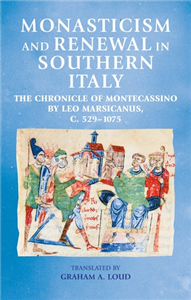
        Monasticism and renewal in southern Italy

        The Chronicle of Montecassino by Leo Marsicanus, c. 529–1075

        by Graham Loud

        The chronicle of Leo Marsicanus recounts the history of the abbey of Montecassino from its foundation by St. Benedict in the sixth-century up to 1075. It presents a detailed and compelling story of tribulation and renewal, with the abbey twice destroyed and abandoned in the early Middle Ages and then rebuilt. It concludes with an informative account of the building and dedication of the new abbey church by Abbot Desiderius in 1066-71. The chronicle is also a key source for the more general history of southern Italy in the early Middle Ages, and of the conquest of the region by the Normans during the eleventh century. In addition, Montecassino was one of the great intellectual centres of western Christendom and a major contributor to the reform movement within the Church during the later eleventh century. Leo's chronicle is a crucial witness to that role.

      • Trusted Partner
        Humanities & Social Sciences
        May 2026

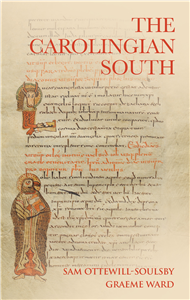
        The Carolingian South

        by Sam Ottewill-Soulsby, Graeme Ward

        The Carolingian South turns the Frankish world upside down by taking as its subject the lands of the Carolingian empire south of the Loire and the Alps. It assembles an international group of scholars from different disciplines to examine how the Carolingians defined and were defined by this region. This book asks how Carolingian power was created and negotiated in the south. It views the Frankish empire from the perspective of the Christian and Muslim polities of the Mediterranean, while also following the movement of people and ideas through the endlessly fascinating world that they made.

      • Trusted Partner
        Humanities & Social Sciences
        March 2026

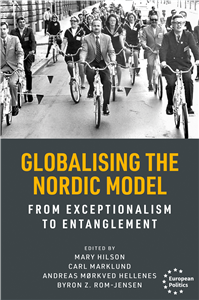
        Globalising the Nordic Model

        From exceptionalism to entanglement

        by Mary Hilson

        The five Nordic countries - Denmark, Finland, Iceland, Norway and Sweden - frequently attract attention as examples of a 'Nordic model'. The meanings of the term vary, but especially since the global financial crisis of 2008-9 the Nordic countries have often been portrayed positively, as examples of economic dynamism, innovation and social equality. Studies of these images of the Nordic countries and Nordic region and their international circulations are now a well-established field of research. This volume explores how the Nordic model has been shaped by global entanglements, in exchange not only with Western Europe and North America, but also with the Global South. Drawing on selected case studies, the volume offers new perspectives on the meanings of the Nordic model and Nordic exceptionalism in a global context during the half century since c. 1970.

      • Trusted Partner
        Medicine
        November 2019

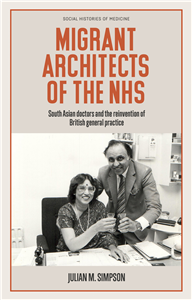
        Migrant architects of the NHS

        South Asian doctors and the reinvention of British general practice (1940s-1980s)

        by Julian Simpson, Keir Waddington

        Migrant architects of the NHS draws on forty-five oral history interviews and extensive archival research to offer a radical reappraisal of how the National Health Service was made. It tells the story of migrant South Asian doctors who became general practitioners in the NHS. Imperial legacies, professional discrimination and an exodus of UK-trained doctors combined to direct these doctors towards work as GPs in some of the most deprived parts of the UK. In some areas, they made up over half of the general practitioner workforce. The NHS was structurally dependent on them and they shaped British society and medicine through their agency. Aimed at students and academics with interests in the history of immigration, immigration studies, the history of medicine, South Asian studies and oral history. It will also be of interest to anyone who wants to know more about how Empire and migration have contributed to making Britain what it is today.

      Subscribe to our

      newsletter