
Tourism, Hospitality & Leisure
Textbooks, research and professional titles in Tourism, Hospitality and Leisure
View Rights Portal
Textbooks, research and professional titles in Tourism, Hospitality and Leisure
View Rights Portal
Toubkal is a publishing house established in Morocco, Casablanca, created in 1985.They have more than 500 titles.
View Rights Portal



This bestselling title is a practical handbook on the concept of basic stimulation in nursing and its application for patients suffering from perceptional deficits, developmental delays and mental handicaps. It enables nurses to develop, improve and stabilize physically and mentally handicapped people with impaired perceptional, communicative and motor skills. Target Group: Nurses
 Trusted Partner
Trusted Partner
Trusted Partner
 Trusted Partner

Although the importance of ethics is often stressed, it remains sidelined in training. Marianne Rabe makes ethics and ethical reflection the focus of nursing practice and training. Her study - presents the theoretical principles of formative learning and explores how it can be put into practice - puts forward practical curriculum suggestions for incorporating ethics into nurse training - shows how to address the ethical principles of dignity, autonomy, care, justice, responsibility, and dialogue within the framework of a teaching concept - presents Rabe’s own model of ethical reflection based on her personal experience. Target Group: Nursing trainers, lecturers
Trusted Partner
 Trusted Partner

How can humor be used to engage with and help people suffering from mental illness? This practical handbook explains the concept of humor in psychiatric treatment and sets out the case for employing it. The author outlines how nurses can assess who might benefit from the use of humor and for whom it would be out of place, and provides a toolkit of humorous interventions for daily nursing practice. Target Group: Practicing nurses, psychiatric nurses, care clowns
Trusted Partner
Trusted Partner

 Trusted Partner
 Trusted Partner
Trusted Partner
Trusted Partner
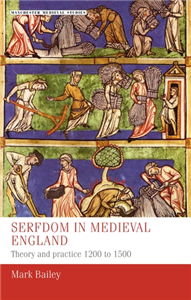
Serfdom was a coercive relationship between a landowner and peasant, which was widespread across medieval and early modern Europe. Itfeatures prominently in major historical debates, such as the origins of capitalism and the divergent pathways of western and eastern Europe to modernity. Scholars have paid particular attention to English serfdom, which is usually portrayed as highly oppressive and a major cause of the Peasants' Revolt in 1381. This comprehensive survey draws on a vast scholarship and new research to show how, in reality, English serfdom was weak, casting new light on the nature of its society and economy when the Black Death struck in 1348-9. The pandemicnow assumesa central role in the rapid decline of serfdom, as illustrated in a case study of the estate of one of England's harshest landowners, St Albans abbey.
Trusted Partner

The first book to tell the shocking story of the AIDS crisis in Soviet Russia. Throughout the 1980s, as the world was grappling with the escalating crisis of AIDS, Soviet Russia continued to deny there was a problem. Arguing that the disease was limited to foreigners and 'immoral' groups, the government failed to take meaningful action, long past the point other countries had begun to recognise the full scale of the threat. In this ground-breaking book, Rustam Alexander tells the story of AIDS in Soviet Russia. Fixated on disinformation, censorship and the persecution of marginalised communities, the Soviet authorities wasted precious time, allowing the epidemic to strike at the very heart of the nation: its children. Yet, despite the government's failure, a number of brave journalists, doctors and nascent gay groups decided to take matters into their own hands and engage in full-fledged AIDS activism. Tracing the political and social response to AIDS in the final years of the Soviet era, Alexander sheds light on the devastating consequences of government inaction. He draws on personal stories, media reports and archival materials to provide a riveting account of the Russian people's fight against AIDS amid the tumultuous transformations of Gorbachev's perestroika.
Trusted Partner


Zuhause in der pulsierenden Stadt Der kleine Fuchs lebt nicht im Wald, sondern in der Großstadt. Hier fahren Straßenbahnen und Busse, hier gibt es viele Menschen und Hunde. Der kleine Fuchs hat in der Stadt seine Heimat gefunden. Tagsüber schläft er gut versteckt in einem Gebüsch. Er spielt mit dem Ball auf dem Spielplatz, trinkt Wasser aus dem Brunnen auf dem Marktplatz und stibitzt Essen aus den Mülleimern zwischen den Hochhäusern. Ob er auch heimlich in den Bus einsteigt? Das Pappbilderbuch für Kinder ab 2 Jahren erzählt eine spannende Geschichte über Tiere in der Stadt. Sein fröhlich gereimter Text und die plakativen Illustrationen lassen den Alltag eines Fuchses lebendig werden, der in einer pulsierenden Stadt lebt. Das niedliche Tierbuch zeigt auf charmante Weise, wie Wildtiere in der Stadt leben und sich an die Menschen anpassen. Ein aktuelles Thema – warmherzig und altersgerecht verpackt! Der kleine Fuchs in der großen Stadt: So leben Tiere in der Stadt Ein tierisches Stadtabenteuer: Liebevoll gereimtes Bilderbuch für Kinder ab 2 Jahren über wilde Tiere in der Stadt. Für kleine Tierliebhaber*innen: Das kindgerechte Tierbuch erzählt vom Leben eines Fuchses in der Großstadt und weckt die Neugier auf die Natur und unsere tierischen Nachbarn in den Städten. Lehrreich und unterhaltsam: Die Vorlesegeschichte vom Fuchs in der Stadt zeigt Kindern, wie Anpassungsfähigkeit funktioniert und wie Wildtiere in urbanen Umgebungen leben. Wunderschön geschrieben: Der liebevoll gereimte Text von Carla Häfner eignet sich perfekt zum Vorlesen. In einer Stadt voller Leben mit Straßenbahnen, Bussen, Hochhäusern, Spielplätzen und Menschen meistert der kleine Fuchs sein urbanes Dasein mit Bravour. Eine hinreißende Vorlesegeschichte voller Empathie und Abenteuer, die kleinen Tierfans ab 2 Jahren zeigt, wie Füchse und andere Wildtiere als ihre Nachbarn in der Stadt leben.
Trusted Partner
 Trusted Partner
Trusted Partner
Trusted Partner
 Trusted Partner

This successful handbook and workbook set has rapidly established itself as the standard. With a concise and specific approach, it summarizes all the information on scientific research relevant for nurses. It clearly explains what research in nursing entails, the techniques that are used, and what products can result from the research. Target Group: Nursing students, nursing trainers, those engaging in further training
Trusted Partner
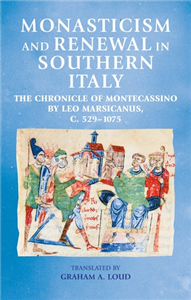
The chronicle of Leo Marsicanus recounts the history of the abbey of Montecassino from its foundation by St. Benedict in the sixth-century up to 1075. It presents a detailed and compelling story of tribulation and renewal, with the abbey twice destroyed and abandoned in the early Middle Ages and then rebuilt. It concludes with an informative account of the building and dedication of the new abbey church by Abbot Desiderius in 1066-71. The chronicle is also a key source for the more general history of southern Italy in the early Middle Ages, and of the conquest of the region by the Normans during the eleventh century. In addition, Montecassino was one of the great intellectual centres of western Christendom and a major contributor to the reform movement within the Church during the later eleventh century. Leo's chronicle is a crucial witness to that role.
Trusted Partner

Written by an interdisciplinary team of scholars, this authoritative text explores how heritage is delivered and consumed in a global world, and the ever-increasing ways in which heritage is actively valued. New international case studies see heritage as social action, as performance, and as a vehicle for innovations in tourism, challenging the notion that only official heritage practices can successfully select and interpret our links with the past. Aimed primarily at students in heritage studies and professionals in heritage industries, this book is one of three in the Understanding Global Heritage series.



