
Polperro Heritage Press
Polperro Heritage Press is an independent British publisher, established in 1995. Recent titles from Polperro Press have included biographies, guides and a growing list of Cornish local history titles.
View Rights Portal
Polperro Heritage Press is an independent British publisher, established in 1995. Recent titles from Polperro Press have included biographies, guides and a growing list of Cornish local history titles.
View Rights Portal
TheUnited States Insitute of Peace was created by the US congress as a federally funded presscreatingworks toprevent and resolve global conflict by providing education and resources to work towards peace.
View Rights Portal
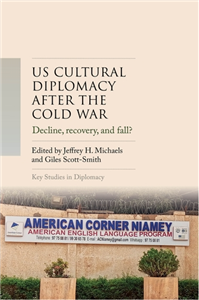
In the decades following the USSR's collapse, the US has gone from unrivalled hegemon to a position of relative decline. With America 'triumphant' after 1991, its culture, like its diplomatic, military and economic power, remained unmatched. Such favourable circumstances seemed to undercut the need for cultural diplomacy. Why should the US government sell a product that was already selling so well? After 9/11, however, it was apparent the US image was less popular than previously assumed. To reverse this negative image, cultural diplomacy was revived. Despite being beset by internal and external challenges, US officials supported various cultural initiatives and partnerships to promote the American brand globally. Along the way, cultural diplomacy has made use of new forms of expression to promote American culture and build positive foreign relations. The arrival of the second Trump administration in 2025 has clearly signalled an end to using cultural diplomacy to further causes of empowerment and diversity, making the future uncertain for this field of activity.
 Trusted Partner
Trusted Partner
Trusted Partner

Written by an interdisciplinary team of scholars, this authoritative text explores how heritage is delivered and consumed in a global world, and the ever-increasing ways in which heritage is actively valued. New international case studies see heritage as social action, as performance, and as a vehicle for innovations in tourism, challenging the notion that only official heritage practices can successfully select and interpret our links with the past. Aimed primarily at students in heritage studies and professionals in heritage industries, this book is one of three in the Understanding Global Heritage series.
Trusted Partner
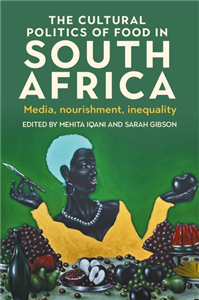
Food is both a material system of nourishment, necessary for human survival, and a communicative system that signifies multiple meanings across human cultures. This book explores the cultural politics of food in the South African context, bringing together a range of disciplinary perspectives on the links between media, nourishment, and inequality. The chapters all highlight the multiplicity of meanings that food has in South African society. These include historical perspectives on the impact of colonialism, migration and apartheid had on food and foodways in South Africa; sociological interventions on food and society; aesthetic practices in relation to food; and mediated food cultures in South Africa. Taken together, the book critically explores the multiple ways in which food is never just food, and always linked to complex and shifting modalities of meaning and knowledge in the South African context.
Trusted Partner

 Trusted Partner
 Trusted Partner

On 25 January 1474, Charles the Bold, duke of Burgundy, appeared before his subjects in Dijon. Robed in silk, gold and precious jewels and wearing a headpiece that gave the illusion of a crown, he made a speech in which he cryptically expressed his desire to become a king. Three years later, Charles was killed at the battle of Nancy, an event that plunged the Great Principality of Burgundy into chaos. This book, innovative and essential, not only explores Burgundian history and historiography but offers a complete synthesis about the nature of politics in this region, considered both from the north and the south. Focusing on political ideologies, a number of important issues are raised relating to the medieval state, the signification of the nation under the 'Ancien Regime', the role of warfare in the creation of political power and the impact of political loyalties in the exercise of government. In doing so, the book challenges a number of existing ideas about the Burgundian state.
Trusted Partner
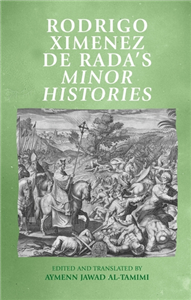
This work provides the first complete English translation of works by Toledan archbishop Rodrigo Ximénez de Rada (1170-1247 CE), whose 'Minor Histories' are sequels to his larger 'Gothic History' and thus round off his grand history of Spain project that he began at the request of King Ferdinand III. The 'Minor Histories' include Rodrigo's 'History of the Arabs' that can be considered the first surviving Western monograph focused on Arab and Islamic history and thus occupies a unique position in the medieval Latin corpus of writings. In addition to the translation, this book provides a thorough and accessible introduction to the life and works of Rodrigo, making sense of the context in which he wrote and his historical method. The translations are thoroughly annotated including cross-references to other Latin and Arabic sources for comparison.
Trusted Partner
Trusted Partner
Trusted Partner
Trusted Partner
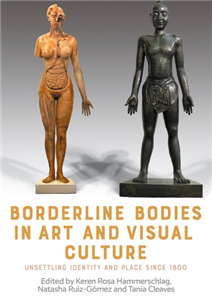
Borderline bodies offers original interpretations of visual representations of human bodies as bounded and unbounded, fortified and permeable, mobile and static-subject to borders and able to traverse and challenge them. It also takes as its focus images and objects that might be considered 'borderline' because they sit at the intersection of disciplines or sit outside accepted notions of what constitutes serious 'art.' By mapping the ways human bodies traverse borders and straddle-even dismantle-categories, this volume's essays approach afresh the relationship of bodies to traditional modes of representation, especially in art and medicine, and encourage us to think anew about how we understand the relationship between human corporeality, identity and place. Critical transdisciplinary and transnational analyses of objects and images from a range of geographies shed new light on the themes of: bodies and identity; typologies of the body; racialised bodies; 'normal' and 'abnormal' bodies; encounters between bodies; bodies in transition; bodies and mobility; and the bounded and unbounded human body. The outcome is a fresh approach to depictions of the human body produced for the purposes of artistic and medical education, aesthetic edification, and scientific and professional advancement, which disrupts assumptions about the normative human body perpetuated through Western image-making traditions.
Trusted Partner
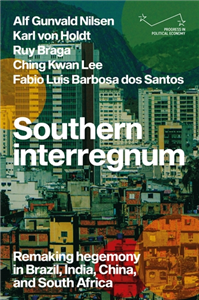
How do governing elites in the global South attempt to remake hegemony in a conjuncture of durable crisis? This is the question at the core of Southern interregnum, a comparative conjunctural analysis of hegemonic projects in Brazil, India, China, and South Africa. Working with a Gramscian notion of crisis, centred on the interregnum as an enduring period of instability and uncertainty, in which hegemonic authority erodes and competing projects for crisis resolution emerge, the book proposes a novel critical reading of the convulsions that are currently reshaping the political economy of the global South and the world-system. Mapping the variegated trajectories of elite projects to reconcile accumulation and legitimation - and probing the limits of these projects - the book breaks new ground in the study of the contemporary global South.
Trusted Partner

Country houses and the British empire, 1700-1930 assesses the economic and cultural links between country houses and the Empire between the eighteenth and twentieth centuries. Using sources from over fifty British and Irish archives, it enables readers to better understand the impact of the empire upon the British metropolis by showing both the geographical variations and its different cultural manifestations. Barczewski offers a rare scholarly analysis of the history of country houses that goes beyond an architectural or biographical study, and recognises their importance as the physical embodiments of imperial wealth and reflectors of imperial cultural influences. In so doing, she restores them to their true place of centrality in British culture over the last three centuries, and provides fresh insights into the role of the Empire in the British metropolis.
Trusted Partner
 Trusted Partner
 Trusted Partner

The West must wait presents a new perspective on the development of the Irish Free State. It extends the regional historical debate beyond the Irish revolution and raises a series of challenging questions about post-civil war society in Ireland. Through a detailed examination of key local themes - land, poverty, politics, emigration, the status of the Irish language, the influence of radical republicans and the authority of the Catholic Church - it offers a probing analysis of the socio-political realities of life in the new state. This book opens up a new dimension by providing a rural contrast to the Dublin-centred views of Irish politics. Significantly, it reveals the level of deprivation in local Free State society with which the government had to confront in the west. Rigorously researched, it explores the disconnect between the perceptions of what independence would deliver and what was achieved by the incumbent Cumann na nGaedheal administration.
Trusted Partner
 Trusted Partner



