
De Vecchi/DVE - Confidential Concepts International Ltd.
We are from De Vecchi Ediciones / DVE, a publishing house with about 4000 titles in Spanish.
View Rights Portal
We are from De Vecchi Ediciones / DVE, a publishing house with about 4000 titles in Spanish.
View Rights Portal
Der Concadora Verlag steht für inspirierende Medien und Veranstaltungen zu den Themen Mindful Leadership, Organisationsbezogenes Transformationsmanagement, Kommunikation und Mediation für Führungskräfte, BeraterInnen und MediatorInnen. Ein Schwerpunkt unserer Veröffentlichungen sind Medien zum Konfliktmanagement und zur systemischen Mediation.
View Rights Portal Trusted Partner


The term 'conversation' is one of today's jargon terms. This book explores in depth what conversation means in national terms. Its premise is that to be English is to participate in a conversation about the country's history, politics, culture and society. The conversation changes, of course, but there is also continuity which illustrates a distinct tradition. It is a conversation, the book argues, which requires the plural notion of these Englands rather than the singularity of this England. Englishness, then, is the tone, register and idiom of it subject matters, its anxieties and certainties, differences and commonalities. The book explores the English conversation through historical, political, literary and popular voices and tries to identify the character of contemporary Englishness.
Trusted Partner
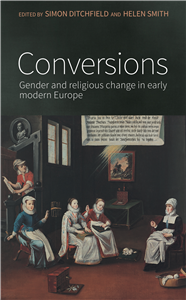
Conversions is the first collection to explicitly address the intersections between sexed identity and religious change in the two centuries following the Reformation. Chapters deal with topics as diverse as convent architecture and missionary enterprise, the replicability of print and the representation of race. Bringing together leading scholars of literature, history and art history, Conversions offers new insights into the varied experiences of, and responses to, conversion across and beyond Europe. A lively Afterword by Professor Matthew Dimmock (University of Sussex) drives home the contemporary urgency of these themes and the lasting legacies of the Reformations. Of interest to scholars of early modern history, literature, and architectural history, this collection will appeal to anyone interested in the vexed history of religious change, and the transformations of both masculine and feminine identity.
Trusted Partner

One of the few books which systematically brings post-structuralist theory to bear on substantive political analysis. Offers accessible accounts of different strands of discourse theory such as deconstruction, psychoanalysis and genealogy, which are applied to the analysis of specific cases such as Northern Ireland and contemporary East European politics. Each chapter addresses a key theme and issue in contemporary politics. Draws on inspiration from Ernesto Laclau, Jacques Derrida, Michel Foucault and Jacques Lacan. Contains a clear introductory statement of the theoretical approach used and concludes with an assessment of the future directions of discourse theory in the social sciences. ;
Trusted Partner
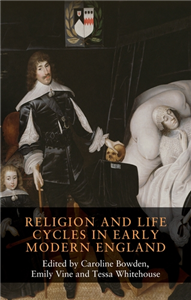
Religion and life cycles in early modern England assembles scholars working in the fields of history, English literature and art history to further our understanding of the intersection between religion and the life course in the period c. 1550-1800. Featuring chapters on Catholic, Protestant and Jewish communities, it encourages cross-confessional comparison between life stages and rites of passage that were of religious significance to all faiths in early modern England. The book considers biological processes such as birth and death, aspects of the social life cycle including schooling, coming of age and marriage and understandings of religious transition points such as spiritual awakenings and conversion. Through this inclusive and interdisciplinary approach, it seeks to show that the life cycle was not something fixed or predetermined and that early modern individuals experienced multiple, overlapping life cycles.
Trusted Partner

Engendering an avant-garde is the first book to comprehensively examine the origins of Vancouver photo-conceptualism in its regional context between 1968 and 1990. Employing discourse analysis of texts written by and about artists, feminist critique and settler-colonial theory, the book discusses the historical transition from artists' creation of 'defeatured landscapes' between 1968-71 to their cinematographic photographs of the late 1970s and the backlash against such work by other artists in the late 1980s. It is the first study to provide a structural account for why the group remains all-male. It accomplishes this by demonstrating that the importation of a European discourse of avant-garde activity, which assumed masculine social privilege and public activity, effectively excluded women artists from membership.
Trusted Partner


These fans contain questions that can be used in a variety of different setting and offer a solution-focused perspective. The user is guided through the fan by topics. The front of the cards provide guidance to help construct a conversation, while the back of the cards focus on specific situations or clients. Target Group: therapists, coaches, managers
Trusted Partner

These fans contain questions that can be used in a variety of different setting and offer a solution-focused perspective. The user is guided through the fan by topics. The front of the cards provide guidance to help construct a conversation, while the back of the cards focus on specific situations or clients. Target Group: therapists, coaches and managers
Trusted Partner

Solution based communication is a positive and very effective approach in therapy sessions. By means of specific questions, the strengths of the client are emphasized. This fan brings together the most important questions, ordered by subject (e.g. getting to know the client, goals, exceptions) and by type of conversation partner (clients who do not want to co-operate, who are in conflict, or who currently experience a crisis). All relevant questions close are at hand with this extremely practical tool!
Trusted Partner

Promoting motivation to change is one of the most important treatment components in psychotherapeutic practice across disorders. Working through ambivalence and ultimatelyincreasing motivation to choose recovery with all its consequences is one of the main goals in treatment. This book presents the current state of knowledge anddescribes practical interventions to promote motivation to change. When dealing with ambivalent issues, an open, therapeutic attitude is recommended, as well as certainstrategies for conducting conversations to avoid reactance and resistance. The main focus of the book is therefore on therapeutic conversation and concrete interventions to clarify and increase motivation to change. For:• medical and psychological psychotherapists• child and adolescent psychotherapists• specialists working in psychiatry, psychotherapy,or psychosomatic medicine• clinical psychologists• psychological counselors• students and teachers in psychotherapeutic training,further training, and continuing education
Trusted Partner

It is the time of the White Nights, when darkness never quite falls over Saint Petersburg. The narrator, a young man and lonesome dreamer, wanders through the quiet summer evenings, emptied of their usual bustle. One night he encounters a distraught girl, seventeen-year-old Nastenka. They strike up a conversation that continues over the course of four evenings, as they tell each other about their lives, their dreams, hopes, and sorrows. From this chance meeting a tender love begins to grow. But Nastenka’s heart belongs to someone else. Dostoevsky’s novella, one of the most celebrated love stories in world literature, is presented here in the classic translation by Constance Garnett. The volume is accompanied by distinctive illustrations by Stella Dreis.
Trusted Partner
Trusted Partner
Trusted Partner
Trusted Partner
Capitalising on developments in the field over the past decade, Riddles at work provides an up-to-date microcosm of research on the early medieval riddle tradition. The book presents a wide range of traditional and experimental methodologies. The contributors treat the riddles both as individual poems and as parts of a tradition, but, most importantly, they address Latin and Old English riddles side-by-side, bringing together texts that originally developed in conversation with each other but have often been separated by scholarship. Together, the chapters reveal that there is no single, right way to read these texts but rather a multitude of productive paths. This book will appeal to students and scholars of early medieval studies. It contains new as well as established voices, including Jonathan Wilcox, Mercedes Salvador-Bello and Jennifer Neville.
Trusted Partner

This book offers a unique and timely reading of the early Frankfurt School in response to the recent 'affective turn' within the arts and humanities. Resisting the overly rationalist tendencies of political philosophy, it argues that critical theory actively cultivates a powerful connection between thinking and feeling, and rediscovers a range of often neglected concepts that were of vital importance to the first generation of critical theorists, including melancholia, hope, (un)happiness, objects and mimesis. In doing so, it brings the dynamic work of Walter Benjamin, Theodor Adorno, Ernst Bloch and Siegfried Kracauer into conversation with more recent debates around politics and affect. An important intervention in the fields of affect studies and social and political thought, Critical theory and feeling shows that sensuous experience is at the heart of the Frankfurt School's affective politics.
Trusted Partner
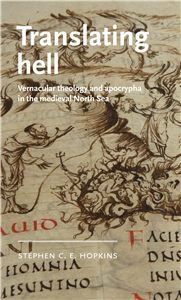
In the Middle Ages, hell was useful because it was vaguely defined. Canonical scriptures scarcely mention hell, leaving much to the imaginations of early Christians, who used it to sort out who belonged within the faith. This book explores how hell became a place for literary experiments with local challenges in theology and identity. Following the reception and transformations of two popular hell apocrypha, it argues that they served as this role because of their liminal textual authority. As noncanonical scriptures, apocrypha afforded medieval writers space to revise their hells (since they were not actually scripture), while also encouraging readers to revere those experiments as valid (since they seemed like scripture). The book brings together adaptations from early medieval England, Iceland, Ireland, and Wales, placing the early vernacular theologies of the North Sea in comparative conversation.
Trusted Partner

This volume presents the first systematic account of Japanese international legal theory; edited by Japanese scholars, the volume traces thirteen influential scholars and spans over a century. It examines how theorists positioned outside international law's Western centre developed sophisticated frameworks to address tensions between Western modernity and their own experiences. The book's central contribution proposes 'conversation'-continuous engagement that respects differences between legal traditions-as an alternative to 'dialogue', which often reproduces existing hierarchies by assuming all perspectives can be reconciled. Through detailed intellectual biographies across six historical periods, contributors reveal how Japanese scholars strategically employed legal positivism, articulated transcivilizational perspectives, and developed concepts of normative multilateralism. Addressed at scholars of international law, legal theory, and comparative legal traditions, this volume demonstrates that the discipline's future requires genuinely reciprocal exchange where diverse perspectives can coexist productively.
Trusted Partner

Expertise alone does not guarantee a successful consulta- tion – what matters is how it is conveyed to the customer. Here the tools for successful communication in everyday pharmacy practice can be found: clear technical and legal principles, practical tips and a wealth of realistic exercises. The training covers the safe use of digital media, conducting consultations on a wide range of indications and essential communication skills – from active listening to targeted conversation techniques. Whether self-medication, prescription delivery or medical devices: this textbook provides optimal preparation for delivering competent, clear and customer-oriented advice in everyday pharmacy practice. It is also the ideal companion for pharmaceutical technician training in the subject „Exercises in Delivery and Consultation using Digital Technologies.“ Practical, comprehensive and directly applicable – for training, exams and professional practice! Target group: Pharmaceutical technicians in training, returning pharmaceutical technicians and pharmacists, pharmacy interns



