Your Search Results

      • Sharjah Documentation and Archives Authority

        Sharjah Documentation and Archives Authority, earlier Sharjah Centre for Documentation and Research, was established by resolution no. (4) of 2010, issued by His Highness Sheikh Dr. Sultan Bin Muhammad AL Qassimi, member of the Supreme Council, the Ruler of Sharjah. In 2016, H.H. Ruler of Sharjah issued resolution no. (4) of 2016, on the establishment of Sharjah Documentation and Archives Authority. The objectives were set to collecting and preserving documents related to the emirate, as well as the development of the documentation and archive system. Furthermore, the Authority shall oversee the management of current documents and mediate documents with concerned parties. The Authority represents the local body concerned with all matters of documents and archiving and it abides by the best international standards for preserving and maintaining documents. The Authority works to strengthen cultural and historical awareness and encourage scientific researches and intellectual creativity.

        View Rights Portal
      • Magic Author

        We are a one-stop platform to read, write, self-publish and sell ebooks in any of the Indian languages. Our mission is to empower the author's community with the digital tools and techniques, and we take care of the online presence of professionals in the publishing landscape, be they authors, publishers, editors, designers, publicists, etc.

        View Rights Portal
      • Trusted Partner
        Literature & Literary Studies
        June 2012

        Authorship and authority

        The writings of James VI and I

        by Jane Rickard

        James VI of Scotland and I of England participated in the burgeoning literary culture of the Renaissance, not only as a monarch and patron, but as an author in his own right, publishing extensively in a number of different genres over four decades. As the first monograph devoted to James as an author, this book offers a fresh perspective on his reigns in Scotland and England, and also on the inter-relationship of authorship and authority, literature and politics in the Renaissance. Beginning with the poetry he wrote in Scotland in the 1580s, it moves through a wide range of his writings in other genres, including scriptural exegeses, political, social and theological treatises and printed speeches, concluding with his manuscript poetry of the early 1620s. The book combines extensive primary research into the preparation, material form and circulation of these varied writings, with theoretically informed consideration of the relationship between authors, texts and readers. The discussion thus explores James's responses to, and interventions in, a range of literary, political and religious debates, and reveals the development of his aims and concerns as an author. Rickard argues that, despite the King's best efforts to the contrary, his writings expose the tensions and contradictions between authorship and authority. This book will be of interest to scholars and students of the reign of James VI and I, the literary and political cultures of late sixteenth-century Scotland and early seventeenth-century England, the development of notions of authorship and the relationship between literature and politics. ;

      • Trusted Partner
        Literature & Literary Studies
        May 2026

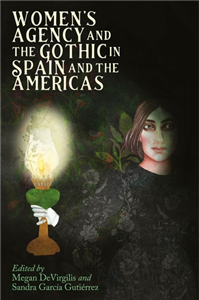
        Women’s Agency and the Gothic in Spain and the Americas

        by Megan DeVirgilis, Sandra García Gutiérrez

        This volume has emerged to fulfill two main purposes: Primarily, to constitute the first collaborative work that traces the relationship between the Gothic and Women in Spain and the Americas, but also, to surpass the term 'Female Gothic,' coined by Ellen Moers, by transferring the focus towards women and their agency as writers, readers and characters. This volume functions as a manifesto per se to open new avenues into understanding how women have interacted with the Gothic between the nineteenth and twenty-first centuries in Spain and the Americas. The question, we determine, is not simply about identity, but rather about agency. We define women's agency as the total capacity of characters, authors and readers to act freely within a social framework in relation to gothic texts. In our exploration of authorship, we reject the claim that the Gothic is a simplistic literary genre, instead sustaining that the plasticity of the Gothic has enabled it to survive for centuries; by shifting from a genre to a mode, it has surpassed literary forms and invaded all kinds of media: from film to music and merchandise such as clothing and pop culture collectables, fostering an authentic goth fandom.

      • Trusted Partner
        Humanities & Social Sciences
        May 2021

        Disciplined agency

        Neoliberal precarity, generational dispossession and call centre labour in Portugal

        by Patrícia Alves de Matos

        Since the mid-2000s, the harsh reality of call centre employment for a generation of young workers in Portugal has been impossible to ignore. With its endless rows of small cubicles, where human agents endure repetitive telephone conversations with abusive clients under invasive modes of technological surveillance, discipline and control, call centre work remains a striking symbol of labour precarity, a condition particularly associated with the neoliberal generational disenchantment that 'each generation does better than its predecessor'. This book describes the emergence of a regime of disciplined agency in the Portuguese call centre sector. Examining the ascendancy of call centres as icons of precarity in contemporary Portugal, this book argues that call centre labour constitutes a new form of commodification of the labouring subject. De Matos argues that call centres represent an advanced system of non-manual labour power exploitation, due to the underestimation of human creativity that lies at the centre of the regimented structures of call centre labour. Call centres can only guarantee profit maintenance, de Matos argues, through the commodification of the human agency arising from the operators' moral, relational and social embedded agentive linguistic interventions of creative improvisation, decision-making, problem-solving and ethical evaluation.

      • Trusted Partner
        Literary studies: c 1500 to c 1800
        September 2007

        Authorship and authority: the writings of James VI and I

        by Jane Rickard

        James VI of Scotland and I of England participated in the burgeoning literary culture of the Renaissance, not only as a monarch and patron, but as an author in his own right, publishing extensively in a number of different genres over four decades. As the first monograph devoted to James as an author, this book offers a fresh perspective on his reigns in Scotland and England, and also on the inter-relationship of authorship and authority, literature and politics in the Renaissance. Beginning with the poetry he wrote in Scotland in the 1580s, it moves through a wide range of his writings, including scriptural exegeses, political, social and theological treatises and printed speeches, concluding with his manuscript poetry of the early 1620s. The book combines extensive primary research into the preparation, material form and circulation of these varied writings, with theoretically informed consideration of the relationship between authors, texts and readers. The discussion thus explores James's responses to, and interventions in, a range of literary, political and religious debates, and reveals the development of his aims and concerns as an author.

      • Trusted Partner
        The Arts
        October 2016

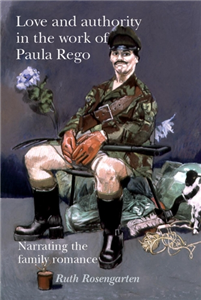
        Love and authority in the work of Paula Rego

        Narrating the family romance

        by Ruth Rosengarten

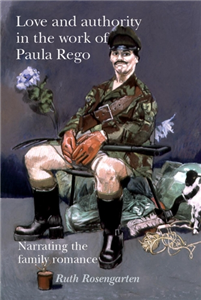
        Rosengarten explores the narrative operations of Rego's work by mobilising both psychoanalytic theory and social history. She confronts, as case studies, three complex figure paintings from different moments in Rego's oeuvre: The Policeman's Daughter (1987), The Interrogator's Garden (2000), and The First Mass in Brazil (1993). The content of the three specimen paintings links them to the political context of the Estado Novo, the fascist-inspired regime that dominated Rego's childhood. Plotting links between the spheres of the political and the personal, Rosengarten throws light on the complex intertwining of state power and parental authority in Rego's work, focusing on the "labour of socialisation and resistance" that Rego's work evinces in relation to the Freudian model of the family romance. Rosengarten unveils the political context of Portugal under Salazar, and the workings of colonial fantasy, Catholic ideology and gender construction. In prodding the inalienable link between love and authority, this study offers a reading of Rego's work that interrogates, rather than subverts, the Oedipal model structuring the patriarchal family.

      • Trusted Partner
        The Arts
        October 2010

        Love and authority in the work of Paula Rego

        Narrating the family romance

        by Ruth Rosengarten

        Rosengarten explores the narrative operations of Rego's work by mobilising both psychoanalytic theory and social history. She confronts, as case studies, three complex figure paintings from different moments in Rego's oeuvre: The Policeman's Daughter (1987), The Interrogator's Garden (2000), and The First Mass in Brazil (1993). The content of the three specimen paintings links them to the political context of the Estado Novo, the fascist-inspired regime that dominated Rego's childhood. Plotting links between the spheres of the political and the personal, Rosengarten throws light on the complex intertwining of state power and parental authority in Rego's work, focusing on the "labour of socialisation and resistance" that Rego's work evinces in relation to the Freudian model of the family romance. Rosengarten unveils the political context of Portugal under Salazar, and the workings of colonial fantasy, Catholic ideology and gender construction. In prodding the inalienable link between love and authority, this study offers a reading of Rego's work that interrogates, rather than subverts, the Oedipal model structuring the patriarchal family. ;

      • Trusted Partner
        Humanities & Social Sciences
        March 2026

        The cultural politics of food in South Africa

        Media, nourishment, inequality

        by Mehita Iqani, Sarah Gibson

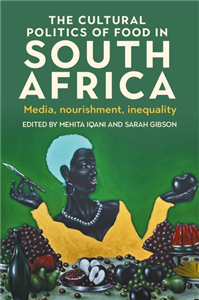
        Food is both a material system of nourishment, necessary for human survival, and a communicative system that signifies multiple meanings across human cultures. This book explores the cultural politics of food in the South African context, bringing together a range of disciplinary perspectives on the links between media, nourishment, and inequality. The chapters all highlight the multiplicity of meanings that food has in South African society. These include historical perspectives on the impact of colonialism, migration and apartheid had on food and foodways in South Africa; sociological interventions on food and society; aesthetic practices in relation to food; and mediated food cultures in South Africa. Taken together, the book critically explores the multiple ways in which food is never just food, and always linked to complex and shifting modalities of meaning and knowledge in the South African context.

      • Trusted Partner
        Humanities & Social Sciences
        March 2026

        US cultural diplomacy after the Cold War

        Decline, recovery, and fall

        by Jeffrey H. Michaels, Giles Scott-Smith

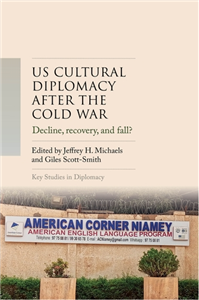
        In the decades following the USSR's collapse, the US has gone from unrivalled hegemon to a position of relative decline. With America 'triumphant' after 1991, its culture, like its diplomatic, military and economic power, remained unmatched. Such favourable circumstances seemed to undercut the need for cultural diplomacy. Why should the US government sell a product that was already selling so well? After 9/11, however, it was apparent the US image was less popular than previously assumed. To reverse this negative image, cultural diplomacy was revived. Despite being beset by internal and external challenges, US officials supported various cultural initiatives and partnerships to promote the American brand globally. Along the way, cultural diplomacy has made use of new forms of expression to promote American culture and build positive foreign relations. The arrival of the second Trump administration in 2025 has clearly signalled an end to using cultural diplomacy to further causes of empowerment and diversity, making the future uncertain for this field of activity.

      • Trusted Partner

        Negotiating with Confidence –Psychological Strategies and Methods

        With 20 Exercises for Self-Learning

        by T. Fritzsche

        From a psychological perspective, there are many aspects to negotiating. Given the right knowledge of backgrounds and mechanisms, it is an art form possible to get to grips with and put into practice. In an entertaining and informative way, this book introduces the reader to the basics of communication and body language, cooperative negotiation, strategic negotiation, the different personalities of negotiators, and negotiating. Using practical exercises and valuable practical tips, this book takes the reader through the main psychological strategies and methods so he can negotiate in a flexible, goal-oriented, and successful manner.   Target Group: For people who want to improve their negotiating skills.

      • Trusted Partner
        Humanities & Social Sciences
        March 2017

        British culture and the end of empire

        by Stuart Ward

        This book is the first major attempt to examine the cultural manifestations of the demise of imperialism as a social and political ideology in post-war Britain. Far from being a matter of indifference or resigned acceptance as is often suggested, the fall of the British Empire came as a profound shock to the British national imagination, and resonated widely in British popular culture. The sheer range of subjects discussed, from the satire boom of the 1960s to the worlds of sport and the arts, demonstrates how profoundly decolonisation was absorbed into the popular consciousness. Offers an extremely novel and provocative interpretation of post-war British cultural history, and opens up a whole new field of enquiry in the history of decolonisation.

      • Trusted Partner
        Business, Economics & Law
        March 2008

        Cultural warfare and trust

        Fighting the Mafia in Palermo

        by Carina Gunnarson, Kim Stringer

        Cultural warfare and trust: fighting the Mafia in Palermo concentrates on a central issue in research on democratic processes: the development of generalised trust. The existence of generalised trust and confidence in a society is decisive for economic development and an effective democracy. Is it possible to fight persistent values of distrust and non-cooperation? Is it possible to support the development of generalised trust through public action and education? The book addresses these questions by examining political efforts to combat Palermo's Mafia-controlled heritage and to turn a tradition of non-cooperation and distrust into cooperation and trust. In particular, it focuses on the school program launched in Palermo during the mid-1990s, which was designed to break the Mafia's territorial and mental control. Combining theories on social capital and civic education, the author presents and analyses new quantitative and qualitative research carried out in seven public schools in Palermo. This book will be valuable to students, academics and researchers interested in social capital and trust, Italian politics, civic education, organised crime, local government and democratic practice. ;

      • Trusted Partner
        Humanities & Social Sciences
        July 2020

        Disciplined Agency

        by Patrícia Matos, Alexander Smith

      • Trusted Partner
      • Trusted Partner
        Humanities & Social Sciences
        June 2025

        Local government and democracy in Britain

        by Neil Barnett, J. Chandler

        Local government in the UK is in crisis. It is now neither local in terms of the geography and populations of its principle units, nor does it truly govern in these areas. As this book reveals, over the previous 200 years local government has moved from a system in which local interests held governance over localities to one in which central government and national and multi-national agencies such as corporate businesses hold governance over local and community decision-making. These changes seriously undermine the important role that local government can play in liberal democracy in the UK. The book explains the nature of local government today and asks if there is any possibility of change.

      • Trusted Partner
      • Trusted Partner
        Humanities & Social Sciences
        November 2024

        US public diplomacy in socialist Yugoslavia, 1950–70

        Soft culture, cold partners

        by Carla Konta

        The first comprehensive account of the public and cultural diplomacy campaigns carried out by the US in Yugoslavia during the height of the Cold War, this book examines the political role of culture in US-Yugoslav bilateral relations and the fluid links between information and propaganda. Tito allowed the US Information Agency and the State Department's cultural programmes to enter Yugoslavia, liberated from Soviet control. The exchange of intellectual and political personnel helped foster the US-Yugoslav relationship, yet it posed severe ideological challenges for both sides. By providing new insights into porous borders between freedom and coercion in Tito's regime, this book shows how public diplomacy acted as an external input for Yugoslav liberalisation and dissident movements. Using extensive archival research and interviews, Konta analyses the links between information and propaganda, and the unintended effects of propaganda beyond the control of producers and receivers.

      • Trusted Partner
        Humanities & Social Sciences
        April 2026

        A Confucian theory of power

        by Sungmoon Kim

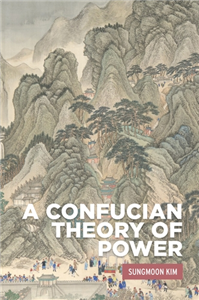
        In the book's lead essay, Sungmoon Kim offers a comprehensive analysis of Confucian power. Through a blend of philosophical, political, and historical analysis, Kim challenges the dominant idea that Confucianism is primarily centred on virtue ethics. Instead, he argues that Confucianism perceives power through the prism of responsibility. Kim not only traces this perspective throughout history but also demonstrates its relevance to contemporary society. He contrasts this Confucian perspective with Western political theory's view of power as control. Political theorists and philosophers will offer essay responses to Sungmoon Kim's provocation, offering a dialogue approach to provide a comprehensive analysis of the Confucian conception of power.

      • Trusted Partner
        Humanities & Social Sciences
        March 2017

        Air power and colonial control

        by David Omissi

        Air policing was used in many colonial possessions, but its most effective incidence occurred in the crescent of territory from north-eastern Africa, through South-West Arabia, to North West Frontier of India. This book talks about air policing and its role in offering a cheaper means of 'pacification' in the inter-war years. It illuminates the potentialities and limitations of the new aerial technology, and makes important contributions to the history of colonial resistance and its suppression. Air policing was employed in the campaign against Mohammed bin Abdulla Hassan and his Dervish following in Somaliland in early 1920. The book discusses the relationships between air control and the survival of Royal Air Force in Iraq and between air power and indirect imperialism in the Hashemite kingdoms. It discusses Hugh Trenchard's plans to substitute air for naval or coastal forces, and assesses the extent to which barriers of climate and geography continued to limit the exercise of air power. Indigenous responses include being terrified at the mere sight of aircraft to the successful adaptation to air power, which was hardly foreseen by either the opponents or the supporters of air policing. The book examines the ethical debates which were a continuous undercurrent to the stream of argument about repressive air power methods from a political and operational perspective. It compares air policing as practised by other European powers by highlighting the Rif war in Morocco, the Druze revolt in Syria, and Italy's war of reconquest in Libya.

      Subscribe to our

      newsletter