
Rabea Blue - Fantasyautorin
Rabea Blue is an author, writing fantasy, science-fiction and romance. She alreasy published short stories & novels.
View Rights Portal
Rabea Blue is an author, writing fantasy, science-fiction and romance. She alreasy published short stories & novels.
View Rights Portal

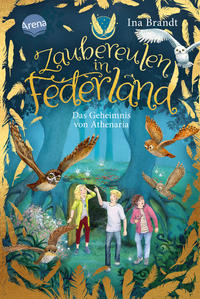
Flora is very excited: together with her magic owl Goldwing, she is to be part of a new team. The owl rulers of the Magical Kingdom have summoned them to Featherland, a hidden place in a mysterious monastery. There they meet the snowy owl Nordis, the spectacled owl Claro and, of course, Jona, who always tries to compete with Flora. How will they ever manage to make a team? It’s not long before they are given their first job: during the night of the next full moon they must help one another to awaken the magic of Featherland – and this proves to be more difficult than expected. Because suddenly Claro disappears from the face of the earth. And without him, no magic can ever succeed…
 Trusted Partner


On 25 January 1474, Charles the Bold, duke of Burgundy, appeared before his subjects in Dijon. Robed in silk, gold and precious jewels and wearing a headpiece that gave the illusion of a crown, he made a speech in which he cryptically expressed his desire to become a king. Three years later, Charles was killed at the battle of Nancy, an event that plunged the Great Principality of Burgundy into chaos. This book, innovative and essential, not only explores Burgundian history and historiography but offers a complete synthesis about the nature of politics in this region, considered both from the north and the south. Focusing on political ideologies, a number of important issues are raised relating to the medieval state, the signification of the nation under the 'Ancien Regime', the role of warfare in the creation of political power and the impact of political loyalties in the exercise of government. In doing so, the book challenges a number of existing ideas about the Burgundian state.
Trusted Partner
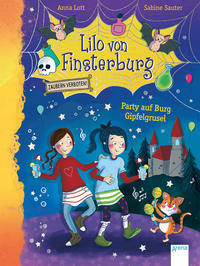
The Dark Castle family receives an invitation to a party at Highhorror Castle. Lilo and Miss Rüdiger are immediately eager to go. And of course Luisa should go with them. But humans are strictly forbidden to set foot in Castle Highhorror. “Who cares?”, say Lilo and Luisa, and at first everything seems fine: Luisa gets in as a perfect witch. But then the girls learn about a protective magic spell which covers the whole of the castle: unauthorized beings will be turned for ever into stone… Only a secret book of magic spells can save Luisa now!
Trusted Partner

The most magical adventure since the discovery of chocolate! Do you believe in magic and miracles? Everyone in the little town of Belony takes magic and miracles for granted – everyone except Elina, who thinks it’s all a load of nonsense. That is, until her nervous neighbour Charlie happens to get hold of a bar of chocolate that has a very strange effect on her. Suddenly Elina is convinced that Charlie has fallen under a spell. Of all people, it’s shy Robin who comes to the girl’s rescue. He is a member of a Candy Guild family – people who have the ability to create magic sweets that will help others. This is how he knows that only the mysterious Candy Guild can lift the curse on Charlie. With a suitcase full of magic sweets, the three of them set out on a dangerous quest. Because not everyone keeps to the pact that magic sweets should only be used to do good… The Candy Guild. The Magic Pact is the first in a new series of magic-fantasy books for children of 9+ - as enchanting as chocolate and as wild as a Christmas cracker!
Trusted Partner
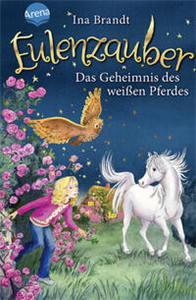
It’s just like a fairy tale. In the forest Flora stumbles on a little house with a garden that’s overgrown with roses. But the house is about to be sold. Not only that, but Flora learns from the owner’s daughter that a white horse has been living for a long time in the stable…but now he’s disappeared! Together with her magic owl Goldwing, Flora tries to find the terrified animal. Will the two of them manage to make their way through the jungle of roses and win the confidence of the white stallion?
Trusted Partner

Exciting new adventures in the Enchanted Forest. The mighty tree witches send out invitations to take part in the great Witch Competition, which is only held once every hundred years. The prize is a superb extra magical power. Just the thing for a young owl witch like Petunia, think the seven litte owls, and so they secretly enter their witch for the competition. There is just one catch: whoever comes last in solving the extremely difficult magic problems must hand over her witch’s broomstick. Oh dear! The trouble is, all the other witches are very old and are real experts in the art of magic… Fortunately, and as always, Petunia can rely on her little owls!
Trusted Partner

A shocking glimpse into the mind of a medieval witch hunter. In 1487, the zealous Dominican inquisitor Heinrich Kramer wrote a treatise that would have a remarkable influence on European history. Blaming women for his own lust, and frustrated by official complacency before what he saw as a monstrous spiritual menace, Kramer penned a practical guide to aid law officers in the identification and prosecution of witches. Fusing theology, lurid anecdotes and advice for those engaged in combating sorcery, The Malleus Maleficarum transports the reader into the dark heart of medieval belief - where fear of the supernatural provokes a gripping struggle for understanding and control. Kramer's book led to the burning of numerous innocents and had a lasting impact on the popular image of witchcraft. It remains a sinister symbol of fanaticism and cruelty to this day.
Trusted Partner
Trusted Partner
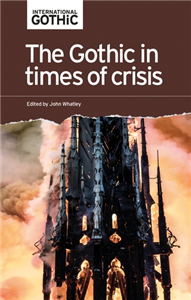
The Gothic in times of crisis reflects contemporary society, showing how the Gothic modes continually resets its own forms to encompass each new reality, each new apocalypse, each new plague or crisis. This collection expands oncurrent scholarship to show how the Gothic challenges our understanding of both older and recent crises and, in turn, disturbs all genre complacencies to expose and confront the problems and contradictions in what our world has been, has become, or is in danger of becoming. This collection explores Gothic's current relevance to the contestations of ideas and the underlying and visible conflicts it dramatizes across a wide range of media. In various ways, it reveals what happens to Gothic modes now they confront the increasingly Gothic realities of our times, sometimesby recalling earlier crises and ideological contestations leading up to them.
Trusted Partner
Trusted Partner
Colonial war played a vital part in transforming the reputation of the military and placing it on a standing equal to that of the navy. The book is concerned with the interactive culture of colonial warfare, with the representation of the military in popular media at home, and how these images affected attitudes towards war itself and wider intellectual and institutional forces. It sets out to relate the changing image of the military to these fundamental facts. For the dominant people they were an atavistic form of war, shorn of guilt by Social Darwinian and racial ideas, and rendered less dangerous by the increasing technological gap between Europe and the world. Attempts to justify and understand war were naturally important to dominant people, for the extension of imperial power was seldom a peaceful process. The entertainment value of war in the British imperial experience does seem to have taken new and more intensive forms from roughly the middle of the nineteenth century. Themes such as the delusive seduction of martial music, the sketch of the music hall song, powerful mythic texts of popular imperialism, and heroic myths of empire are discussed extensively. The first important British war correspondent was William Howard Russell (1820-1907) of The Times, in the Crimea. The 1870s saw a dramatic change in the representation of the officer in British battle painting. Up to that point it was the officer's courage, tactical wisdom and social prestige that were put on display.
Trusted Partner
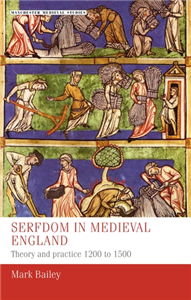
Serfdom was a coercive relationship between a landowner and peasant, which was widespread across medieval and early modern Europe. Itfeatures prominently in major historical debates, such as the origins of capitalism and the divergent pathways of western and eastern Europe to modernity. Scholars have paid particular attention to English serfdom, which is usually portrayed as highly oppressive and a major cause of the Peasants' Revolt in 1381. This comprehensive survey draws on a vast scholarship and new research to show how, in reality, English serfdom was weak, casting new light on the nature of its society and economy when the Black Death struck in 1348-9. The pandemicnow assumesa central role in the rapid decline of serfdom, as illustrated in a case study of the estate of one of England's harshest landowners, St Albans abbey.
Trusted Partner
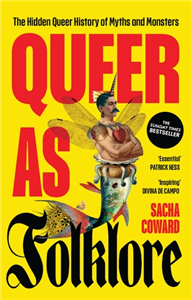
A celebration of queer history like you've never seen it before. Queer as folklore travels across centuries and continents to reveal the unsung heroes and villains of storytelling, magic and fantasy. Featuring images from archives, galleries and museums around the world, each chapter investigates the queer history of different mythic and folkloric characters, both old and new. Leaving no headstone unturned, Sacha Coward takes you on a wild ride through the night from ancient Greece to the main stage of RuPaul's Drag Race, visiting cross-dressing pirates, radical fairies and the graves of the 'queerly departed' along the way. Queer communities have often sought refuge in the shadows and created safe spaces in underworlds. But these forgotten narratives tell stories of resilience that deserve to be heard. Join any Pride march and you will see a glorious display of papier-mâché unicorn heads, drag queens in mermaid tails and more fairy wings than you can shake a trident at. These are not just accessories: they are queer symbols with historic roots. To truly understand who queer people are today, we must confront the twisted tales of the past.
Trusted Partner

Nordic Gothic traces Gothic fiction in the Nordic region from its beginnings in the nineteenth century, with a main focus on the development of Gothic from the 1990s onwards in literature, film, TV and new media. The volume gives an overview of Nordic Gothic fiction in relation to transnational developments and provides a number of case studies and in-depth analyses of individual narratives. It creates an understanding of this under-researched cultural phenomenon by showing how the narratives make visible cultural anxieties haunting the Nordic countries, their welfare systems, identities and ideologies. Nordic Gothic examines how figures from Nordic folklore function as metaphorical expressions of Gothic themes and Nordic settings are explored from perspectives such as ecocriticism and postcolonialism. The book will be of interest to researchers and post- and- undergraduate students in various fields within the Humanities.
Trusted Partner
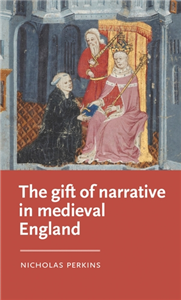
This invigorating study places medieval romance narrative in dialogue with theories and practices of gift and exchange, opening new approaches to questions of storytelling, agency, gender and materiality in some of the most engaging literature from the Middle Ages. It argues that the dynamics of the gift are powerfully at work in romances: through exchanges of objects and people; repeated patterns of love, loyalty and revenge; promises made or broken; and the complex effects that time works on such objects, exchanges and promises. Ranging from the twelfth century to the fifteenth, and including close discussions of poetry by Chaucer, the Gawain-Poet and romances in the Auchinleck Manuscript, this book will prompt new ideas and debate amongst students and scholars of medieval literature, as well as anyone curious about the pleasures that romance narratives bring.
Trusted Partner

Clive Barker: Dark imaginer explores the diverse literary, film and visionary creations of the polymathic and influential British artist Clive Barker. In this necessary and timely collection, innovative essays by leading scholars in the fields of literature, film and popular culture explore Barker's contribution to gothic, fantasy and horror studies, interrogating his creative legacy. The volume consists of an extensive introduction and twelve groundbreaking essays that critically reevaluate Barker's oeuvre. These include in-depth analyses of his celebrated and lesser known novels, short stories, theme park designs, screen and comic book adaptations, film direction and production, sketches and book illustrations, as well as responses to his material from critics and fan communities. Clive Barker: Dark imaginer reveals the breadth and depth of Barker's distinctive dark vision, which continues to fascinate and flourish.
Trusted Partner
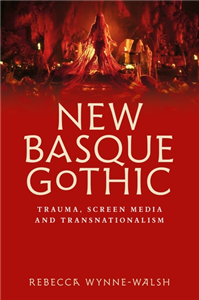
This monograph addresses the twenty-first century upsurge in Gothic screen media emanating from the Autonomous Basque Community, Euskadi, in Northern Spain. The book focuses on online video sharing, streaming and social media platforms, demonstrating the impact of multi-national co-production and distribution on the development of Basque film production; looking to the future of regional production in the digital era. This monograph fills a critical gap, presenting Basque Gothic screen media as a regionalist challenge to national models of cinema and identity. Wynne-Walsh establishes Basque Gothic as an expression of transgenerational trauma engendered by a history of state-suppression and socio-political violence. This regional iteration of the mode is addressed as a window into community perception and projection. While this project centres a Basque case study, it establishes a model for the reimagination of critical approaches to global, twenty-first century screen cultures.
Trusted Partner
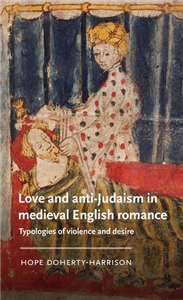
Love and anti-Judaism is a new examination of medieval romance for the questions it poses of the most significant events in Christian history. Providing new readings of Sir Gawain and the Green Knight, Sir Orfeo, Sir Gowther and Sir Amadace, the book argues that romance explores depictions of love-and the sacrifices it may necessitate-in the Hebrew Bible, especially where they do not easily fit into interpretations asserting that this history must prefigure Christ and the crucifixion. An examination of anti-Judaism as a discourse of violence and desire that could be turned inwardly to expose the irresolution in Christianity, this book will provoke new investigations into the religious crises of medieval romance.
Trusted Partner

Terry Gilliam presents a sustained examination of one of cinema's most challenging and lauded auteurs, proposing fresh ways of seeing Gilliam that go beyond reductive readings of him as a gifted but manic fantasist. Analysing Gilliam's work over nearly four decades, from the brilliant anarchy of his Monty Python animations through the nightmarish masterpiece Brazil to the provocative Gothic horror of Tideland, it critically examines the variety and richness of Gilliam's sometimes troubled but always provocative output. The book situates Gilliam within the competing cultural contexts of the British, European and American film industries, examining his regular struggles against aesthetic and commercial pressures. He emerges as a passionate, immensely creative director, whose work encompasses a dizzying array of material: anarchic satire, childhood and adult fantasy, dystopia, romantic comedy, surrealism, road movie, fairy tale and the Gothic. The book charts how Gilliam interweaves these genres and forms to create magical interfaces between reality and the illuminating, frightening but liberating worlds of the imagination. Scrutinising the neglected importance of literature and adaptation in Gilliam's career, this study also observes him through the lenses of auteurism, genre, performance, design and national culture, explaining how someone born in Minnesota and raised in California came to be one of British television and film's most compelling figures.



