
Your Search Results
-

-

A Walk through History
A Walk Through History is a Russian publishing house specializing in children’s nonfiction. Since 2011 it has created and designed about 50 titles on various periods of history and other subjects such as mathematics, sport, plants and animals.
View Rights Portal
-
Promoted Content

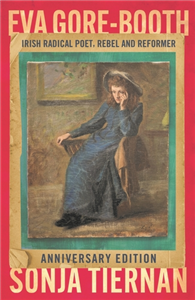 Biography & True StoriesMarch 2026
Eva Gore-Booth: Irish radical poet, rebel and reformer
Anniversary edition
by Sonja Tiernan
An acclaimed biography of poet, pacifist and political firebrand Eva Gore-Booth. The Irish poet and activist Eva Gore-Booth (1870-1926) led a life defiantly at odds with her aristocratic origins. Choosing to live and work among the poor of Manchester, she campaigned on behalf of barmaids, circus performers, flower sellers and pit-brow lasses, her partner, Esther Roper, at her side. Gore-Booth was tireless in her pursuit of justice. She was a militant pacifist during the First World War, a champion of Irish independence and a pioneering thinker on gender and sexuality. She was also a prolific author, publishing nineteen volumes of poetry and prose that reflect the full force of her radical convictions. Featuring a new preface that situates Gore-Booth's life and work in the context of our current political climate, this biography reclaims her place as a significant figure of Anglo-Irish letters and an unsung hero of LGBT+ history.
-
Promoted Content
 Literature & Literary StudiesFebruary 2023
Imagining the Irish child
Discourses of childhood in Irish Anglican writing of the seventeenth and eighteenth centuries
by Jarlath Killeen
This book examines the ways in which ideas about children, childhood and Ireland changed together in Irish Protestant writing of the seventeenth and eighteenth centuries. It focuses on different varieties of the child found in the work of a range of Irish Protestant writers, theologians, philosophers, educationalists, politicians and parents from the early seventeenth century up to the outbreak of the 1798 Rebellion. The book is structured around a detailed examination of six 'versions' of the child: the evil child, the vulnerable/innocent child, the political child, the believing child, the enlightened child, and the freakish child. It traces these versions across a wide range of genres (fiction, sermons, political pamphlets, letters, educational treatises, histories, catechisms and children's bibles), showing how concepts of childhood related to debates about Irish nationality, politics and history across these two centuries.
-
 Trusted Partner
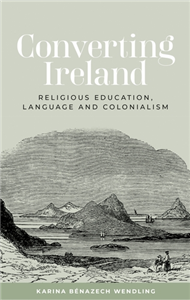 Humanities & Social SciencesApril 2026
Converting Ireland
Religious education, language and colonialism
by Karina Bénazech Wendling
Karina Bénazech Wendling offers a re-assessment of 'souperism'-the long-debated claim that food was used to convert Irish Catholics to Protestantism during the Great Famine. Focusing on the Irish Society for Promoting the Education of the Native Irish through their Own Language, the first group labeled 'soupers' in 1841, she uncovers a more complex picture. Rather than a mere tool of British cultural imperialism, the Society had a deep engagement with the Irish language and Bible translation, while also encouraging religious conversions in the West. The book explores the Society's role in Ireland's religious and political landscape, the rise of Catholic counter-missions, and nationalist resistance. Offering fresh insights into Ireland's religious history and global missionary movements, this book is essential for scholars of Irish studies, interdenominational relations, and education in Ireland.
-
Trusted Partner
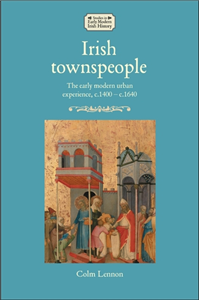 Humanities & Social SciencesMay 2026
Irish townspeople
The early modern urban experience, c.1400–c.1640
by Colm Lennon
Through a series of innovative perspectives, this book examines how early modern Irish townspeople experienced the urban world through a range of family and associational ties. Migrants inducted through town citizenship and marriage bonded more closely as sisters or brothers of confraternities and guilds, consolidating parish membership. Civic religion saw the integration of religion with town politics and councils, and monastic charity of the friars' hospitals preceded the era of modern municipal welfare. In circumstances of the alienation of the long-settled Catholic townspeople from the state's religious and political Reformation in the seventeenth century, they drew sustenance from the continuity of institutions such as colleges, fraternities and hospitals and forms of coexistence with Protestant fellow-citizens.
-
Trusted Partner
 Humanities & Social SciencesJanuary 2017
The West must wait
County Galway and the Irish Free State, 1922–32
by Una Newell
The West must wait presents a new perspective on the development of the Irish Free State. It extends the regional historical debate beyond the Irish revolution and raises a series of challenging questions about post-civil war society in Ireland. Through a detailed examination of key local themes - land, poverty, politics, emigration, the status of the Irish language, the influence of radical republicans and the authority of the Catholic Church - it offers a probing analysis of the socio-political realities of life in the new state. This book opens up a new dimension by providing a rural contrast to the Dublin-centred views of Irish politics. Significantly, it reveals the level of deprivation in local Free State society with which the government had to confront in the west. Rigorously researched, it explores the disconnect between the perceptions of what independence would deliver and what was achieved by the incumbent Cumann na nGaedheal administration.
-
Trusted Partner
 Humanities & Social SciencesFebruary 2017
Scottishness and Irishness in New Zealand since 1840
by Angela McCarthy, Andrew Thompson, John M. MacKenzie
This book examines the distinctive aspects that insiders and outsiders perceived as characteristic of Irish and Scottish ethnic identities in New Zealand. When, how, and why did Irish and Scots identify themselves and others in ethnic terms? What characteristics did the Irish and the Scots attribute to themselves and what traits did others assign to them? Did these traits change over time and if so how? Contemporary interest surrounding issues of ethnic identities is vibrant. In countries such as New Zealand, descendants of European settlers are seeking their ethnic origins, spurred on in part by factors such as an ongoing interest in indigenous genealogies, the burgeoning appeal of family history societies, and the booming financial benefits of marketing ethnicities abroad. This fascinating book will appeal to scholars and students of the history of empire and the construction of identity in settler communities, as well as those interested in the history of New Zealand.
-
Trusted Partner
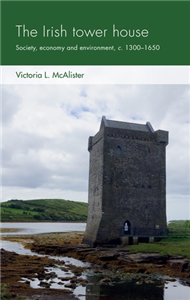 Humanities & Social SciencesApril 2021
The Irish tower house
Society, economy and environment, c. 1300–1650
by Victoria L. McAlister
The Irish tower house examines the social role of castles in late-medieval and early modern Ireland. It uses a multidisciplinary methodology to uncover the lived experience of this historic culture, demonstrating the interconnectedness of society, economics and the environment. Of particular interest is the revelation of how concerned pre-modern people were with participation in the economy and the exploitation of the natural environment for economic gain. Material culture can shed light on how individuals shaped spaces around themselves, and tower houses, thanks to their pervasiveness in medieval and modern landscapes, represent a unique resource. Castles are the definitive building of the European Middle Ages, meaning that this book will be of great interest to scholars of both history and archaeology.
-
Trusted Partner
 Humanities & Social SciencesJanuary 2023
Democracy and dissent in the Irish Free State
by Jason Knirck
-
Trusted Partner
 Literature & Literary StudiesMarch 2009
Irish Literature Since 1990
by Michael Parker, Scott Brewster
-
Trusted Partner
-
Trusted Partner
 Literature & Literary StudiesMarch 2007
On the uses of history in recent Irish writing
by Bernhard Klein
This book offers a critical reassessment of the uses of history in contemporary Irish literature and culture. It argues that in much recent Irish writing, history is approached not as the proverbial 'nightmare' from which Joyce's Stephen Dedalus tried to awake, but as a rich, imaginative resource. Drawing on recent debates in Irish literary and cultural criticism, On the uses of history in recent Irish writing explores the varied, creative, and often critically challenging forms of rewriting Ireland's troubled past in contemporary prose, drama and poetry. Individual chapters focus on literary treatments of the Tudor reconquest, the Famine, the Northern Irish Troubles and other key events in Irish history, highlighting in a series of close readings the unique forms of historical thought enabled by different literary forms and genres. Canonical works by authors such as Seamus Heaney, Derek Mahon, Tom Paulin, Brian Friel, Stewart Parker and Frank McGuinness are considered alongside lesser known writers and texts, placing each in their wider social, cultural and historical contexts. ;
-
Trusted Partner
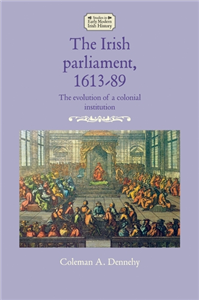 Humanities & Social SciencesAugust 2022
The Irish parliament, 1613–89
The evolution of a colonial institution
by Coleman A. Dennehy
The Irish parliament was both the scene of frequent political battles and an important administrative and legal element of the state machinery of early modern Ireland. This institutional study looks at how parliament dispatched its business on a day-to-day basis. It takes in major areas of responsibility such as creating law, delivering justice, conversing with the executive and administering parliamentary privilege. Its ultimate aim is to present the Irish parliament as one of many such representative assemblies emerging from the feudal state and into the modern world, with a changing set of responsibilities that would inevitably transform the institution and how it saw both itself and the other political assemblies of the day.
-
Trusted Partner
 Humanities & Social SciencesMarch 2012
John Hume and the revision of Irish nationalism
by P. J. McLoughlin
The book, available at last in paperback, explores the politics of the most important Irish nationalist leader of his generation, and one of the most influential figures of twentieth-century Ireland: the Nobel Peace Prize winner, John Hume. Given his central role in the reformulation of Irish nationalist ideology, and the vital part which he played in drawing violent republicanism into democratic politics, the book shows Hume to be one of the chief architects of the Northern Ireland peace process, and a key figure in the making of the 1998 Good Friday Agreement. At the same time, it considers Hume's failure in what he stated to be his foremost political objective: the conciliation of the two communities in Northern Ireland. The book is essential reading for specialists on Irish history and politics, but will also be of interest to academics and practitioners working in other regions of political and ethnic conflict. In addition, it will appeal to readers seeking to understand the crucial role played by Hume in modernising Irish nationalist thinking, and bringing peace to Northern Ireland. ;
-
Trusted Partner
 Humanities & Social SciencesJune 2021
Na Fianna Éireann and the Irish Revolution, 1909–23
by Marnie Hay
-
Trusted Partner
 Humanities & Social SciencesNovember 2009
Re-evaluating Irish national security policy
Affordable threats?
by Michael Mulqueen
On the afternoon of September 11 2001 the Irish Prime Minister (Taoiseach), Bertie Ahern ordered the 'heads of the security services of key government departments' to undertake a complete re-evaluation of measures to protect the state from attack. Hence, underway within hours of the 9/11 outrage in the United States was potentially the most far-reaching review of Irish national security in decades. This book, the first major academic investigation of Irish national security policy as it has operated since 9/11, provides a theoretically informed analysis of that re-evaluation and the decisions which have been taken as a consequence of it up until September 2008. In so doing it draws on unprecedented access to Ireland's police, security and intelligence agencies; over twenty senior personnel agreed to be interviewed. Theoretically the author demonstrates the utility to the analysis of national security policy of three conceptual models of historical institutionalism, governmental politics and threat evaluation. The text is of interest to scholars of Security Studies, International Relations and Politics, as well as state and NGO personnel, journalists and general readers. ;
-
Trusted Partner
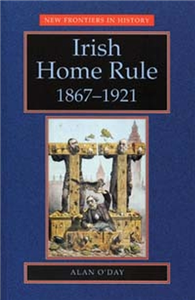 Humanities & Social SciencesAugust 1998
Irish Home Rule
by Alan O'Day, Mark Greengrass
Irish Home Rule considers the pre-eminent issue in British politics during the late nineteenth and early twentieth-centuries. It is the first account to explain the various self-government plans, to place these in context and examine the motives for putting the schemes forward. The book distinguishes between moral and material home rulers, making the point that the first appealed especially to outsiders, some Protestants and the intelligentsia, who saw in self-government a means to reconcile Ireland's antagonistic traditions. In contrast, material home rulers viewed a Dublin Parliament as a forum of Catholic interests. This account appraises the home rule movement from a fresh angle, distinguishing it from the usual division drawn between physical force and constitutional nationalists It maintains that an ideological continuity runs from Young Ireland, the Fenians, the early home rulers including Isaac Butt and Charles Stewart Parnell, to the Gaelic Revivalists to the Men of 1916. These nationalists are distinguishable from material home rulers not on the basis of methods or strategy but by a fundamental ideological cleavage. ;
-
Trusted Partner
 Humanities & Social SciencesJanuary 2026
Afterlives of the Troubles
Life stories, culture and conflict transformation in Northern Ireland
by Graham Dawson
Focusing on experiential life stories across a range of forms and practices, this book investigates subjectivity, culture and the cultural politics of representation as a neglected dimension of conflict transformation in the Northern Irish peace process. Interdisciplinary critical perspectives from historical cultural studies, oral history and popular-memory theory inform close interpretive engagement with life stories in their cultural, historical and geographical contexts. This enables exploration of the complex temporal dynamics of 'post-conflict' subjectivities in the lengthening 'afterlife' of the Troubles, where feelings attached to conflict experiences are not 'past' but haunt the present, and memory-work carries future-oriented desires for truth, justice and reconciliation. Through case studies responding to the evolving peace process through this prism of life-storytelling, Afterlives maps a contested history of legacy policy-making and approaches to 'dealing with the past', from devolution in 2005-7 through to the Legacy and Reconciliation Act of 2023.
-
Trusted Partner
 Cultural studiesNovember 2014
Are the Irish different?
by Edited by Tom Inglis
This book examines the extent and nature of Irish social and cultural difference. It is a collection of twenty-three short essays written in a clear and accessible manner by human scientists who are international experts in their area. The topics covered include the nature of Irish nationalism and capitalism, the Irish political elite, the differences and similarities of the Irish family, the upsurge in immigration, Northern Ireland, the Irish diaspora, the Irish language, sport, music and many other topics. The book will be bought by those who have an academic and personal interest in Irish Studies. It will be attractive to those who are not familiar with the theories and methods of the human sciences and how they can shine a light on the transformations that have taken place in Ireland. Tom Inglis, the editor of the collection, is a sociologist who has written extensively on Irish culture and society.
-
Trusted Partner
 Humanities & Social SciencesNovember 2014
Are the Irish different?
by Tom Inglis
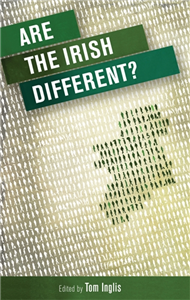
This book examines the extent and nature of Irish social and cultural difference. It is a collection of twenty-three short essays written in a clear and accessible manner by human scientists who are international experts in their area. The essays cover topics covered include the nature of Irish nationalism and capitalism, the Irish political elite, the differences and similarities of the Irish family, the upsurge in immigration, Northern Ireland, the Irish diaspora, the Irish language, sport, music and many other topics. The book will be bought by those who have an academic and personal interest in Irish Studies. It will be attractive to those who are not familiar with the theories and methods of the human sciences and how they can shine a light on the transformations that have taken place in Ireland. Tom Inglis, the editor of the collection, is a sociologist who has written extensively on Irish culture and society. ;
-
Trusted Partner


