
Your Search Results


-
Promoted Content

 The ArtsMarch 2026
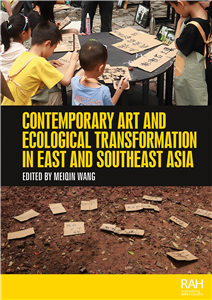
Contemporary art and ecological transformation in East and Southeast Asia
by Meiqin Wang
This anthology, presenting new research from fourteen scholars, delves into the interplay between contemporary art and ecological concerns in East and Southeast Asia. Focused on the concept of artistic remediation, the book unravels the diverse capacities of art to combat systemic anthropogenic destruction to the environment and ecology. At its core, the book articulates the ongoing ecological transformation in art and art history that embraces a paradigm shift in human-nature relationships, emphasizing interconnectedness of all life forms of the Earth. Bridging art studies, activism, and environmental studies, the book examines how artistic practices in the region have engaged with ecocritical reflection, biodiversity advocacy, sustainable practices, and environmental justice, among others. Providing a platform for critical and timely analysis of artistic interventions in the face of existential crises, the book acknowledges diverse voices of scholars who have situated their scholarship in the cultural and artistic specificities of various societies, locales, and communities in the region.
-
Promoted Content
 Humanities & Social SciencesJanuary 2026
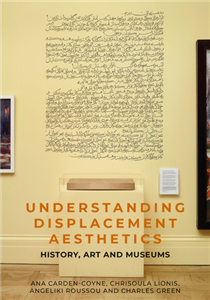
Understanding displacement aesthetics
History, art and museums
by Ana Carden-Coyne, Charles Green, Chrisoula Lionis, Angeliki Roussou
Since the Second World War and the formalisation of the international refugee regime, forced displacement has been marked by a set of aesthetic, practical, and institutional concerns. Understanding Displacement Aesthetics examines how visual culture and art practice constructs and challenges ideas about forced displacement and refugees. The novel framework for 'displacement aesthetics' moves beyond conventional understandings of aesthetics as merely representational, demonstrating the entanglement of visual culture, art practices, and forced displacement in postmigrant contexts. Bringing together the fields of cultural history, art history, and curatorial studies, Understanding Displacement Aesthetics identifies four areas for consideration: visual tropes of refugeedom; language and identity; institutional and artistic responses to displacement; and lived experiences of artists with backgrounds of displacement. Through archival research, visual culture and art, interviews, and collaborative curatorship, Understanding Displacement Aesthetics offers new insight into overcoming the limitations that contexts of displacement can present for artists, art galleries and institutions addressing refugeedom and its legacies.
-
 Trusted Partner
 The ArtsOctober 2025
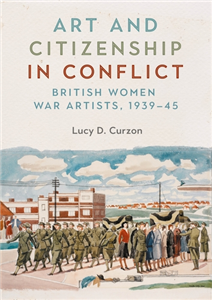
Art and citizenship in conflict
British women war artists, 1939–45
by Lucy Curzon
Art and Citizenship in Conflict examines the work of women war artists in order to highlight the complexity of citizenship and gender in Britain during the Second World War. Evelyn Dunbar, Mary Kessell, Ethel Gabain, Stella Schmolle, and Laura Knight, among others, were commissioned by the War Artists' Advisory Committee (WAAC) to document the millions of women who took up sometimes unconventional roles-in agriculture, the auxiliary services, and manufacturing, among others-to support the British war effort. Indeed, their prints, drawings, and paintings were part of a broader scheme to uphold morale and promote much-needed citizen involvement on the home front. While there is growing interest, the importance of their remit in the history of the Second World War and the quality of their artistry have nonetheless not yet secured them a significant place in scholarship. Art and Citizenship in Conflict seeks to amend this gap while also broadening approaches to the study of war itself.
-
Trusted Partner

 August 2024
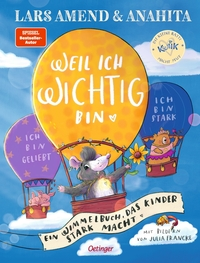
Die kleine Ratte Kwiik macht stark. Weil ich wichtig bin
Ein Wimmelbuch, das Kinder stark macht
by Lars Amend, Anahita, Julia Francke
Hier werden Kinder stark Achtung, hier kommt Kwiik! In diesem kunterbunten Wimmelbuch von Bestseller-Autor Lars Amend dreht sich alles um eine kleine Ratte, die sich traut, anders zu sein. Das Pappbilderbuch enthält fünf detailreich illustrierte Szenen zu den Themen Achtsamkeit und Selbstliebe. In jeder Szene findet sich ein starker Glaubenssatz, der für Kinder ab 2 Jahren leicht verständlich ist. So lernen schon die Allerkleinsten spielerisch, ihre Stärken zu erkennen und diese auch auszusprechen. Kleine Suchaufgaben in den Wimmelbildern runden das Buch ab und sorgen für viel Spaß beim Lesen und Entdecken! Ein wunderbares Wimmelbuch für Familien, die wichtige Themen wie Selbstliebe und Achtsamkeit schon früh in den Alltag integrieren möchten. Die kleine Ratte Kwiik. Weil ich wichtig bin: Affirmationen für Kinder Du bist stark: Ein Wimmelbuch mit kraftvollen Affirmationen für Kinder ab 2 Jahren von Bestseller-Autor Lars Amend. Einzigartig und leicht verständlich: Die detailreichen Bilder und altersgerechten Glaubenssätze laden Kinder ein, sich selbst zu lieben und zu akzeptieren. Authentisch und lebensnah: Autor Lars Amend und seine Partnerin Anahita stehen für die Themen Selbstfürsorge, Spiritualität und Achtsamkeit. Wichtiges Thema: Das unterhaltsame Pappbilderbuch macht es Kindern leicht, sich spielerisch mit sich selbst auseinanderzusetzen – für mehr Selbstliebe und Achtsamkeit im Alltag. Das kunterbunte Wimmelbuch mit der kleinen Ratte Kwiik macht Kinder ab 2 Jahren stark. Seine fünf Glaubenssätze „Ich bin klug”, „Ich bin stark”, „Ich werde geliebt”, „Ich bin in Sicherheit” und „Ich kann im Leben alles schaffen, was ich will” bieten schon den Kleinsten kraftvolle Ankerpunkte für ihren Alltag.
-
Trusted Partner
 March 2025
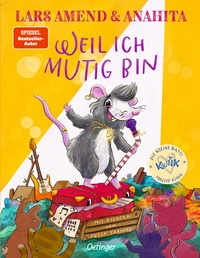
Die kleine Ratte Kwiik macht stark. Weil ich mutig bin
by Lars Amend, Anahita, Julia Francke
Selbstbewusstsein bei Kindern stärken Steh zu dir und zu dem, was du liebst! Die kleine Ratte Kwiik liebt es zu singen, aber die anderen Ratten finden das total nervig und lachen Kwiik aus. Traurig zieht Kwiik los, um einen Ort zu finden, an dem die Ratte die Liebe zur Musik ungehemmt ausleben kann. Beim großen Schrottplatz-Festival bekommt Kwiik schließlich die Chance, vor anderen zu singen. Ob Kwiik sich traut, ganz zu sich selbst und zu der großen Leidenschaft zur Musik zu stehen? Ein wunderschönes Bilderbuch, das Klein und Groß zu Selbstliebe auffordert und richtig viel Mut macht. Weil ich mutig bin: Eine starke Geschichte über Selbstvertrauen und Mut Kindern Mut machen: Motivierendes Bilderbuch über Selbstliebe lernen von Bestsellerautor Lars Amend und Anahita für Kinder ab 3 Jahren, zauberhaft illustriert von Julia Francke. Unterhaltsam und kindgerecht: Die leicht verständliche Geschichte hilft Kindern, ihre Gefühle besser zu verstehen und auszudrücken. Wichtige Botschaften: Der erfolgreiche Autor Lars Amend und seine Partnerin Anahita vermitteln spielerisch Themen wie Selbstfürsorge, Spiritualität und Achtsamkeit. Schüchternheit überwinden: Das Gefühle-Bilderbuch ist ideal für Eltern, die mit ihren Kindern über Selbstbewusstsein, Mut und Toleranz sprechen und diese Werte in den Alltag integrieren möchten. „Die kleine Ratte Kwiik“-Bücher von Bestsellerautor Lars Amend und der erfahrenen Pädagogin Anahita beschäftigen sich mit den großen und kleinen Fragen des Lebens. Im Mittelpunkt der Geschichten stehen die Themen Selbstfürsorge und Achtsamkeit. Sie werden unterhaltsam und altersgerecht vermittelt und helfen Kindern, sich selbst zu akzeptieren und stolz auf ihre Einzigartigkeit zu sein. Neben Bilderbüchern gibt es auch Wimmelbücher und Hörspiele von und mit der Ratte Kwiik.
-
Trusted Partner
 August 2024
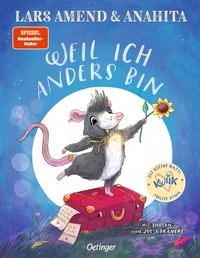
Die kleine Ratte Kwiik macht stark. Weil ich anders bin
by Lars Amend, Anahita, Julia Francke
Anders sein ist ganz normal! Die kleine Ratte Kwiik ist anders als andere Ratten. Während die anderen es schmutzig und dunkel mögen und gerne im Müll wühlen, liebt Kwiik die Sonne, das Tanzen und duftende Blumen. Dafür wird Kwiik gerne von den anderen ausgelacht. Auch wenn Kwiik alles tut, um dazuzugehören: die kleine Ratte ist einfach anders. Aber ist das etwas Schlechtes? Ist es nicht ein Geschenk, anders und besonders zu sein? Bestseller-Autor Lars Amend erzählt in seinem Bilderbuch für Kinder ab 3 Jahren eine warmherzige Geschichte über Mut und Selbstakzeptanz. Die kleine Ratte Kwiik beschäftigt sich mit den großen und kleinen Fragen des Lebens, mit denen jeder irgendwann konfrontiert wird. Das unterhaltsame Bilderbuch gibt Eltern wertvolle Impulse, um mit ihren Kleinkindern altersgerecht über Themen wie Toleranz und Anderssein zu sprechen. Eine wunderbare Geschichte für alle Familien, die Selbstliebe und Achtsamkeit in ihren Alltag integrieren möchten. Weil ich anders bin: Ein Bilderbuch über Selbstakzeptanz – und über eine mutige kleine Ratte Liebe dich selbst: Ein kraftvolles Bilderbuch für Kinder ab 3 Jahren von Bestseller-Autor Lars Amend. Wichtige Alltagsthemen: Die Bilderbuchgeschichte greift wichtige Themen wie Toleranz und Selbstliebe verständlich und altersgerecht auf. Authentisch und lebensnah: Autor Lars Amend und seine Partnerin Anahita stehen für Selbstfürsorge, Spiritualität und Achtsamkeit. Stärkt das Selbstbewusstsein: Die Geschichte erzählt einfühlsam von Kwiiks Mut, anders zu sein und eignet sich hervorragend für Eltern, um mit ihren Kindern über wichtige Werte wie Selbstakzeptanz zu sprechen. Die kleine Ratte Kwiik setzt sich in diesem warmherzigen Bilderbuch mit Themen wie Selbstfürsorge und Achtsamkeit auseinander. Kinder ab 3 Jahren erfahren hier, wie sie ein ausgeglichenes Leben im Einklang mit sich selbst führen können und lernen, auf ihre innere Stimme zu hören.
-
Trusted Partner

 August 2024
Die kleine Ratte Kwiik. Weil ich anders bin
by Anahita, Lars Amend, Cathlen Gawlich, Lars Amend, Anahita, Ralf Kiwit, Ralf Kiwit, Patrick Ehrlich, Insa Schwartz, Ralf Kiwit, Julia Francke
Die kleine Ratte Kwiik ist ganz anders als die anderen Ratten. Während die anderen genüsslich im Müll wühlen und es schmutzig und dunkel mögen, schnuppert Kwiik viel lieber an duftenden Blumen und liebt es zu tanzen und genießt den Sonnenschein. Dafür wird Kwiik von den anderen ständig ausgelacht. Und obwohl die kleine Ratte alles tut, um dazuzugehören, ist ganz klar, dass Kwiik einfach anders ist. Aber ist das eigentlich schlimm? Ist es nicht auch ein Geschenk, anders, ganz besonders zu sein? Dieses außergewöhnliche Hörbuch umfasst zwei Bilderbuchgeschichten von der kleinen Ratte Kwiik, die richtig viel Mut machen und Klein und Groß in Selbstliebe und Achtsamkeit stärken. Inklusive bestärkendem Song und Affirmationen für den Alltag. - Liebe dich selbst: Ein kraftvolles Mitmach-Hörbuch für Kinder ab 3 Jahren von Bestseller-Autor Lars Amend. - Wichtige Alltagsthemen: Toleranz und Selbstliebe verständlich und altersgerecht aufbereitet. - Authentisch und lebensnah: Autor Lars Amend und seine Partnerin Anahita stehen für Selbstfürsorge, Spiritualität und Achtsamkeit. - Stärkt das Selbstbewusstsein: Die Geschichte erzählt einfühlsam von Kwiiks Mut, anders zu sein und eignet sich hervorragend für Eltern, um mit ihren Kindern über wichtige Werte wie Selbstakzeptanz zu sprechen.
-
Trusted Partner
 The ArtsJune 2026
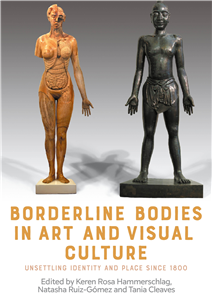
Borderline bodies in art and visual culture
Unsettling identity and place since 1800
by Keren Hammerschlag, Natasha Ruiz-Gómez, Tania Anne Cleaves
Borderline bodies offers original interpretations of visual representations of human bodies as bounded and unbounded, fortified and permeable, mobile and static-subject to borders and able to traverse and challenge them. It also takes as its focus images and objects that might be considered 'borderline' because they sit at the intersection of disciplines or sit outside accepted notions of what constitutes serious 'art.' By mapping the ways human bodies traverse borders and straddle-even dismantle-categories, this volume's essays approach afresh the relationship of bodies to traditional modes of representation, especially in art and medicine, and encourage us to think anew about how we understand the relationship between human corporeality, identity and place. Critical transdisciplinary and transnational analyses of objects and images from a range of geographies shed new light on the themes of: bodies and identity; typologies of the body; racialised bodies; 'normal' and 'abnormal' bodies; encounters between bodies; bodies in transition; bodies and mobility; and the bounded and unbounded human body. The outcome is a fresh approach to depictions of the human body produced for the purposes of artistic and medical education, aesthetic edification, and scientific and professional advancement, which disrupts assumptions about the normative human body perpetuated through Western image-making traditions.
-
Trusted Partner
 The ArtsApril 2026
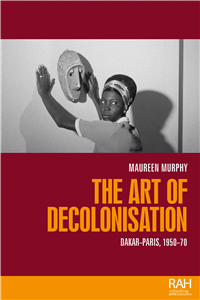
The art of decolonisation
Dakar-Paris, 1950-70
by Maureen Murphy
The art of decolonisation examines how artists challenged colonial legacies and reconfigured power through transnational networks of art and diplomacy. Adopting a global and transhistorical perspective, it explores artistic, political, and institutional relations between France and Senegal during decolonisation and the Cold War. From the emergence of a national modern art in Senegal to contested cultural policies and high-profile exhibitions-such as those featuring Picasso and Soulages in Dakar, or contemporary Senegalese art in Paris-this book traces the circulation of artworks, ideas, and influence across borders. It reveals how visual artists and filmmakers shaped a new artistic geopolitics between 1950 and 1970. Reconsidering the accepted chronology of the 'global turn', The art of decolonisation shows that the roots of global art discourse run deeper than the 1990s, and were already forming during the era of independence struggles.
-
Trusted Partner
 History of art & design styles: c 1800 to c 1900August 2016
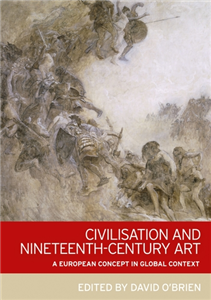
Civilisation and nineteenth-century art
A European concept in global context
by O'Brien
Over the course of the long nineteenth century, Civilisation was the subject of some of the most prominent public mural paintings and sculptures in Europe and the United States, especially those that speculated on the direction of history. It also underpinned Western depictions of non-Western societies and evaluations of social progress and artistic excellence. The essays in this volume explore the ways in which the idea of Civilisation acted as a lens through which Europeans and Americans represented themselves and others, how this concept reshaped understandings of historical and artistic development, and also how it changed and was put to new uses as the century progressed. This collection will prove invaluable to students and academics in both history and art history.
-
Trusted Partner
 Literature & Literary StudiesOctober 2012
Art and Literature of the Second Empire
by David Baguley
This volume explores the characteristics of the art and literature of the Second Empire in France; it examines the attitudes and positioning of artists and writers of the period in relation to a regime of dubious legitimacy, and the ways in which that regime exploited to its advantage the artistic capital available to it. ;
-
Trusted Partner
 The ArtsJanuary 2012
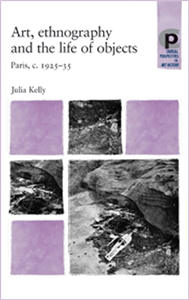
Art, ethnography and the life of objects
Paris, c.1925–35
by Julia Kelly, Marsha Meskimmon, Shearer West, Tim Barringer
In the 1920s and 1930s, anthropology and ethnography provided new and striking ways of rethinking what art could be and the forms which it could take. This book examines the impact of these emergent disciplines on the artistic avant-garde in Paris. The reception by European artists of objects arriving from colonial territories in the first half of the twentieth century is generally understood through the artistic appropriation of the forms of African or Oceanic sculpture. The author reveals how anthropological approaches to this intriguing material began to affect the ways in which artists, theorists, critics and curators thought about three-dimensional objects and their changing status as 'art', 'artefacts' or 'ethnographic evidence'. This book analyses texts, photographs and art works that cross disciplinary boundaries, through case studies including the Dakar to Djibouti expedition of 1931-33, the Trocadéro Ethnographic Museum, and the two art periodicals Documents and Minotaure. Through its interdisciplinary and contextual approach, it provides an important corrective to histories of modern art and the European avant-garde. ;
-
Trusted Partner
 The ArtsDecember 2007
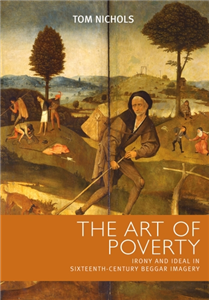
The art of poverty
Irony and ideal in sixteenth-century beggar imagery
by Tom Nichols
The art of poverty is the first book in English to analyse depictions of beggars in sixteenth-century European art. Featuring works from Germany, the Low Countries, Britain, France and Italy, it discusses a diverse body of imagery in many different media, from crude woodcuts to monumental church altarpieces. It develops a striking thesis, arguing that these works largely conformed to two paradoxical, though mutually supportive, representational approaches. The earlier chapters follow the emergence of a trenchantly negative approach in Northern art, in which beggars are shown as vagabonds, whose idleness and thievery threatened the values of sixteenth-century society (especially its growing emphasis on the need to work). In the other predominant visual mode, beggars are exalted as examples of sacred purity. In many Italian religious paintings, beggars are morally exalted with reference to sacred texts, and made formally beautiful with reference to revered artistic models. Though these approaches reflect the impact of religious reform, it is shown that, by the end of the century, they happily co-existed within Protestant and Catholic cultures. The final part of the book is concerned with the issue of artistic style and with the growing tendency of the beggar image to mediate and dissolve the didactic traditions through which it had originally been defined. The art of poverty will be of special interest to scholars and students of Renaissance art history, and its progressive approach and cross-disciplinary theme and perspective will also make it vital reading for those concerned with the development of early modern European culture. ;
-
Trusted Partner
 MedicineMay 2013
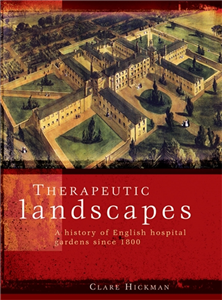
Therapeutic landscapes
A history of English hospital gardens since 1800
by Clare Hickman
Therapeutic landscapes uniquely brings together historical and contemporary debates on the use of the garden as a therapeutic space. Hickman narrates the story of the landscapes associated with psychiatric, general and specialist medical institutions and asks what did they look like, how were they used and how did this relate to medical concepts? It traces the history of these gardens from the grottos, Chinese galleries and summer houses of elite nineteenth-century lunatic asylums, through Florence Nightingale's championing of the Victorian pavilion hospital design with its courtyard gardens, and the open-air institutions of the Edwardian period with their revolving chalets. It concludes with a discussion of new hospital gardens being created by designers such as Dan Pearson in the twenty-first century. This book will be essential reading for those interested in the histories of place, space and material culture, and in particular medical historians, garden historians and historical geographers. ;
-
Trusted Partner
 The ArtsFebruary 2026
Caribbean eco-aesthetics
Strategies of survival through contemporary art
by Kate Keohane, Daniella Rose King, Giulia Smith
This edited volume reframes the Caribbean as a paradigm of ecological resilience and creativity by bringing together the voices of contemporary artists and scholars who are at the forefront of environmental activism in the region and across its diasporas. While dominant narratives percolating from the environmental sciences to the mainstream press present the Caribbean as a frontier of planetary disaster, the contributors to this volume show how the region offers radical models for overcoming the environmental challenges of the present. At the heart of this argument lies the history of the Caribbean as a centre for grassroots forms of anti-colonial and anti-capitalist resistance founded upon nature-centred cosmologies and practices. Caribbean Eco-Aesthetics shows how contemporary artists are mobilising this radical heritage in a bid to unlock alternative planetary futures.
-

 The ArtsMarch 1905
Concerning the Spiritual in Art
by Wassily Kandinsky
A pioneering work in the movement to free art from its traditional bonds to material reality, this book is one of the most important documents in the history of modern art. Written by the famous nonobjective painter Wassily Kandinsky (1866–1944), it explains Kandinsky's own theory of painting and crystallizes the ideas that were influencing many other modern artists of the period. Along with his own groundbreaking paintings, this book had a tremendous impact on the development of modern art. Kandinsky's ideas are presented in two parts. The first part, called "About General Aesthetic," issues a call for a spiritual revolution in painting that will let artists express their own inner lives in abstract, non-material terms. Just as musicians do not depend upon the material world for their music, so artists should not have to depend upon the material world for their art. In the second part, "About Painting," Kandinsky discusses the psychology of colors, the language of form and color, and the responsibilities of the artist. An Introduction by the translator, Michael T. H. Sadler, offers additional explanation of Kandinsky's art and theories, while a new Preface by Richard Stratton discusses Kandinsky's career as a whole and the impact of the book. Making the book even more valuable are nine woodcuts by Kandinsky himself that appear at the chapter headings. This English translation of Über das Geistige in der Kunst was a significant contribution to the understanding of nonobjectivism in art. It continues to be a stimulating and necessary reading experience for every artist, art student, and art patron concerned with the direction of 20th-century painting.
-
Trusted Partner
 Humanities & Social SciencesJuly 2025
Empirical art
Filmmaking for fieldwork in practice
by Andy Lawrence, Martha-Cecilia Dietrich
Empirical art: Filmmaking for fieldwork in practice is an insightful exploration of what the craft of filmmaking brings to social science research. Providing creative avenues on how to narrate encounters, relationships, and experiences during fieldwork, this comprehensive volume offers a rich tapestry of theoretical explorations and explorative methodologies. Skilfully connecting the worlds of ethnography, art and cinema, the contributors in this book act as a compass for filmmakers and researchers venturing to use a camera and microphone to relate and narrate their research collaborations and fieldsites. Drawing from the authors' extensive experience in disciplines like social anthropology, environmental humanities, and political science, "Empirical Art" breaks down the intricate process of crafting ethnographic films that departs from the researcher's subjectivity. Covering aspects of filmmaking from conceptualisation to production and distribution, readers are equipped with a treasure trove of collaborative techniques, innovative approaches, and ethical considerations necessary to generate and examine storytelling practices in contemporary fields of study. The authors discuss the significance of the multiple roles that technologies of filmmaking play in reflecting on cultural practices, social dynamics, and (beyond) human storytelling and their transformative potentials. Whether a seasoned filmmaker, an aspiring ethnographer, or an academic seeking new dimensions for their research, Empirical Art serves as a guide to integrating visual storytelling, cinema craft and empirical research.
-
Trusted Partner
 Teaching, Language & ReferenceDecember 2017
Sustainable art communities
Contemporary creativity and policy in the transnational Caribbean
by Leon Wainwright, Kitty Zijlmans
This collection sets out a range of perspectives on the challenges that the Caribbean is facing today, showing how the arts hold a crucial role in forging a more sustainable Caribbean community. It forcefully attests to the view that visual art in particular has a specific contribution to make and that this in turn means striving to foster a sustainable arts community that can contend with an environment of uneven infrastructure, opportunity and public awareness. Spanning the scholarly, artistic and professional fields of arts and heritage, this book compares two of the Caribbean's key linguistic regions - the Anglophone and the Dutch - to address the themes of global-local relations, capital, patronage, morality, contestation, sustainability and knowledge exchange. The result is a milestone of collaboration from diverse global settings of the Caribbean and its diaspora, including Jamaica, the Bahamas, Barbados, Suriname, Curaçao, the Netherlands, United Kingdom, Germany and the United States.
-
Trusted Partner
-
Trusted Partner
 Humanities & Social SciencesNovember 2025
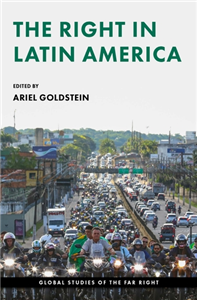
The right in Latin America
by Ariel Goldstein
This book provides an in-depth analysis of the rise and influence of both radical and mainstream right-wing movements across Latin America. Through country-specific case studies, it explores the evolution of these groups and their impact on politics, culture, and governance, highlighting key figures and strategies shaping the political landscape in the region.


