Your Search Results

      • Penerbit Republika

        Republika Penerbit is a Jakarta-based publishing company. We publish books with genres ranging from religious (Islamic books), nonfiction, biography, historical fiction, contemporary fiction, fantasy, picture books, to comics.  Some of our fiction has been adapted into films and there will be more to be filmed.

        View Rights Portal
      • Cassava Republic Press

        Cassava Republic Presswas founded with the aim of bringing high quality fiction and non-fiction for adults and children alike to a global audience.

        View Rights Portal
      • Trusted Partner
        Humanities & Social Sciences
        June 2025

        Diaspora diplomacy

        The politics of Turkish emigration to Europe

        by Ayca Arkilic

        Since the early 2000s, Turkey has shown an unprecedented interest in its diaspora. This book provides the first in-depth examination of the institutionalisation of Turkey's diaspora engagement policy since the Justice and Development Party's rise to power in 2002, the Turkish diaspora's new role as an agent of diplomatic goals, and how Turkey's growing sphere of influence affects intra-diaspora politics and diplomatic relations with Europe. The book is based on fieldwork in Turkey, France and Germany, and interviews conducted with diaspora organisation leaders and policymakers. Diasporas have become transformative for relations at the state-to-state level and blur the division between the domestic and the foreign. A case study of Turkey's diasporas is significant at a time when emigrants from Turkey form the largest Muslim community in Europe and when issues of diplomacy, migration and citizenship have become more salient than ever.

      • Trusted Partner
        Teaching, Language & Reference
        May 2025

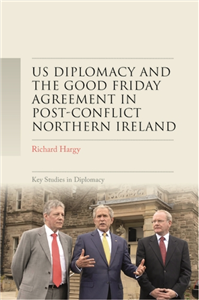
        US diplomacy and the Good Friday Agreement in post-conflict Northern Ireland

        by Richard Hargy

        Richard Haass and Mitchell Reiss, as autonomous diplomats in the George W. Bush State Department, were able to alter US intervention in Northern Ireland and play critical roles in the post-1998 peace process. Their contributions have not been fully appreciated or understood. The restoration of Northern Ireland's power-sharing government in 2007 was made possible by State Department-led intervention in the peace process. There are few references to Northern Ireland in work examining the foreign policy legacy of the George W. Bush presidency. Moreover, the ability to control US foreign policy towards the region brought one of George W. Bush's Northern Ireland special envoys into direct diplomatic conflict with the most senior actors inside the British government. This book will uncover the extent of this fall-out and provide original accounts on how diplomatic relations between these old allies became so fraught.

      • Trusted Partner
        Humanities & Social Sciences
        March 2026

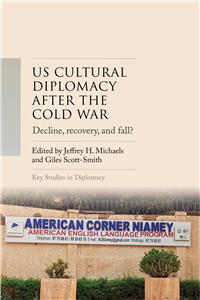
        US cultural diplomacy after the Cold War

        Decline, recovery, and fall

        by Jeffrey H. Michaels, Giles Scott-Smith

        In the decades following the USSR's collapse, the US has gone from unrivalled hegemon to a position of relative decline. With America 'triumphant' after 1991, its culture, like its diplomatic, military and economic power, remained unmatched. Such favourable circumstances seemed to undercut the need for cultural diplomacy. Why should the US government sell a product that was already selling so well? After 9/11, however, it was apparent the US image was less popular than previously assumed. To reverse this negative image, cultural diplomacy was revived. Despite being beset by internal and external challenges, US officials supported various cultural initiatives and partnerships to promote the American brand globally. Along the way, cultural diplomacy has made use of new forms of expression to promote American culture and build positive foreign relations. The arrival of the second Trump administration in 2025 has clearly signalled an end to using cultural diplomacy to further causes of empowerment and diversity, making the future uncertain for this field of activity.

      • Trusted Partner
      • Trusted Partner
        Humanities & Social Sciences
        November 2024

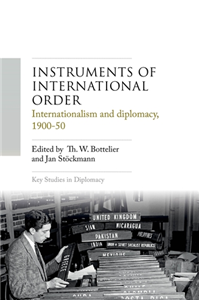
        Instruments of international order

        Internationalism and diplomacy, 1900-50

        by Thomas W. Bottelier, Jan Stöckmann

        During the first half of the twentieth century, world politics was reshaped in pursuit of a new international order. The ideological foundations of the 'new diplomacy' (and its fate during the interwar period) are well known. This book instead examines the practices of internationalism and diplomacy from the First Hague Conference of 1899 to the aftermath of the Second World War. By focusing on these practices, such as disarmament regimes or public diplomacy, and their use as instruments to build international order(s), it emphasises the constructed, contested, and experimental character of what subsequently became a standard repertoire of international politics. Essays from a range of interdisciplinary scholars address well-established principles such as self-determination, and also less prominent practices such as small arms control or parliamentary inquiry. The book makes a major contribution to the growing historiography on twentieth-century internationalism.

      • Trusted Partner
        Politics & government
        March 2009

        Race and representation

        Electoral politics and ethnic pluralism in Britain

        by Shamit Saggar

        The central concern of Race and representation is the political integration of Britain's ethnic minorities. The book provides a direct and extensive comparison between the voting behaviour of ethnic minorities and the electorate as a whole. Newly available in paperback, the book pioneers innovative use of the British Election Study and features the results of the 1997 ethnic minority election study. It also contains an in-depth look at party strategy with regard to ethnic minorities, ethnic minority attitudes on key issues and policies, and the lessons to be learned from the performance of black and Asian parliamentary candidates. In particular, the analysis aims to uncover whether electoral abstention, orientation towards issues and party alignment are primarily circumstantial, as existing research suggests is the case among the white population. It is a major re-examination of the role of ethnicity in shaping political outlook and voting choice. The book will be essential reading for students, teachers and scholars interested in the involvement of Britain's ethnic minorities in the democratic process. It will also have extensive appeal among activists, policy-makers and opinion formers concerned with ethnic diversity, race relations and political inclusion.

      • Trusted Partner
        Humanities & Social Sciences
        June 2026

        Instruments of international order

        Internationalism and diplomacy, 1900-50

        by Th. W. Bottelier, Jan Stöckmann

        During the first half of the twentieth century, world politics was reshaped in pursuit of a new international order. The ideological foundations of the 'new diplomacy' (and its fate during the interwar period) are well known. This book instead examines the practices of internationalism and diplomacy from the First Hague Conference of 1899 to the aftermath of the Second World War. By focusing on these practices, such as disarmament regimes or public diplomacy, and their use as instruments to build international order(s), it emphasises the constructed, contested, and experimental character of what subsequently became a standard repertoire of international politics. Essays from a range of interdisciplinary scholars address well-established principles such as self-determination, and also less prominent practices such as small arms control or parliamentary inquiry. The book makes a major contribution to the growing historiography on twentieth-century internationalism.

      • Trusted Partner
        Humanities & Social Sciences
        July 2010

        Groups, representation and democracy

        Between promise and practice

        by Darren Halpin

        Whether called pressure groups, NGOs, social movement organisations or organised civil society, the value of 'groups' to the policy process, to economic growth, to governance, to political representation and to democracy has always been contested. However, there seems to be a contemporary resurgence in this debate largely centred on their democratising potential: can groups effectively link citizens to political institutions and policy processes? Are groups an antidote to emerging democratic deficits? Or do groups themselves face challenges in demonstrating their legitimacy and representativeness? This book debates the democratic potential and practice of groups; focussing on the vibrancy of internal democracies, and modes of accountability with those who join such groups and to the constituencies they advocate for. It draws on literatures covering national, European and global levels, and presents new empirical material from the UK and Australia ;

      • Trusted Partner
        Humanities & Social Sciences
        January 2026

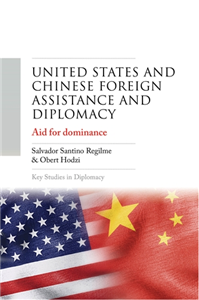
        United States and Chinese foreign assistance and diplomacy

        Aid for dominance

        by Salvador Santino Regilme, Obert Hodzi

        Aid for Dominance addresses the analytic weaknesses of mainstream analysis of foreign aid, which often focuses on its material dimensions. The book underscores the constitutive relationship between foreign aid as a material resource and the diplomatic discourses and practices that constitute complex bilateral relations between donor and recipient states. Written by two leading scholars of contemporary United States and Chinese foreign policies in the Global South, Aid for Dominance offers a pioneering, theoretically conscious, and empirically rich account of the two great powers' grand strategies in the global development sector. By deploying a multidisciplinary and comparative analysis, this book draws from a wide range of evidentiary materials from primary sources, including data from fieldwork interviews, government documents, local and international newspapers, speeches by high-ranking government officials and diplomats, and secondary data from scholarly publications and policy papers.

      • Trusted Partner
        Humanities & Social Sciences
        March 2025

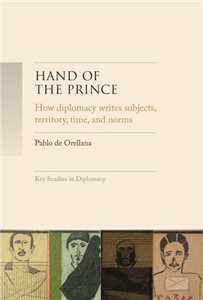
        Hand of the prince

        How diplomacy writes subjects, territory, time, and norms

        by Pablo de Orellana

        This book is dedicated to how diplomacy makes, develops, and trades in knowledge. It proposes an approach to examine how diplomatic knowledge production describes what diplomats see, how these descriptions develop, and whether they were convincing to one's own policymakers or even those of other actors. These descriptions are vital: actors can be inserted into global categories Communism or Terrorism that beget significant security, relational and policy consequences. Diplomacy and policy constitute the world we inhabit based on what policymakers made of descriptions, assessments, and analysis. Such is the power of knowing who we and the others are.

      • Trusted Partner
        Humanities & Social Sciences
        May 2021

        Disciplined agency

        Neoliberal precarity, generational dispossession and call centre labour in Portugal

        by Patrícia Alves de Matos

        Since the mid-2000s, the harsh reality of call centre employment for a generation of young workers in Portugal has been impossible to ignore. With its endless rows of small cubicles, where human agents endure repetitive telephone conversations with abusive clients under invasive modes of technological surveillance, discipline and control, call centre work remains a striking symbol of labour precarity, a condition particularly associated with the neoliberal generational disenchantment that 'each generation does better than its predecessor'. This book describes the emergence of a regime of disciplined agency in the Portuguese call centre sector. Examining the ascendancy of call centres as icons of precarity in contemporary Portugal, this book argues that call centre labour constitutes a new form of commodification of the labouring subject. De Matos argues that call centres represent an advanced system of non-manual labour power exploitation, due to the underestimation of human creativity that lies at the centre of the regimented structures of call centre labour. Call centres can only guarantee profit maintenance, de Matos argues, through the commodification of the human agency arising from the operators' moral, relational and social embedded agentive linguistic interventions of creative improvisation, decision-making, problem-solving and ethical evaluation.

      • Trusted Partner
        Biography & True Stories
        February 2026

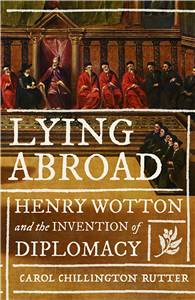
        Lying abroad

        Henry Wotton and the invention of diplomacy

        by Carol Chillington Rutter

        Student, traveller, secretary, scoundrel, spy: introducing the maverick whose diplomacy saved Europe from war. Henry Wotton had already exhausted several lives when he arrived in Venice as England's ambassador in 1604. Yet the most remarkable phase of his career was yet to come. In Lying abroad, Carol Chillington Rutter tells Wotton's extraordinary story. She reveals how this one-time exile, who fled England after his employer was convicted of treason, gained the favour of King James, securing a knighthood and a diplomatic posting. Charged with restoring relations with Venice after a fifty-year hiatus, he drew criticism for his breaches of protocol. But when a dispute brought Europe to the brink of war, Wotton took a risk - one that changed European history. This engrossing biography recounts a life that was tumultuous, tarnished and endlessly theatrical. The man King James called his 'honest dissembler' was a maverick who fashioned diplomacy in ways that still inform international relations today.

      • Trusted Partner
        Humanities & Social Sciences
        November 2024

        US public diplomacy in socialist Yugoslavia, 1950–70

        Soft culture, cold partners

        by Carla Konta

        The first comprehensive account of the public and cultural diplomacy campaigns carried out by the US in Yugoslavia during the height of the Cold War, this book examines the political role of culture in US-Yugoslav bilateral relations and the fluid links between information and propaganda. Tito allowed the US Information Agency and the State Department's cultural programmes to enter Yugoslavia, liberated from Soviet control. The exchange of intellectual and political personnel helped foster the US-Yugoslav relationship, yet it posed severe ideological challenges for both sides. By providing new insights into porous borders between freedom and coercion in Tito's regime, this book shows how public diplomacy acted as an external input for Yugoslav liberalisation and dissident movements. Using extensive archival research and interviews, Konta analyses the links between information and propaganda, and the unintended effects of propaganda beyond the control of producers and receivers.

      • Trusted Partner
        Literature & Literary Studies
        May 2026

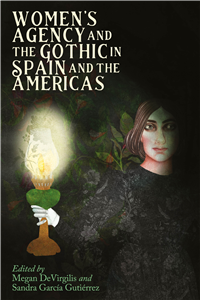
        Women’s Agency and the Gothic in Spain and the Americas

        by Megan DeVirgilis, Sandra García Gutiérrez

        This volume has emerged to fulfill two main purposes: Primarily, to constitute the first collaborative work that traces the relationship between the Gothic and Women in Spain and the Americas, but also, to surpass the term 'Female Gothic,' coined by Ellen Moers, by transferring the focus towards women and their agency as writers, readers and characters. This volume functions as a manifesto per se to open new avenues into understanding how women have interacted with the Gothic between the nineteenth and twenty-first centuries in Spain and the Americas. The question, we determine, is not simply about identity, but rather about agency. We define women's agency as the total capacity of characters, authors and readers to act freely within a social framework in relation to gothic texts. In our exploration of authorship, we reject the claim that the Gothic is a simplistic literary genre, instead sustaining that the plasticity of the Gothic has enabled it to survive for centuries; by shifting from a genre to a mode, it has surpassed literary forms and invaded all kinds of media: from film to music and merchandise such as clothing and pop culture collectables, fostering an authentic goth fandom.

      • Trusted Partner
        The Arts
        April 2025

        The theatrical orchestra

        British music ensembles experiment with performance

        by Adrian Curtin

        The Theatrical Orchestra analyses experimental performances by British music ensembles in the twenty-first century. Orchestras are reconceiving how concerts are programmed and presented, how musicians perform, where performance can occur, and the role of the audience in the co-creation of the live event. They are embracing theatricality, thereby realising music more fully as a multi-sensory performance art. This book explains how and why orchestras are thinking theatrically about performance, and uses the work of British music ensembles as exemplars. It analyses performances by Aurora Orchestra, London Contemporary Orchestra, London Sinfonietta, Manchester Collective, Multi-Story Orchestra, Paraorchestra, Scottish Ensemble, and Southbank Sinfonia. The book bridges musicology and theatre studies to analyse the theatrical orchestra on the concert stage and beyond, addressing such topics as visuality, storytelling, physical performance, site-engaged performance, and immersive performance.

      • Trusted Partner
        Humanities & Social Sciences
        July 2010

        Women, men and the representation of women in the British Parliaments

        Magic numbers?

        by Anna Manasco-Dionne

        This is the first book to consider the difference women MPs make for women constituents in Britain by comparing women parliamentarians' activities, priorities and perceptions to those of their male colleagues. It uncovers complicated gender dynamics that have been neglected in other works because of an exclusive focus on the activities of women MPs, and mounts a systematic challenge to the idea that a critical mass of women is necessary for women's presence to matter. By comparing the representation received by women from a parliament with few women to that received from a parliament with many women, Anna Dionne leads the reader to understand why numbers are not magic. Her empirical research includes interviews with over eighty parliamentarians in London, Scotland, Wales and Northern Ireland, and the amassing of an unprecedented and comprehensive database of representatives' legislative activities. She compares how men and women and different political parties introduce and support bills and motions, ask parliamentary questions, participate in committee and floor debates, and work behind the scenes for cross-party consensus and on constituency casework. The analysis considers gender similarities and differences throughout the policy process and explains the gender dynamics with a new sensitivity to their fluctuation. ;

      • Trusted Partner
        Humanities & Social Sciences
        November 2024

        Unofficial peace diplomacy

        Private peace entrepreneurs in conflict resolution processes

        by Lior Lehrs

        This book analyses the international phenomenon of private peace entrepreneurs. These are private citizens with no official authority who initiate channels of communication with official representatives from the other side of a conflict in order to promote a conflict resolution process. It combines theoretical discussion with historical analysis, examining four cases from different conflicts: Norman Cousins and Suzanne Massie in the Cold War, Brendan Duddy in the Northern Ireland conflict and Uri Avnery in the Israeli-Palestinian conflict. The book defines the phenomenon, examines the resources and activities of private peace entrepreneurs and their impact on the official diplomacy, and examines the conditions under which they can play an effective role in peace-making processes. This book is relevant to United Nations Sustainable Development Goal 16, Peace, justice and strong institutions.

      • Trusted Partner
        Humanities & Social Sciences
        September 2023

        International law in Europe, 700–1200

        by Jenny Benham

        Was there international law in the Middle Ages? Using treaties as its main source, this book examines the extent to which such a system of rules was known and followed in the period 700 to 1200. It considers how consistently international legal rules were obeyed, whether there was a reliance on justification of action and whether the system had the capacity to resolve disputed questions of fact and law. The book further sheds light on issues such as compliance, enforcement, deterrence, authority and jurisdiction, challenging traditional ideas over their role and function in the history of international law. International law in Europe, 700-1200 will appeal to students and scholars of medieval Europe, international law and its history, as well as those with a more general interest in warfare, diplomacy and international relations.

      Subscribe to our

      newsletter