
Éditions de la Pastèque
Livres Canada Books
View Rights Portal

Pastrengo is a Milan-based literary agency founded on September 2016 by Francesco Sparacino and Michele Turazzi. Pastrengo represents Italian authors of fiction (commercial and literary, young adult) and non fiction.
View Rights Portal

This collection brings together scholars from disciplines including Children's Literature, Classics, and History to develop fresh approaches to children's culture and the uses of the past. It charts the significance of historical episodes and characters during the long nineteenth-century (1750-1914), a critical period in children's culture. Boys and girls across social classes often experienced different pasts simultaneously, for purposes of amusement and instruction. The book highlights an active and shifting market in history for children, and reveals how children were actively involved in consuming and repackaging the past: from playing with historically themed toys and games to performing in plays and pageants. Each chapter reconstructs encounters across different media, uncovering the cultural work done by particular pasts and exposing the key role of playfulness in the British historical imagination.

This book explores the psychic, cultural and political ramifications of memory within the Irish Troubles. It investigates the traumatic impact of the violence perpetrated since 1969; the antagonistic cultural narratives of memory fashioned and mobilised in this context within public and private arenas; and the conflicts, paradoxes and contradictions involved in 'coming to terms with the past' both before and during the Irish peace process initiated in 1993-94. The study focuses on personal and collective remembrance within two particular locations: the Unionist communities along the Irish Border, and nationalist Derry. It traces the formation from below of competing public narratives, one concerned with the 'ethnic cleansing' of Protestants by the Irish Republican Army, the other with British state violence on Bloody Sunday; and analyses their subjective roots in specific experiences of fear and loss, their role in ideological struggle, and their complicated relation to private, familial and individual remembering. ;
 Trusted Partner
 Trusted Partner
Trusted Partner
Trusted Partner
Trusted Partner
Trusted Partner
Trusted Partner
Trusted Partner
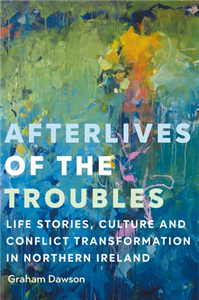
Focusing on experiential life stories across a range of forms and practices, this book investigates subjectivity, culture and the cultural politics of representation as a neglected dimension of conflict transformation in the Northern Irish peace process. Interdisciplinary critical perspectives from historical cultural studies, oral history and popular-memory theory inform close interpretive engagement with life stories in their cultural, historical and geographical contexts. This enables exploration of the complex temporal dynamics of 'post-conflict' subjectivities in the lengthening 'afterlife' of the Troubles, where feelings attached to conflict experiences are not 'past' but haunt the present, and memory-work carries future-oriented desires for truth, justice and reconciliation. Through case studies responding to the evolving peace process through this prism of life-storytelling, Afterlives maps a contested history of legacy policy-making and approaches to 'dealing with the past', from devolution in 2005-7 through to the Legacy and Reconciliation Act of 2023.
Trusted Partner
 Trusted Partner
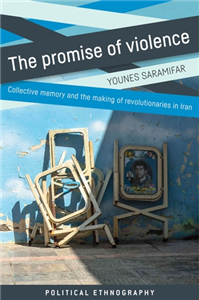
Revolutionaries in Iran choose to identify memories of the Iran-Iraq War as their 'collective' memory to mark the war era as the temporal reference in history - the time of times, or sometimes even a time beyond time. Can a sole event and its violence truly become - for some - the all-encompassing, constituting element of history and memory? This book pursues this question and follows revolutionaries in the maze of 'collective' memory to offer a temporal account of the breakdown of happenings - as well as the mending of happenings through the force of remembrance.
Trusted Partner
 Trusted Partner
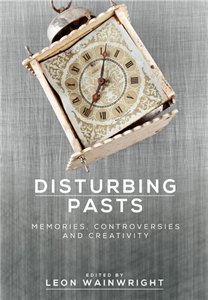 Trusted Partner

 Trusted Partner
Trusted Partner
Trusted Partner
Trusted Partner
Trusted Partner


Gute Freunde? Check. Erstes Date? Check. Und dann steht plötzlich das FBI vor deiner Tür … Ally liebt ihr Leben, wie es ist: Die Bewerbungen an ihre Traum-Colleges sind geschrieben. Mit ihrem Dad versteht sie sich blendend. Sie hat die besten Freunde, die man sich wünschen kann. Und sie ist sich sicher, morgen wird ihr Sandkastenfreund Neil sie ENDLICH um ein Date bitten. Doch dann klingelt das FBI an der Tür und plötzlich ist alles anders. Denn Ally ist nicht Ally und ihr ganzes Leben eine einzige Lüge. Ein Roman über Liebe, Lügen und Familiengeheimnisse - dieses Buch zieht einem den Boden unter den Füßen weg! Für alle Leser von Karen M. McManus, Colleen Hoover und Laura Kneidl.
Trusted Partner

One of the first books to put memory at the centre of analysis when exploring the relationship between film culture and the past. Provides a sustained, interdisciplinary perspective on memory and film from early cinema to the present, drawing from film studies, American studies and cultural studies. Adopts a resolutely cultural perspective and unlike psychoanalytic or formalist approaches to memory, explores questions of culture, power and identity. Contributes to the growing debate about the status and function of the past in cultural life and discourse, discussing issues of memory in film, and of film as memory. Considers such well known films as Forrest Gump, Pleasantville, and Jackie Brown.
Trusted Partner
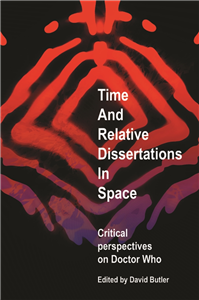
Time and relative dissertations in space takes the reader on a rich and varied study of one of the greatest television programmes of all time: Doctor Who. This book is the first study of Doctor Who to explore the Doctor's adventures in all their manifestations: on television, audio, in print and beyond. Although focusing on the original series (1963-89), the collection recognises that Doctor Who is a cultural phenomenon that has been 'told' in many ways through a myriad of texts. Combining essays from academics as well as practitioners who have contributed to the ongoing narrative of Doctor Who, the collection encourages debate with contrasting opinions on the strengths (and weaknesses) of the programme, offering a multi-perspective view of Doctor Who and the reasons for its endurance.
Trusted Partner
Writers have previously placed the action of kissing into categories: kisses of love, affection, peace, respect and friendship. Each of the essays in this fascinating book take a single kind of kiss and uses it as an index to the past. For rather than offering a simple history of the kiss, this book is about the kiss in history. In this collection, an eminent group of cultural historians have explored this subject using an exceptionally wide range of evidence. They explore the kiss through sources as diverse as canonical religious texts, popular prints, court depositions, periodicals, diaries and poetry. In casting the net so wide, these authors demonstrate how cultural history has been shaped by a broad concept of culture, encompassing more than simply the canons of art and literature, and integrating apparently 'historical' and 'non-historical' sources. Furthermore, this collections shows that by analyzing the kiss and its position - embedded as it is as part of our culture - history can use small gestures to take us to big issues concerning ourselves and others, the past and the present. With an afterword by Sir Keith Thomas, this book will be fascinating reading for cultural historians working on a wide range of different societies and periods.
Trusted Partner
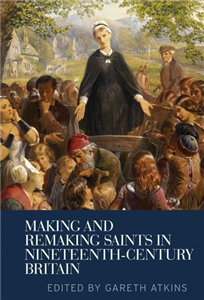
This book examines the place of 'saints' and sanctity in a self-consciously modern age, and argues that Protestants were as fascinated by such figures as Catholics were. Long after the mechanisms of canonisation had disappeared, people continued not only to engage with the saints of the past but continued to make their own saints in all but name. Just as strikingly, it claims that devotional practices and language were not the property of orthodox Christians alone. Making and remaking saints in the nineteenth-century Britain explores for the first time how sainthood remained significant in this period both as an enduring institution and as a metaphor that could be transposed into unexpected contexts. Each of the chapters in this volume focuses on the reception of a particular individual or group, and together they will appeal to not only historians of religion, but those concerned with material culture, the cult of history, and with the reshaping of British identities in an age of faith and doubt.
Trusted Partner



