
Thornapple Press
Publisher of bestselling and award-winning books including Polysecure, More Than Two and Love’s Not Color Blind.
View Rights Portal
Publisher of bestselling and award-winning books including Polysecure, More Than Two and Love’s Not Color Blind.
View Rights Portal
Home to poetry slammers / stage poets and their stages-texts as well as novels / fictional works. What have all our authors in common? They can perform on stages what make every reading quite entertaining. When a stage-experienced actor and poetry slammer writes a dragon-novel for yound readers / listeners, then it's beatuful to read, listen and his readings are always fascinating. That way, the young dragon Fionrir, princess Quirina and their most unusual pack gained a intensely interacting fanbase. As the other stage-performers do.
View Rights Portal

■ How many omega-3 fatty acids does salmon contain? ■ Which dairy product contains the most calcium? ■ How iron-rich is spinach, really? Whether calories, vitamins or amino acids – whether in field beans, bananas, eggs, chicken, parmesan cheese or onion – it is all here. The compact edition of the time-tested „large SFK [Souci/Fachmann/Kraut]“ offers tested data on over 70 ingredients in more than 360 foods, systematically structured according to food groups. This edition with thousands of values has been completely revised and updated by the Leibniz Institute of Food Systems Biology at the Technical University of Munich. Extra: 32 summary tables cover more than 300 other, less common foods and allow for targeted, clear comparisons. 16 orientation tables provide information about foods with particularly high or low amounts of ingredients. Nutritional values, energy content, main components and ingredients displayed in uniform systematics and a practical format – just look it up!
 Trusted Partner
Trusted Partner
Trusted Partner

 Trusted Partner


»Es sind Gedichte der unmöglichen, der unerwiderten, der abwesenden, der verschmähten und verschlampten Liebe ... Voller Verzweiflung und zugleich durchdrungen von der Ahnung, nein: Gewißheit, daß ... ›die Hoffnung vorüber ist. / Was bleibt, ist die Spur ihrer Lüge.‹« Erich Hackl
Trusted Partner


Design Thinking: Solve problems together, user-centered and iterative, develop innovations and have fun doing so! - Practical cards for innovation project work with change of perspective- Consistently customer-oriented and iterative- Targeted use of the maps in project planning and implementation with Design Thinking- Pragmatic, compact and wonderfully descriptive- Suitable for the most diverse questions or problems- With folding poster for targeted use of maps in project planning and decorative at the workplace- From the authors "Design Thinking Quick Start
Trusted Partner

In this book, the complexity and the significance of the foods we eat are analysed from a variety of perspectives, by sociologists, economists, geographers and anthropologists. Chapters address a number of intriguing questions: how do people make judgments about taste? How do such judgments come to be shared by groups of people?; what social and organisational processes result in foods being certified as of decent or proper quality? How has dissatisfaction with the food system been expressed? What alternatives are thought to be possible? The multi-disciplinary analysis of this book explores many different answers to such questions. The first part of the book focuses on theoretical and conceptual issues, the second part considers processes of formal and informal regulation, while the third part examines social and political responses to industrialised food production and mass consumption. Qualities of food will be of interest to researchers and students in all the social science disciplines that are concerned with food, whether marketing, sociology, cultural studies, anthropology, human nutrition or economics.
Trusted Partner


This book follows a unique path in the ubiquitous food debate: it leads us on the trail of the origins of our food culture, from the Neolithic period to the present day. Thomas A. Vilgis has compiled a guide that combines scientific with cultural or sociological aspects. How did Stone Age man poach food? Which cereal varieties were cultivated first? What is the mysterious umami flavour all about? The cultural historical excursion gets interactive with plenty of recipes for those curious to test Kimchi with birch leaves or red cabbage in their dessert.
Trusted Partner


This book is a clear and compact guide on how to succeed by means of goal-oriented negotiation and cooperative persuasion. Readers learn models to understand and describe what takes place during negotiations, while numerous figures, charts, and checklists clearly summarize effective strategies for analyzing context, processes, competencies, and the impact of our own behavior. Real-life case examples vividly illustrate the specific measures individuals and teams can take to systematically improve their powers of persuasion and bargaining strength. The book also describes a modern approach to raising negotiation competencies as part of personnel development, making it suitable for use in training courses as well as for anyone who wants to be a more persuasive and successful negotiator. Target Group: For work and organizational psychologists, HR professionals, coaches, management trainers and trainees.
Trusted Partner

The human brain is a wondrous thing, highly complex and highly functional. However, the control centre of our feelings, thoughts and actions can sometimes go out of sync. Some reasons for this are known, such as genetic factors, hormonal effects or trauma. In other cases, we are still in the dark. In an extreme case scenario, the brain may create bizarre delusions – masterful narrations that the people affected fi nd completely conclusive and reasonable. Monika Niehaus has compiled 36 such disorders ranging from love madness and the gourmand syndrome – where gourmet food becomes the purpose of life – to people who desire nothing more than to have their limbs amputated. She tells gripping tales of famous and not so famous cases. With sensitivity and a considerable dose of humour she takes us into the history of art and literature, and presents scientifi c explanations. This fascinating book shows that our brain is a genius – and madness is quite often NOT inexplicable.
Trusted Partner
This book shows that Max Horkheimer's program of critical theory and his research throughout his career as a university professor and thinker are rooted in the cogency of philosophical questions and an in-depth knowledge of the historical development of philosophical problems in their close correlation with the socio-economic framework which shaped the 'bourgeois society' and the Modern Era. Indeed, his analyses of modern philosophers allows us to understand how the bourgeoisie seeks legitimisation and consolidation of its position, partly through the voices of its thinkers. In this way, in his investigation of early modern philosophy problems, and through constant dialogue with his colleagues Adorno, Marcuse, Pollock and Fromm, Horkheimer expresses a profound awareness of the critical force inherent in thought which, admittedly, is ever vulnerable to crisis and weakening, but which can always be reactivated.
Trusted Partner
In fresh readings of Theodor W. Adorno, Giorgio Agamben, Hannah Arendt, Judith Butler, Barbara Cassin, Michel Foucault, Werner Hamacher, Martin Heidegger, and many more, Gotman rearticulates the foundations of broadly western philosophical thinking to carve out a shadowy space of recalcitrant thought 'in dark times'. At once indebted to the legacy of critique and enmeshed in affective and performative approaches to language, anti-theatricality, critical race theory and gender studies, she weaves a poetic mesh of intimate fragments, reflections on what it means to think and to write, as she puts it, after spectacle. Almost but not quite a straight work of philosophy, distinctly literary and performative in its anti-genre, this book twists and turns, swerves and cuts, to show the work of thinking as an intimate act - a theatre of angles and openings, adjacencies and reverberations.
Trusted Partner

Interactions between medicines and foodstuffs may be just as clinically relevant as interactions between individual drugs. A single meal contains several hundred potentially interacting compounds that, in an individual patient, may be the deciding factor as to whether a treatment is successful or not. The resulting, sometimes serious risks are not known to most patients – nor to many physicians and pharmacists. This practical handbook enables anyone interested in applied pharmacotherapy to keep abreast of the complex field of drug interactions. The authors – proven experts in clinical pharmacology and pharmaconutrition – describe the most important interactions and give concrete recommendations for action. Tables and overviews permit fast access to potentially problematic combinations. This completely updated edition now also includes information about fruit juices and curcumin as well as a new chapter on food interactions in oncology.
Trusted Partner
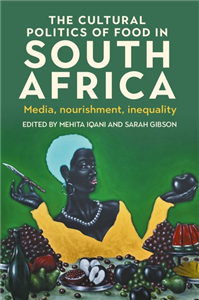
Food is both a material system of nourishment, necessary for human survival, and a communicative system that signifies multiple meanings across human cultures. This book explores the cultural politics of food in the South African context, bringing together a range of disciplinary perspectives on the links between media, nourishment, and inequality. The chapters all highlight the multiplicity of meanings that food has in South African society. These include historical perspectives on the impact of colonialism, migration and apartheid had on food and foodways in South Africa; sociological interventions on food and society; aesthetic practices in relation to food; and mediated food cultures in South Africa. Taken together, the book critically explores the multiple ways in which food is never just food, and always linked to complex and shifting modalities of meaning and knowledge in the South African context.
Trusted Partner


They hear you thinking. But you can’t understand them. Not yet! After a terrifying experience on a school trip to the forest, Noomi isn’t the same anymore. Fragments of memories that are as thrilling as they are disturbing continually lead her back to this same day in the forest. Something has happened to her since then and she has to find out what went on there. Why can’t she remember? Why does she now feel so close to animals? One secret experiment. Four young offenders. Animals acting like humans in the forest. Evolution at a turning point - FEEL NATURE! Atmospheric, enigmatic and disturbing – the new novel from the prize-winning author duo Ella Blix, consisting of Antje Wagner and Tania Witte. 2019 literary awards: the Mannheim Feuergriffel (Fire Pen) for Tania Witte and the town of Wetzlar’s Fantasy Prize. Printed on recycled paper and certified with the Blue Angel.
Trusted Partner
 Trusted Partner

This book provides the most comprehensive analysis of the post-war political thought of the Liberals and Liberal Democrats to date. The rationale of the book stems from a belief that contemporary debate over the party's future ideological direction can only be fully appreciated by placing it within a broader historical context. The book begins by outlining the three dominant ideological traditions within the Liberals and Liberal Democrats - namely, classical liberalism, the 'centre' and social liberalism. The main ideas, policies and personalities associated with each tradition are evaluated. Leading experts in the field then examine a range of themes and issues including constitutional reform, decentralization, political economy, social morality, internationalism and political strategy. The final section consists of three commentaries from different ideological perspectives written by leading Liberal Democrat MPs - Vincent Cable, David Howarth and Steve Webb. In adopting a new approach to the Liberals and Liberal Democrats and in combining expert analysis with political commentary, this book will be of interest to students and the general reader alike. ;
Trusted Partner

How should we respond to the inhumanity that suffused the twentieth Century and continues in the present one? Has there been an adequate treatment of this issue by the political left? Questions such as these are treated in this, the first scholarly book to combine academic and blogging approaches to some of the major political issues of the day. It does this by focusing on the work of Norman Geras - Marxist, political philosopher and blogger - and developing the central themes of his work such as crimes against humanity, the Holocaust, Marxism, and the means/ends problem in politics. It contains contributions by famous political philosophers such as Michael Walzer, Hillel Steiner and David McLennan, and bloggers and journalists such as David Aaronovitch, Nick Cohen and Ophelia Benson. The book contains a unique response by Geras in which he draws together the various themes it covers. It will be of interest to all who are concerned with these pressing political issues of our time. The book will be particularly relevant for those with an academic or general interest in politics, philosophy, sociology, genocide studies, applied ethics, international relations and law. It will also be of interest to bloggers and all those who regard new technology as having significant implications for public debate on these issues. ;
Trusted Partner
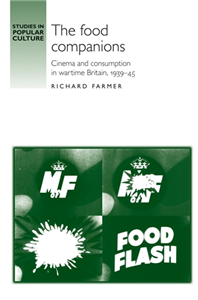
The introduction of rationing in January 1940 ensured that food became a central concern for the British people during the Second World War. The food companions investigates the cinema of this period and demonstrates the cultural impact that rationing and food control had on both government propaganda and commercial feature films. Combining archival research, detailed film analysis, and the extensive use of contemporary documents and resources, this book is the first to fully address the extensive propaganda work of the Ministry of Food both inside and outside the cinema. It also explores the tensions contained in images of communal dining, investigating the role that food played in Gainsborough's narratives of excess and identifying and analysing a cycle of black-market feature films. Lively and illuminating, The food companions will be welcomed by film scholars, historians, students, and anyone who has ever wondered about the important contribution that tea made during the war to shaping ideas of Britishness. ;
Trusted Partner

Two of today’s leading scientists, Ernst Peter Fischer and Detlev Ganten, reconfirm the legacy of two influential 19th-century researchers. To mark the 200th birthday of Rudolf Virchow (1821–1902) and Hermann von Helmholtz (1821–1894), they explain why pioneering research and holistic thinking are still relevant for health science and practice, and for a sustainable balance of people, society and the environment. The historical achievement of Virchow and Helmholtz continues today with the work of researchers like Emmanuelle Charpentier and Christian Drosten, so ensuring that the humane idea continues to be fruitful in the future. An insight into the history of medical science.



