Your Search Results

      • Martini Maria Cristina | MMC Edizioni

        MMC EDIZIONI is a publishing house based in Rome.Born in 2001 as a generalist, along the time it has specialized almost exclusively in non-fiction, dedicated in particular (but not only) to the city of Rome.The main series, called "A walk with history" offers an alternative vision of the city through the historical reconnaissance and analysis of some of its urban furnishings that are not taken into consideration such as small fountains, clocks, inscriptions, sacred shrines, plaques. This series stands out for a particular graphic style and for the abundance of photographs, specially made for these books.Other series on Rome are instead dedicated to in-depth studies on specific historical and customs themes, or on the mysterious aspects of the city that also reveal its dark side.In the MMC catalogue are other non-fiction books on topics such as Music, Interculture, Anthropology and a series of stories for children encouraging solidarity, non-violence and respect for the environment

        View Rights Portal
      • AG Book Publishing / AG Solutions sas di Angela Cristofaro & C.

        AG BOOK PUBLISHING is a small, independent, strictly no-fee, Rome–based publishing house. We publish a wide range of fiction and non-fiction titles, with particular attention to performing arts, environment and nature, social and educational issues, and children's literature.

        View Rights Portal
      • Trusted Partner
        Business, Economics & Law
        February 2024

        Foundations of social ecological economics

        by Clive L Spash

      • Trusted Partner
        The Arts
        May 2026

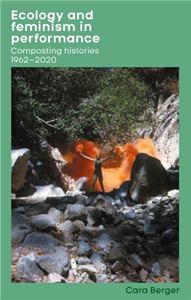
        Ecology and feminism in performance

        Composting histories 1962–2020

        by Cara Berger

        This book provides a vital new history of feminist performance through an ecological lens. It argues that from the 1960s to the present, artists have used performance to challenge the linked oppression of women and nature. Proposing 'composting' as a new method for writing feminist history, the study moves beyond linear narratives to trace regenerative connections between generations of practitioners. It provides sustained analysis of genres from land art to postdramatic theatre, re-evaluating the work of canonical figures while examining how contemporary artists continue to address these urgent themes. By placing ecofeminism in dialogue with feminist new materialism, queer ecology, and transecological thought, this study demonstrates how performance has been a crucial site for imagining more just and sustainable futures in an age of environmental crisis.

      • Trusted Partner
        The Arts
        July 2025

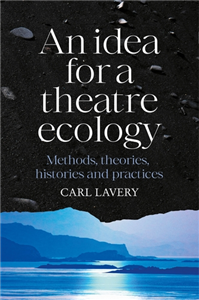
        An idea for a theatre ecology

        Methods, theories, histories and practices

        by Carl Lavery

        An Idea for a Theatre Ecology is the first book in the discipline of Theatre and Performance Studies to provide a rigorous and coherent theory of the ecology that is immanent to the theatrical medium. Over six clearly written chapters, the book provides a genealogy, outlines a method, provides a lexicon and demonstrates an alternative practice of ecoperformance analysis grounded in the figure of the archipelago. Focusing on Antonin Artaud's theatre of cruelty, the book argues that theatre has no need to provide ecological messages nor to transform itself into a platform for the narration of ecological stories. Instead, more is to be gained, environmentally and politically, by concentrating on the power of images, gestures and voices to create corporeal affects and sensations that implicate the spectators in a terrestrial event.

      • Trusted Partner
        Humanities & Social Sciences
        October 2021

        Ireland and the European Union

        Economic, political and social crises

        by Michael Holmes, Kathryn Simpson, Dimitris Papadimitriou, Kathryn Simpson, Paul Tobin

        This book examines how Ireland's relationship with the EU was affected by a succession of crises in both the Republic of Ireland and Northern Ireland. The financial crisis, the Brexit crisis and the migration crisis were not of equal significance on the island of Ireland. The financial crisis was a huge issue for the Republic but not Northern Ireland, Brexit had a major impact in both polities, the migration and populism issues were less controversial, while foreign policy challenges had a minimal impact. The book provides a summary of the main features of each of the crises to be considered, from both the EU and the Irish perspective. Ireland and the European Union is the first volume of its kind to provide a comprehensive analysis on British-Irish relations in the context of Brexit. It assesses the Withdrawal Agreement and Protocol on Ireland/Northern Ireland, the devolution settlement and the 1998 Agreement, as well as the European dimension to Northern Ireland's peace process. The contributors explore a number of policy areas that are central to the understanding of each of the crises and the impact of each for Ireland. Chapters examine issues such as security, migration and taxation as well as protest politics, political parties, the media, public opinion and the economic impact of each of these crises on Ireland's relationship with the EU.

      • Trusted Partner
        October 2024

        Renunciation and Freedom

        Survivial in the future

        by Jean-Pierre Wils

        The situation in our society is precarious. The ecological shocks are omnipresent. The mere continuation of our lifestyles fixated on expansion and self-development has long since reached its limits. As if intoxicated by ourselves, we consume our world voraciously and without restraint. We need moderation and frugality that lead us out of the ecological and social dead ends and hold both the individual and Politics to account. We are by no means powerless and are perfectly capable of leading a life that offers prospects for a humane future. However, our idea of freedom needs urgent correction. For this endeavour to succeed, we need the courage to face reality and the willingness, in a spirit of solidarity, to say goodbye to a false life and join the alliance of renunciation and freedom. Then we will be free – differently and better.

      • Trusted Partner
      • Trusted Partner
        November 2021

        The Metropolitan Age

        The decisive force in the Anthropocene

        by German Environmental Foundation (Ed.)

        Three quarters of the world’s population live in cities. One in eight people lives in a metropolitan area. Megacities swallow up land, energy and resources – and at the same time are particularly hard hit by the current climate crisis that they fuel. However, in the metropolises of the overcrowded world plenty of committed people have heard the warning signals and establish networks to use the potential of cities to reorganize the participative and social-ecological activity that is urgently needed. The contributions to this Yearbook for Ecology focus on the present and future of cities from wide-ranging viewpoints and highlight perspectives for their creative transformation towards liveable sustainability.

      • Trusted Partner
        The Arts
        February 2026

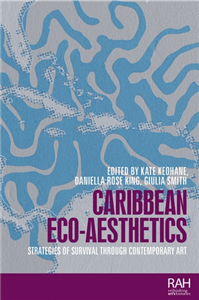
        Caribbean eco-aesthetics

        Strategies of survival through contemporary art

        by Kate Keohane, Daniella Rose King, Giulia Smith

        This edited volume reframes the Caribbean as a paradigm of ecological resilience and creativity by bringing together the voices of contemporary artists and scholars who are at the forefront of environmental activism in the region and across its diasporas. While dominant narratives percolating from the environmental sciences to the mainstream press present the Caribbean as a frontier of planetary disaster, the contributors to this volume show how the region offers radical models for overcoming the environmental challenges of the present. At the heart of this argument lies the history of the Caribbean as a centre for grassroots forms of anti-colonial and anti-capitalist resistance founded upon nature-centred cosmologies and practices. Caribbean Eco-Aesthetics shows how contemporary artists are mobilising this radical heritage in a bid to unlock alternative planetary futures.

      • Trusted Partner
        September 2022

        The Great Deception

        How we put our future at risk and sleep through the necessary transformation

        by Deutsche Umweltstiftung (ed.)

        More and more companies are becoming sustainable. More and more products are being produced sustainably. But things that are called climate-neutral or sustainable today often are not. Then there are the catchy phrases like 'electric mobility belongs to the future' or 'there's enough food on the planet for everyone'. These statements are not true, and are referred to in science as 'frames'. This book provides a guide that enables us to free ourselves from these ecological frames, to see through them. Because only a policy that understands the connections is able to develop perspectives. Numerous experts uncover the biggest lies about the future in this book, refute them and explain what we need to change. Because we can lie to ourselves, but we cannot lie to nature.

      • Trusted Partner
        Humanities & Social Sciences
        April 2016

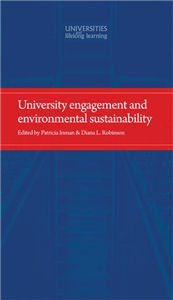
        University engagement and environmental sustainability

        by Michael Osborne, Patricia Inman, Diana Robinson

        Universities have a key role to play in contributing to environmental development and combating climate change. The chapters within this volume detail the challenges faced by higher education institutions in considering environmental sustainability, and provide both a broad view of university engagement and a detailed examination of various projects. As part of this series in association with the Place and Social Capital and Learning (PASCAL) International Observatory, the three key PASCAL themes of place management, lifelong learning and the development of social capital are considered throughout the book. While universities have historically generated knowledge outside of specific local contexts, this book argues that it is particularly important for them to engage with the local community and to consider diverse perspectives and assets when looking at issues within an ecological context. The chapters in this volume provide new perspectives and frames of reference for transforming universities by engaging in the development of resilient communities.

      • Trusted Partner
        Central government policies
        July 2013

        Sweden and ecological governance

        by Lennart J. Lundqvist

      • Trusted Partner
      • Trusted Partner
        Humanities & Social Sciences
        June 2026

        The political ecology of colonial capitalism

        by Bikrum Gill

      • Trusted Partner
        Humanities & Social Sciences
        June 2025

        Living with water

        Everyday encounters and liquid connections

        by Charlotte Bates, Kate Moles

        Living with water brings together sociologists, geographers, artists, writers and poets to explore the ways in which water binds, immerses and supports us. Drawing from international research on river crossings, boat dwelling, wild swimming, sea fishing, and drought impacts, and navigating urban waters, glacial lagoons, barrier reefs and disappearing tarns, the collection illuminates the ways that we live with and without water, and explores how we can think and write with water on land. Water offers a way of attending to emerging and enduring social and ecological concerns and making sense of them in lively and creative ways. By approaching Living with water from different disciplinary and methodological perspectives, and drawing on research from around the world, this collection opens up discussions that reinvigorate and renew previously landlocked debates. This book is relevant to United Nations Sustainable Development Goal 6, Clean water and sanitation

      • Trusted Partner
      • Trusted Partner
        Literature & Literary Studies
        December 2025

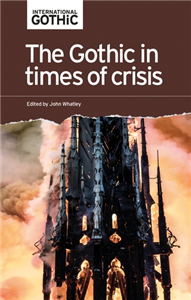
        The Gothic in times of crisis

        by John Whatley

        The Gothic in times of crisis reflects contemporary society, showing how the Gothic modes continually resets its own forms to encompass each new reality, each new apocalypse, each new plague or crisis. This collection expands oncurrent scholarship to show how the Gothic challenges our understanding of both older and recent crises and, in turn, disturbs all genre complacencies to expose and confront the problems and contradictions in what our world has been, has become, or is in danger of becoming. This collection explores Gothic's current relevance to the contestations of ideas and the underlying and visible conflicts it dramatizes across a wide range of media. In various ways, it reveals what happens to Gothic modes now they confront the increasingly Gothic realities of our times, sometimesby recalling earlier crises and ideological contestations leading up to them.

      • Trusted Partner
      • Trusted Partner
        Medicine
        May 2024

        Creative approaches to wellbeing

        The pandemic and beyond

        by Victoria Tischler, Karen Gray

        A compilation of case studies illustrating the use of arts, culture and other community assets individuals and communities used to cope and develop resilience during the Covid-19 pandemic, demonstrating valuable lessons that might help us develop resilience in similar future crises.

      Subscribe to our

      newsletter