Your Search Results
-
 Trusted Partner

-

Textofilia Ediciones
Literary publisher. It has received several awards. It has the stamp Libros del Marqués, dedicated to social relevant topics of this time.
View Rights Portal
-
Promoted Content

 Humanities & Social SciencesApril 2025
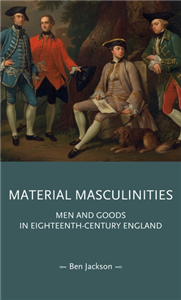
Material masculinities
Men and goods in eighteenth-century England
by Ben Jackson
Material Masculinities examines the material and consumer practices of over 1000 men from the middling and upper ranks of eighteenth-century society, c.1650-1850. It draws upon evidence from over 35 archives and museum collections to detail how material objects were integral for men in forming identities and shaping experiences. For men of all social ranks, ages, and geographic locations, material knowledge was imperative for masculine social identities to operate in a commercial society. Before the centralised factory and widespread mass-produced goods, men personalised and repaired their goods; products were shaped by men's attitudes and concerns. Objects were tools in men's identity formation and the exercise of social and gendered power. There was a reciprocal relationship between men and goods in this period; men were active agents of material and commercial change driving product and aesthetic innovation.
-
Promoted Content
-
Trusted Partner
-
Trusted Partner
 Humanities & Social SciencesJune 2010
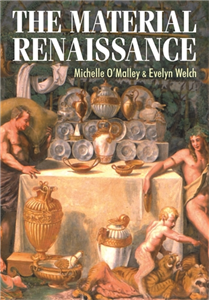
The Material Renaissance
None
by Michelle O'Malley, Christopher Breward, Evelyn Welch, Bill Sherman
Despite the recent interests of economic and art historians in the workings of the market, we still know remarkably little about the everyday context for the exchange of objects and the meaning of demand in the lives of individuals in the Renaissance. Nor do we have much sense of the relationship between the creation and purchase of works of art and the production, buying and selling of other types of objects in Italy in the period. The material Renaissance addresses these issues of economic and social life. It develops the analysis of demand, supply and exchange first proposed by Richard Goldthwaite in his ground-breaking Wealth and the demand for art in Renaissance Italy, and expands our understanding of the particularities of exchange in this consumer-led period. Considering food, clothing and every-day furnishings, as well as books, goldsmiths' work, altarpieces and other luxury goods, the book draws on contemporary archival material to explore pricing, to investigate production from the point of view of demand, and to look at networks of exchange that relied not only on money but also on credit, payment in kind and gift giving. The material Renaissance establishes the dynamic social character of exchange. It demonstrates that the cost of goods, including the price of the most basic items, was largely contingent upon on the relationship between buyer and seller, shows that communities actively sought new goods and novel means of production long before Colbert encouraged such industrial enterprise in France and reveals the wide ownership of objects, even among the economically disadvantaged. ;
-
Trusted Partner
 Industrial / commercial art & designApril 2017
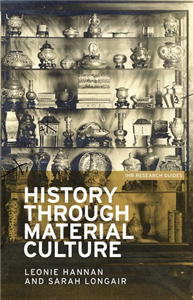
History through material culture
by Series edited by Simon Trafford, Leonie Hannan, Sarah Longair
History through material culture is a unique, step-by-step guide for students and researchers who wish to use objects as historical sources. Responding to the significant, scholarly interest in historical material culture studies, this book makes clear how students and researchers ready to use these rich material sources can make important, valuable and original contributions to history. Written by two experienced museum practitioners and historians, the book recognises the theoretical and practical challenges of this approach and offers clear advice on methods to get the best out of material culture research. With a focus on the early modern and modern periods, this volume draws on examples from across the world and demonstrates how to use material culture to answer a range of enquiries, including social, economic, gender, cultural and global history.
-
Trusted Partner
 History of art & design styles: c 1600 to c 1800October 2014
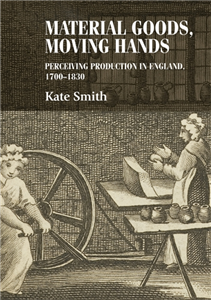
Material goods, moving hands
Perceiving production in England, 1700–1830
by Kate Smith
In eighteenth-century Britain, greater numbers of people entered the marketplace and bought objects in ever-greater quantities. As consumers rather than producers, how did their understandings of manufacturing processes and the material world change? Material goods and moving hands combines material culture and visual culture approaches to explore the different ways in which manufacturers and retailers presented production to consumers during the eighteenth century. It shows how new relationships with production processes encouraged consumers, retailers, designers, manufacturers and workers to develop conflicting understandings of production. Objects then were not just markers of fashion and taste, they acted as important conduits through which people living in Georgian Britain could examine and discuss their material world and the processes and knowledge that rendered it.
-
Trusted Partner
 Humanities & Social SciencesSeptember 2025
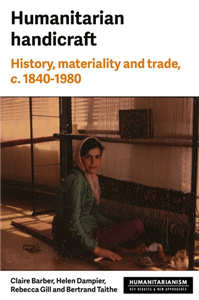
Humanitarian handicraft
History, materiality and trade, c. 1840–1980
by Rebecca Gill, Claire Barber, Helen Dampier, Bertrand Taithe
This book uncovers the overlooked history of artisanal textiles in projects aimed at social uplift and moral reform. The contributors ask what the implications of this form of gendered craft production are for our understanding of the humanitarian imagination, relations of humanitarian production and the generation of meaning and social and artistic value. It also opens a dialogue with contemporary socially-engaged textile artists to engender critical reflection on the socially-situated meaning of textile craft in past and present humanitarian contexts.
-
Trusted Partner
 Humanities & Social SciencesDecember 2021
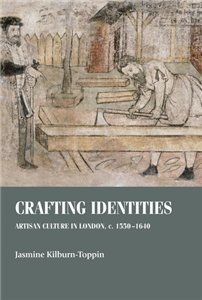
Crafting identities
Artisan culture in London, c. 1550–1640
by Jasmine Kilburn-Toppin, Christopher Breward, James Ryan
Crafting identities explores artisanal identity and culture in early modern London. It demonstrates that the social, intellectual and political status of London's crafts and craftsmen were embedded in particular material and spatial contexts. Through examination of a wide range of manuscript, visual and material culture sources, the book investigates for the first time how London's artisans physically shaped the built environment of the city and how the experience of negotiating urban spaces impacted directly on their distinctive individual and collective identities. Applying an innovative and interdisciplinary methodology to the examination of artisanal cultures, the book engages with the fields of social and cultural history and the histories of art, design and architecture. It will appeal to scholars of early modern social, cultural and urban history, as well as those interested in design and architectural history.
-
Trusted Partner
 Humanities & Social SciencesMarch 2026
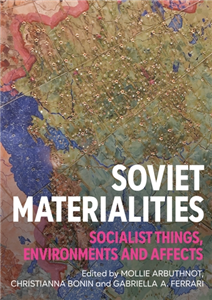
Soviet materialities
Socialist things, environments and affects
by Mollie Arbuthnot, Christianna Bonin, Gabriella Ferrari
Soviet materialities explores how material transforms our understanding of Soviet culture, from the textures of domestic space in 1960s apartment blocks to Gulag labour on the Moscow canal, and from avant-garde literary theory in the 1920s to conceptual art under perestroika. It starts from the ethos that the material world shapes people and society. Taking a material approach-or a range of material approaches-can therefore illuminate aspects of the cultural production and lived experiences of Soviet socialism that are not reflected in other kinds of historical records. This edited volume brings cutting-edge research by emerging scholars together with the established voices who have broken the ground in this sub-field over the last twenty years and promises to make a major intervention in the study of Soviet history and culture.
-
Trusted Partner
 Literature & Literary StudiesJuly 2025
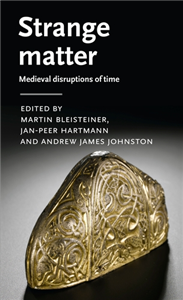
Strange matter
Medieval disruptions of time
by Martin Bleisteiner, Jan-Peer Hartmann, Andrew James Johnston
Medieval and early modern texts reflect a fascination with material objects, from ancient heirlooms to ingenious automata. Often imbued with power or beauty, these objects carry an uncanny sense of otherness, their mysterious origins evoking wonder and suggesting temporal and spatial distance. Acting as repositories of temporal alterity, such artefacts bridge the past and present in profound ways. This volume, featuring contributions from experts in literature and art history, explores how texts from these periods use material objects to engage with temporal otherness. From everyday items to marvellous creations, objects challenge distinctions between human and material, natural and cultural. Whether examining the hybrid status of Hector's body in Lydgate's Troy Book or the temporal agency of humble bubbles, the chapters illuminate the vibrant networks connecting people and objects. By highlighting the 'hybridity' of matter, the book offers fresh insights into Bruno Latour's critique of nature-culture divides.
-
Trusted Partner
 Humanities & Social SciencesOctober 2024
Humanitarianism, empire and transnationalism, 1760-1995
Selective humanity in the Anglophone world
by Joy Damousi, Trevor Burnard, Alan Lester
This is the first book to examine the shifting relationship between humanitarianism and the expansion, consolidation and postcolonial transformation of the Anglophone world across three centuries, from the antislavery campaign of the late eighteenth century to the role of NGOs balancing humanitarianism and human rights in the late twentieth century. Contributors explore the trade-offs between humane concern and the altered context of colonial and postcolonial realpolitik. They also showcase an array of methodologies and sources with which to explore the relationship between humanitarianism and colonialism. These range from the biography of material objects to interviews as well as more conventional archival enquiry. They also include work with and for Indigenous people whose family histories have been defined in large part by 'humanitarian' interventions.
-
Trusted Partner
 Humanities & Social SciencesApril 2021
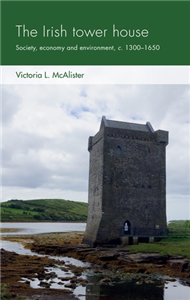
The Irish tower house
Society, economy and environment, c. 1300–1650
by Victoria L. McAlister
The Irish tower house examines the social role of castles in late-medieval and early modern Ireland. It uses a multidisciplinary methodology to uncover the lived experience of this historic culture, demonstrating the interconnectedness of society, economics and the environment. Of particular interest is the revelation of how concerned pre-modern people were with participation in the economy and the exploitation of the natural environment for economic gain. Material culture can shed light on how individuals shaped spaces around themselves, and tower houses, thanks to their pervasiveness in medieval and modern landscapes, represent a unique resource. Castles are the definitive building of the European Middle Ages, meaning that this book will be of great interest to scholars of both history and archaeology.
-
Trusted Partner
 Teaching, Language & ReferenceAugust 2022
Dividing the spoils
Perspectives on military collections and the British empire
by Henrietta Lidchi, Stuart Allan
At a time of heightened international interest in the colonial dimensions of museum collections, Dividing the Spoils provides new perspectives on the motivations and circumstances whereby collections were appropriated and acquired during colonial military service. Combining approaches from the fields of material anthropology, imperial and military history, this book argues for a deeper examination of these collections within a range of intercultural histories that include alliance, diplomacy, curiosity and enquiry, as well as expropriation and cultural hegemony. As museums across Europe reckon with the post-colonial legacies of their collections, Dividing the Spoils explores how the amassing of objects was understood and governed in British military culture, and considers how objects functioned in museum collections thereafter, suggesting new avenues for sustained investigation in a controversial, contested field.
-
Trusted Partner
 The ArtsJune 2026
Confessions of monuments
Commemorating and representing the Turkish nation-state in the early twentieth century
by Emin Artun Ozguner
Following the dissolution of the Ottoman Empire in the early 1920s, an emerging nation state built a particular relationship with the Ottoman past. In its simultaneous disavowal and inheritance of it, this was the new Republic of Turkey, founded in 1923. Nation-states are areas of ideological contestation. However, they are equally visible and tangible. This is thanks to the making of a new world of artefacts in build or print that represent and commemorate them in many, often contradicting ways through design practices. This book offers a thorough account of this new Turkish material world through the trajectories of commemoration; from public monuments, print media, and festive illumination to temporary and permanent architecture from the onset of the 1908 Young Turk revolution to the demise of Turkey's founding single-party regime in the late 1950s. If objects are silent actors of history, their confessions await.
-
Trusted Partner
 The ArtsJanuary 2025
Refashioning the Renaissance
Everyday dress in Europe, 1500–1650
by Paula Hohti
How did ordinary men and women dress in early modern Europe? What fabrics and garments formed the essential elements of fashion for artisans and shopkeepers? Did they rely on affordable alternatives to the silks, jewellery, and decorations favoured by the wealthy elite? Or did those with modest means find innovative ways to express their fashion sense? This book provides new perspectives on early modern clothing and fashion history byinvestigating the consumption and meaning of fashionable clothing and accessories among the 'popular' classes. Through a close examination of the materials, craftsmanship and cultural significance of fashion items owned by and available to a broad group of consumers, it challenges conventional assumptions that the everyday dress of ordinary families was limited to a narrow selection of garments made of coarse textiles, often produced at home and resistant to change.
-
Trusted Partner
-
Trusted Partner
-
Trusted Partner
-
Trusted Partner
-
Trusted Partner
Humanities & Social SciencesJune 2025
Taking travel home
The souvenir culture of British women tourists, 1750–1830
by Emma Gleadhill
In the late eighteenth-century, elite British women had an unprecedented opportunity to travel. Taking travel home uncovers the souvenir culture these women developed around the texts and objects they brought back with them to realise their ambitions in the arenas of connoisseurship, friendship and science. Key characters include forty-three-year-old Hester Piozzi (Thrale), who honeymooned in Italy; thirty-one-year-old Anna Miller, who accompanied her husband on a Grand Tour; Dorothy Richardson, who undertook various tours of England from the ages of twelve to fifty-two; and the sisters Katherine and Martha Wilmot, who travelled to Russia in their late twenties. The supreme tourist of the book, the political salon hostess Lady Elizabeth Holland, travelled to many countries with her husband, including Paris, where she met Napoleon, and Spain during the Peninsular War. Using a methodology informed by literary and design theory, art history, material culture studies and tourism studies, the book examines a wide range of objects, from painted fans "of the ruins of Rome for a sequin apiece" and the Pope's "bless'd beads", to lava from Vesuvius and pieces of Stonehenge. It argues that the rise of the souvenir is representative of female agency, as women used their souvenirs to form spaces in which they could create and control their own travel narratives.