
Your Search Results


-
Promoted Content

 Humanities & Social SciencesNovember 2025
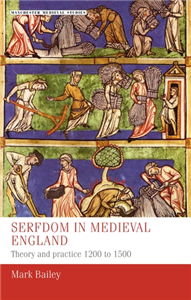
Serfdom in medieval England
Theory and practice 1200 to 1500
by Mark Bailey
Serfdom was a coercive relationship between a landowner and peasant, which was widespread across medieval and early modern Europe. Itfeatures prominently in major historical debates, such as the origins of capitalism and the divergent pathways of western and eastern Europe to modernity. Scholars have paid particular attention to English serfdom, which is usually portrayed as highly oppressive and a major cause of the Peasants' Revolt in 1381. This comprehensive survey draws on a vast scholarship and new research to show how, in reality, English serfdom was weak, casting new light on the nature of its society and economy when the Black Death struck in 1348-9. The pandemicnow assumesa central role in the rapid decline of serfdom, as illustrated in a case study of the estate of one of England's harshest landowners, St Albans abbey.
-
Promoted Content
 Literature & Literary StudiesJanuary 2013
Popular protest in late-medieval Europe
Italy, France and Flanders
by Samuel Kline Cohn
The documents in this stimulating volume span from 1245 to 1424 but focus on the 'contagion of rebellion' from 1355 to 1382 that followed in the wake of the plague. They comprise a diversity of sources and cover a variety of forms of popular protest in different social, political and economic settings. Their authors range across a wide political and intellectual horizon and include revolutionaries, the artistocracy, merchants and representatives from the church. They tell gripping and often gruesome stories of personal and collective violence, anguish, anger, terror, bravery, and foolishness. Of over 200 documents presented here, most have been translated into English for the first time, providing students and scholars with a new opportunity to compare social movements across Europe over two centuries, allowing a re-evaluation of pre-industrial revolts, the Black Death and its consequences for political culture and action. This book will be essential reading for those seeking to better understand popular attitudes and protest in medieval Europe.
-
 Trusted Partner
 The ArtsJanuary 2019
Medieval film
by Anke Bernau, Bettina Bildhauer
Medieval film explores theoretical questions about the ideological, artistic, emotional and financial investments inhering in cinematic renditions of the medieval period. What does it mean to create and watch a 'medieval film'? What is a medieval film and why are they successful? This is the first work that attempts to answer these questions, drawing, for instance, on film theory, postcolonial theory, cultural studies and the growing body of work on medievalism. Contributors investigate British, German, Italian, Australian, French, Swedish and American film, exploring topics such translation, temporality, film noir, framing and period film - and find the medieval lurking in unexpected corners. In addition it provides in-depth studies of individual films from different countries including The Birth of a Nation to Nosferatu, and Robin Hood: Prince of Thieves. Medieval film will be of interest to medievalists working in disciplines including literature, history, art history, to scholars working on film and in cultural studies. It will also be of interest to undergraduates, postgraduates and to an informed enthusiast in film or/and medieval culture.
-
Trusted Partner
 The ArtsJune 2021
Medieval film
by Anke Bernau, Bettina Bildhauer
Medieval film explores theoretical questions about the ideological, artistic, emotional and financial investments inhering in cinematic renditions of the medieval period. What does it mean to create and watch a 'medieval film'? What is a medieval film and why are they successful? This is the first work that attempts to answer these questions, drawing, for instance, on film theory, postcolonial theory, cultural studies and the growing body of work on medievalism. Contributors investigate British, German, Italian, Australian, French, Swedish and American film, exploring topics such translation, temporality, film noir, framing and period film - and find the medieval lurking in inexpected corners. In addition it provides in-depth studies of individual films from different countries including The Birth of a Nation to Nosferatu, and Robin Hood: Prince of Thieves. Medieval Film will be of interest to medievalists working in disciplines including literature, history, to scholars working on film and in cultural studies. It will also be of interest to undergraduates, postgraduates and to an informed enthusiast in film or/and medieval culture.
-
Trusted Partner
 Literature & Literary StudiesMay 2024
Medieval afterlives
Transforming traditions in Shakespeare and early English drama
by Daisy Black, Katharine Goodland
A collection of essays which show how early drama traditions were transformed, recycled, re-used and reformed across time to form new relationships with their audiences. Medieval afterlives brings new insight to the ways in which peoples in the sixteenth century understood, manipulated and responded to the history of their performance spaces, stage technologies, characterisation and popular dramatic tropes. In doing so, this volume advocates for a new understanding of sixteenth-seventeenth century theatre makers as highly aware of the medieval traditions that formed their performance practices, and audiences who recognised and appreciated the recycling of these practices between plays.
-
Trusted Partner
 Literature & Literary StudiesJanuary 2023
The gift of narrative in medieval England
by Nicholas Perkins
This invigorating study places medieval romance narrative in dialogue with theories and practices of gift and exchange, opening new approaches to questions of storytelling, agency, gender and materiality in some of the most engaging literature from the Middle Ages. It argues that the dynamics of the gift are powerfully at work in romances: through exchanges of objects and people; repeated patterns of love, loyalty and revenge; promises made or broken; and the complex effects that time works on such objects, exchanges and promises. Ranging from the twelfth century to the fifteenth, and including close discussions of poetry by Chaucer, the Gawain-Poet and romances in the Auchinleck Manuscript, this book will prompt new ideas and debate amongst students and scholars of medieval literature, as well as anyone curious about the pleasures that romance narratives bring.
-
Trusted Partner
-
Trusted Partner
 Humanities & Social SciencesMay 2023
Medieval women and urban justice
Commerce, crime and community in England, 1300–1500
by Teresa Phipps
This book provides a detailed analysis of women's involvement in litigation and other legal actions within their local communities in late-medieval England. It draws upon the rich records of three English towns - Nottingham, Chester and Winchester - and their courts to bring to life the experiences of hundreds of women within the systems of local justice. Through comparison of the records of three towns, and of women's roles in different types of legal action, the book reveals the complex ways in which individual women's legal status could vary according to their marital status, different types of plea and the town that they lived in. At this lowest level of medieval law, women's status was malleable, making each woman's experience of justice unique.
-
Trusted Partner
 Literature & Literary StudiesSeptember 2025
Love and anti-Judaism in medieval English romance
Typologies of violence and desire
by Hope Doherty-Harrison
Love and anti-Judaism is a new examination of medieval romance for the questions it poses of the most significant events in Christian history. Providing new readings of Sir Gawain and the Green Knight, Sir Orfeo, Sir Gowther and Sir Amadace, the book argues that romance explores depictions of love-and the sacrifices it may necessitate-in the Hebrew Bible, especially where they do not easily fit into interpretations asserting that this history must prefigure Christ and the crucifixion. An examination of anti-Judaism as a discourse of violence and desire that could be turned inwardly to expose the irresolution in Christianity, this book will provoke new investigations into the religious crises of medieval romance.
-
Trusted Partner
 The ArtsJune 2017
Gothic television
by Helen Wheatley
Gothic television is the first full length study of the Gothic released on British and US television. An historical account, the book combines detailed archival research with analyses of key programmes, from Mystery and Imagination and Dark Shadows, to The Woman in White and Twin Peaks, and uncovers an aspect of television drama history which has, until now, remained critically unexplored. While some have seen television as too literal or homely a medium to successfully present Gothic fictions, Gothic television argues that the genre, in its many guises, is, and has always been, well-suited to television as a domestic medium, given the genre's obsessions with haunted houses and troubled families. This book will be of interest to lecturers and students across a number of disciplines including television studies, Gothic studies, and adaptation studies, as well as to the general reader with an interest in the Gothic, and in the history of television drama.
-
Trusted Partner
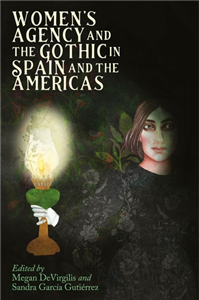 Literature & Literary StudiesMay 2026
Women’s Agency and the Gothic in Spain and the Americas
by Megan DeVirgilis, Sandra García Gutiérrez
This volume has emerged to fulfill two main purposes: Primarily, to constitute the first collaborative work that traces the relationship between the Gothic and Women in Spain and the Americas, but also, to surpass the term 'Female Gothic,' coined by Ellen Moers, by transferring the focus towards women and their agency as writers, readers and characters. This volume functions as a manifesto per se to open new avenues into understanding how women have interacted with the Gothic between the nineteenth and twenty-first centuries in Spain and the Americas. The question, we determine, is not simply about identity, but rather about agency. We define women's agency as the total capacity of characters, authors and readers to act freely within a social framework in relation to gothic texts. In our exploration of authorship, we reject the claim that the Gothic is a simplistic literary genre, instead sustaining that the plasticity of the Gothic has enabled it to survive for centuries; by shifting from a genre to a mode, it has surpassed literary forms and invaded all kinds of media: from film to music and merchandise such as clothing and pop culture collectables, fostering an authentic goth fandom.
-
Trusted Partner
 Humanities & Social SciencesJanuary 2013
The Jews in western Europe, 1400–1600
by John Edwards
As European politics, society, economy and religion underwent epoch-making changes between 1400 and 1600, the treatment of Europe's Jews by the non-Jewish majority was, then as in later periods, a symptom of social problems and tensions in the Continent as a whole. Through a broad-ranging collection of documents, John Edwards sets out to present a vivid picture of the Jewish presence in European life during this vital and turbulent period. Subjects covered include the Jews' own economic presence and culture, social relations between Jews and Christians, the policies and actions of Christian authorities in Church and State. He also draws upon original source material to convey ordinary people's prejudices about Jews, including myths about Jewish 'devilishness', money-grabbing, and 'ritual murder' of Christian children. Full introductory and explanatory material makes accessible the historical context of the subject and highlights the insights offered by the documents as well as the pitfalls to be avoided in this area of historical enquiry. This volume aims to provide a coherent working collection of texts for lecturers, teachers and students who wish to understand the experience of Jewish Europeans in this period.
-
Trusted Partner
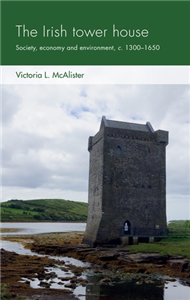 Humanities & Social SciencesApril 2021
The Irish tower house
Society, economy and environment, c. 1300–1650
by Victoria L. McAlister
The Irish tower house examines the social role of castles in late-medieval and early modern Ireland. It uses a multidisciplinary methodology to uncover the lived experience of this historic culture, demonstrating the interconnectedness of society, economics and the environment. Of particular interest is the revelation of how concerned pre-modern people were with participation in the economy and the exploitation of the natural environment for economic gain. Material culture can shed light on how individuals shaped spaces around themselves, and tower houses, thanks to their pervasiveness in medieval and modern landscapes, represent a unique resource. Castles are the definitive building of the European Middle Ages, meaning that this book will be of great interest to scholars of both history and archaeology.
-
Trusted Partner
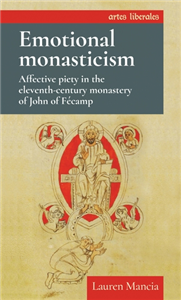 Humanities & Social SciencesJune 2021
Emotional monasticism
Affective piety in the eleventh-century monastery of John of Fécamp
by Lauren Mancia
Medievalists have long taught that highly emotional Christian devotion, often called 'affective piety', appeared in Europe after the twelfth century and was primarily practiced by communities of mendicants, lay people and women. Emotional monasticism challenges this view. The first study of affective piety in an eleventh-century monastic context, it traces the early history of affective devotion through the life and works of the earliest known writer of emotional prayers, John of Fécamp, abbot of the Norman monastery of Fécamp from 1028-78. Exposing the early medieval monastic roots of later medieval affective piety, the book casts a new light on the devotional life of monks in Europe before the twelfth century and redefines how medievalists should teach the history of Christianity.
-
Trusted Partner
 Literature & Literary StudiesDecember 2004
Popular protest in late-medieval Europe
Italy, France and Flanders
by Samuel Kline Cohn Jr, Rosemary Horrox, Simon Maclean
The documents in this stimulating volume span from 1245 to 1424 but focus on the 'contagion of rebellion' from 1355 to 1382 that followed in the wake of the plague. They comprise a diversity of sources and cover a variety of forms of popular protest in different social, political and economic settings. Their authors range across a wide political and intellectual horizon and include revolutionaries, the artistocracy, merchants and representatives from the church. They tell gripping and often gruesome stories of personal and collective violence, anguish, anger, terror, bravery, and foolishness. Of over 200 documents presented here, most have been translated into English for the first time, providing students and scholars with a new opportunity to compare social movements across Europe over two centuries, allowing a re-evaluation of pre-industrial revolts, the Black Death and its consequences for political culture and action. This book will be essential reading for those seeking to better understand popular attitudes and protest in medieval Europe. ;
-
Trusted Partner
 Literature & Literary StudiesFebruary 2021
The gift of narrative in medieval England
by Nicholas Perkins, David Matthews, Anke Bernau, James Paz
-
Trusted Partner
 Humanities & Social SciencesMarch 2020
Medieval women and urban justice
by Teresa Phipps, Cordelia Beattie
-
Trusted Partner
 The ArtsDecember 2025
New Basque Gothic
Trauma, screen media and transnationalism
by Rebecca Wynne-Walsh
This monograph addresses the twenty-first century upsurge in Gothic screen media emanating from the Autonomous Basque Community, Euskadi, in Northern Spain. The book focuses on online video sharing, streaming and social media platforms, demonstrating the impact of multi-national co-production and distribution on the development of Basque film production; looking to the future of regional production in the digital era. This monograph fills a critical gap, presenting Basque Gothic screen media as a regionalist challenge to national models of cinema and identity. Wynne-Walsh establishes Basque Gothic as an expression of transgenerational trauma engendered by a history of state-suppression and socio-political violence. This regional iteration of the mode is addressed as a window into community perception and projection. While this project centres a Basque case study, it establishes a model for the reimagination of critical approaches to global, twenty-first century screen cultures.
-
Trusted Partner
 Humanities & Social SciencesJuly 2022
Jacopo da Varagine's Chronicle of the city of Genoa
by C. E. Beneš
This book offers the first English translation of the Chronicle of the city of Genoa by the thirteenth-century Dominican Jacopo da Varagine, an author best known for his monumental book of saints' lives, the Golden legend. Jacopo's Chronicle presents a coherent vision of Genoa's place in history, the cosmos and Creation as written by the city's own archbishop - mixing eyewitness accounts with scholarly research about the city's origins and didactic reflections on the proper conduct of public and private life. Accompanied by an extensive introduction, this complete translation provides a unique perspective on a dynamic medieval city-state from one of its most important officials, broadening the available literature in English on medieval Italian urban life.
-
Trusted Partner
 Humanities & Social SciencesNovember 2019
Jacopo da Varagine's Chronicle of the city of Genoa
by C. E. Beneš, Rosemary Horrox
This book offers the first English translation of the Chronicle of the city of Genoa by the thirteenth-century Dominican Jacopo da Varagine, an author best known for his monumental book of saints' lives, the Golden legend. Jacopo's Chronicle presents a coherent vision of Genoa's place in history, the cosmos and Creation as written by the city's own archbishop - mixing eyewitness accounts with scholarly research about the city's origins and didactic reflections on the proper conduct of public and private life. Accompanied by an extensive introduction, this complete translation provides a unique perspective on a dynamic medieval city-state from one of its most important officials, broadening the available literature in English on medieval Italian urban life.

