
Your Search Results
-

-

Egyptian Office for Publishing & Distribution
Founded Egyptian Office For Publishing & Distribution in 1992 and until now . our goal is to provide culture for all segments of society and raise the level of public awareness and knowledge and the development of intellectual and creative possibilities for each . Over the past years we have published more than 1,000 cultural educational titles for the whole family through enlist the best authors in Egypt and the Arab world.
View Rights Portal
-
Promoted Content

 Literature & Literary StudiesMay 2026
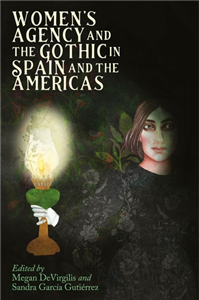
Women’s Agency and the Gothic in Spain and the Americas
by Megan DeVirgilis, Sandra García Gutiérrez
This volume has emerged to fulfill two main purposes: Primarily, to constitute the first collaborative work that traces the relationship between the Gothic and Women in Spain and the Americas, but also, to surpass the term 'Female Gothic,' coined by Ellen Moers, by transferring the focus towards women and their agency as writers, readers and characters. This volume functions as a manifesto per se to open new avenues into understanding how women have interacted with the Gothic between the nineteenth and twenty-first centuries in Spain and the Americas. The question, we determine, is not simply about identity, but rather about agency. We define women's agency as the total capacity of characters, authors and readers to act freely within a social framework in relation to gothic texts. In our exploration of authorship, we reject the claim that the Gothic is a simplistic literary genre, instead sustaining that the plasticity of the Gothic has enabled it to survive for centuries; by shifting from a genre to a mode, it has surpassed literary forms and invaded all kinds of media: from film to music and merchandise such as clothing and pop culture collectables, fostering an authentic goth fandom.
-
Promoted Content
 The ArtsSeptember 2024
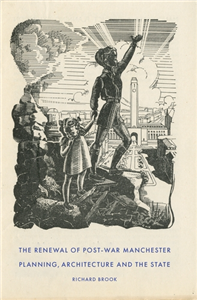
The renewal of post-war Manchester
Planning, architecture and the state
by Richard Brook
A compelling account of the project to transform post-war Manchester, revealing the clash between utopian vision and compromised reality. Urban renewal in Britain was thrilling in its vision, yet partial and incomplete in its implementation. For the first time, this deep study of a renewal city reveals the complex networks of actors behind physical change and stagnation in post-war Britain. Using the nested scales of region, city and case-study sites, the book explores the relationships between Whitehall legislation, its interpretation by local government planning officers and the on-the-ground impact through urban architectural projects. Each chapter highlights the connections between policy goals, global narratives and the design and construction of cities. The Cold War, decolonialisation, rising consumerism and the oil crisis all feature in a richly illustrated account of architecture and planning in post-war Manchester.
-
 Trusted Partner
-
Trusted Partner
 Literature & Literary StudiesJuly 2022
Nordic Gothic
by Maria Holmgren Troy, Johan Hõglund, Yvonne Leffler, Sofia Wijkmark
Nordic Gothic traces Gothic fiction in the Nordic region from its beginnings in the nineteenth century, with a main focus on the development of Gothic from the 1990s onwards in literature, film, TV and new media. The volume gives an overview of Nordic Gothic fiction in relation to transnational developments and provides a number of case studies and in-depth analyses of individual narratives. It creates an understanding of this under-researched cultural phenomenon by showing how the narratives make visible cultural anxieties haunting the Nordic countries, their welfare systems, identities and ideologies. Nordic Gothic examines how figures from Nordic folklore function as metaphorical expressions of Gothic themes and Nordic settings are explored from perspectives such as ecocriticism and postcolonialism. The book will be of interest to researchers and post- and- undergraduate students in various fields within the Humanities.
-
Trusted Partner
-
Trusted Partner
-
Trusted Partner
 Humanities & Social SciencesFebruary 2008
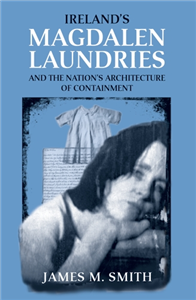
Ireland's Magdalen laundries and the nation's architecture of containment
by James M. Smith
Ireland's Magdalen Laundries and the Nation's Architecture of Containment connects Ireland's Magdalen laundries and the nation-state's nativist politics in the post-independence era, while critically evaluating cultural representations of the Magdalen laundries that have, over the past fifteen years, recovered these institutions from the amnesia at the center of state politics. The book interrogates available archival resources, including government reports, legislative debates, and court cases, to assert that the state was always an active agent in the operation and function of the nation's Magdalen homes. The second half of the book considers a wide range of creative works that help imagine and give narrative form to the Magdalen experience: commercial, independent documentaries, photography and literary representations. Ultimately, the book contends that Ireland's Magdalen institutions chiefly exist in the public mind at the level of story (cultural representation and survivor testimony) rather than history (archival history and documentation). This fascinating study will be invaluable to those interested in Irish History, Gender History and Social History. ;
-
Trusted Partner
 Humanities & Social SciencesJune 2017
Stained glass and the Victorian Gothic revival
by Christopher Breward, Jim Cheshire, Bill Sherman
Stained glass reached the height of its popularity in the Victorian period. But how did it become so popular and who was involved in this remarkable revival? The enthusiasm for these often exquisite pieces of artwork spread from specialist groups of antiquarians and architects to a much wider section of the Victorian public. By looking at stained glass from the perspective of both glass-painter and patron, and by considering how stained glass was priced, bought and sold, this enlightening study traces the emergence of the market for stained glass in Victorian England. Thus it contains new insights into the Gothic Revival and the relationship between architecture and the decorative arts. Beautifully illustrated with colour plates and black and white illustrations, this book will be valuable to those interested in stained glass and the wider world of Victorian art.
-
Trusted Partner
 The ArtsJune 2017
Gothic television
by Helen Wheatley
Gothic television is the first full length study of the Gothic released on British and US television. An historical account, the book combines detailed archival research with analyses of key programmes, from Mystery and Imagination and Dark Shadows, to The Woman in White and Twin Peaks, and uncovers an aspect of television drama history which has, until now, remained critically unexplored. While some have seen television as too literal or homely a medium to successfully present Gothic fictions, Gothic television argues that the genre, in its many guises, is, and has always been, well-suited to television as a domestic medium, given the genre's obsessions with haunted houses and troubled families. This book will be of interest to lecturers and students across a number of disciplines including television studies, Gothic studies, and adaptation studies, as well as to the general reader with an interest in the Gothic, and in the history of television drama.
-
Trusted Partner
 Literature & Literary StudiesSeptember 2025
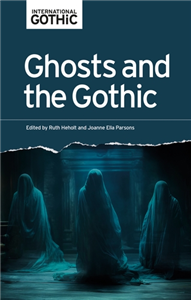
Ghosts and the Gothic
by Ruth Heholt, Joanne Ella Parsons
Ghosts have long been connected with the Gothic, but until now there has not been a book dedicated to the subject. This collection examines ghostly presences (and absences) in both classic and lesser-known Gothic texts from the beginning of the genre to the present in a global context. Arguing that the undead, in the form of ghosts, are intrinsic to the Gothic mode, essays in the collection question the place of manifested spirits. The Gothic has always been 'political', and essays in this collection examine some of the most relevant issues facing us today: from the destruction of the natural environment, to questions of 'freedom', to gender politics.
-
Trusted Partner
 Humanities & Social SciencesMarch 2026
The dilemma of Authority
by Allyn Fives
The moral problem of authority is the challenge of reconciling legitimate authority (the right to rule) with the demands of freedom and rationality. In this book, I argue that authority can have legitimacy, but when it does it generates a moral dilemma, where the obligation to obey comes at some cost to freedom and reason. Hence, not only do I depart from the views of those who insist that authority can never have legitimacy, but also those who maintain that insofar as authority is legitimate it simply satisfies the demands of freedom or rationality. My focus here will be on both what it is that justifies authority (in particular focusing on membership, and the goods of membership) as well what type of reason an authoritative directive is, how it can come into conflict with others reasons, and how those conflicts are resolved.
-
Trusted Partner
 Literature & Literary StudiesDecember 2025
The Gothic in times of crisis
by John Whatley
The Gothic in times of crisis reflects contemporary society, showing how the Gothic modes continually resets its own forms to encompass each new reality, each new apocalypse, each new plague or crisis. This collection expands oncurrent scholarship to show how the Gothic challenges our understanding of both older and recent crises and, in turn, disturbs all genre complacencies to expose and confront the problems and contradictions in what our world has been, has become, or is in danger of becoming. This collection explores Gothic's current relevance to the contestations of ideas and the underlying and visible conflicts it dramatizes across a wide range of media. In various ways, it reveals what happens to Gothic modes now they confront the increasingly Gothic realities of our times, sometimesby recalling earlier crises and ideological contestations leading up to them.
-
Trusted Partner
 Humanities & Social SciencesMay 2021
Disciplined agency
Neoliberal precarity, generational dispossession and call centre labour in Portugal
by Patrícia Alves de Matos
Since the mid-2000s, the harsh reality of call centre employment for a generation of young workers in Portugal has been impossible to ignore. With its endless rows of small cubicles, where human agents endure repetitive telephone conversations with abusive clients under invasive modes of technological surveillance, discipline and control, call centre work remains a striking symbol of labour precarity, a condition particularly associated with the neoliberal generational disenchantment that 'each generation does better than its predecessor'. This book describes the emergence of a regime of disciplined agency in the Portuguese call centre sector. Examining the ascendancy of call centres as icons of precarity in contemporary Portugal, this book argues that call centre labour constitutes a new form of commodification of the labouring subject. De Matos argues that call centres represent an advanced system of non-manual labour power exploitation, due to the underestimation of human creativity that lies at the centre of the regimented structures of call centre labour. Call centres can only guarantee profit maintenance, de Matos argues, through the commodification of the human agency arising from the operators' moral, relational and social embedded agentive linguistic interventions of creative improvisation, decision-making, problem-solving and ethical evaluation.
-
Trusted Partner
 The ArtsDecember 2025
New Basque Gothic
Trauma, screen media and transnationalism
by Rebecca Wynne-Walsh
This monograph addresses the twenty-first century upsurge in Gothic screen media emanating from the Autonomous Basque Community, Euskadi, in Northern Spain. The book focuses on online video sharing, streaming and social media platforms, demonstrating the impact of multi-national co-production and distribution on the development of Basque film production; looking to the future of regional production in the digital era. This monograph fills a critical gap, presenting Basque Gothic screen media as a regionalist challenge to national models of cinema and identity. Wynne-Walsh establishes Basque Gothic as an expression of transgenerational trauma engendered by a history of state-suppression and socio-political violence. This regional iteration of the mode is addressed as a window into community perception and projection. While this project centres a Basque case study, it establishes a model for the reimagination of critical approaches to global, twenty-first century screen cultures.
-
Trusted Partner
 Literature & Literary StudiesMay 2026
Russo-Soviet imperialist hauntings
Neo-Gothic geographies in Central and Eastern Europe since 1989
by Svitlana Krys, Maryna Romanets
Russo-Soviet imperialist hauntings attempts to capture some of the ghosts of the colonial and totalitarian past that have been proliferating in international political and cultural landscapes after the collapse of the USSR. By conflating postcolonial, post-totalitarian, postcommunist, and Gothic discourses, it maps virtually untouched aspects of cultural decolonization, focusing on unsettling "hauntings" of unresolved memory traces of Russo-Soviet domination in the former Eastern Bloc countries and Soviet republics. Operating within a vast intertextual field of social, cultural, and ideological discourses, the volume enables a productive exchange across distinct (inter)disciplinary boundaries and represents a range of voices from Europe and North America. The contributors' diverse interests draw on transmedia (literature, visual arts, and film), transnational, and translingual (diasporic literature) approaches, providing insights into a variety of forms that the Gothic has taken in the (late) twentieth and twenty-first centuries, and demonstrating its consistent engagement with history, ideology, and politics.
-
Trusted Partner
 Humanities & Social SciencesJuly 2021
Post-everything
An intellectual history of post-concepts
by Herman Paul, Adriaan van Veldhuizen
Postmodern, postcolonial and post-truth are broadly used terms. But where do they come from? When and why did the habit of interpreting the world in post-terms emerge? And who exactly were the 'post boys' responsible for this? Post-everything examines why post-Christian, post-industrial and post-bourgeois were terms that resonated, not only among academics, but also in the popular press. It delves into the historical roots of postmodern and poststructuralist, while also subjecting more recent post-constructions (posthumanist, postfeminist) to critical scrutiny. This study is the first to offer a comprehensive history of post-concepts. In tracing how these concepts found their way into a broad range of genres and disciplines, Post-everything contributes to a rapprochement between the history of the humanities and the history of the social sciences.
-
Trusted Partner

 September 2014
Dein Crack ist in der Post
Wie das Internet die Welt der Drogen revolutioniert
by Power, Mike
-
Trusted Partner
 Humanities & Social SciencesApril 2026
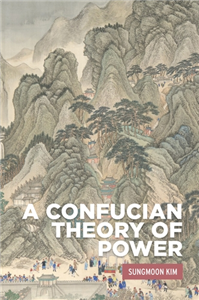
A Confucian theory of power
by Sungmoon Kim
In the book's lead essay, Sungmoon Kim offers a comprehensive analysis of Confucian power. Through a blend of philosophical, political, and historical analysis, Kim challenges the dominant idea that Confucianism is primarily centred on virtue ethics. Instead, he argues that Confucianism perceives power through the prism of responsibility. Kim not only traces this perspective throughout history but also demonstrates its relevance to contemporary society. He contrasts this Confucian perspective with Western political theory's view of power as control. Political theorists and philosophers will offer essay responses to Sungmoon Kim's provocation, offering a dialogue approach to provide a comprehensive analysis of the Confucian conception of power.
-
Trusted Partner
-
Trusted Partner
Literature & Literary StudiesMay 2023
Suicide and the Gothic
by William Hughes, Andrew Smith
Suicide and the Gothic is the first protracted study of how the act of self-destruction recurs and functions within one of the most enduring and popular forms of fiction. Comprising eleven original essays and an authoritative introduction, this collection explores how the act of suicide has been portrayed, interrogated and pathologised from the eighteenth century to the present. The featured fictions embrace both canonical and the less-studied texts and examine the crisis of suicide - a crisis that has personal, familial, religious, legal and medical implications - in European, American and Asian contexts. Featuring detailed interventions into the understanding of texts as temporally distant as Thomas Percy's Reliques and Patricia Highsmith's crime fictions, and movements as diverse as Wertherism, Romanticism and fin-de-siècle decadence, Suicide and the Gothic provides a comprehensive and compelling overview of this recurrent crisis in fiction and culture.



