
Your Search Results

-
Promoted Content

 February 2024
Why We Should Care if a Sack of RiceFalls Over in China
The food of the future
by Dr. Malte Rubach
It is time to counter the numerous utopias, myths and established narratives of the future of nutrition with a fact-based scenario. This book shows where the natural limits of what is currently technologically feasible lie and how the global diversity of food cultures will ensure the survival of humanity in the future. It exposes the great promises of meat substitutes from the laboratory as well as vegan renunciation scenarios, and shows a realistic path for the future of global nutrition along the lines of the United Nations’ 17 Sustainable Development Goals.
-
Promoted Content

 2020
2020Nutritional Practice Infants, Children, Adolescents
Concise advisory knowledge
by Dr. Ute Alexy, Dr. Annett Hilbig and Frauke Lang. Edited by Prof. Dr. Martin Smollich
Anyone giving responsible advice about questions on nutrition must have sound expert knowledge. This must not only be scientifically reliable, but must at the same time be relevant and practicable in the individual context. The concept behind the book series Nutritional Practice is to provide the necessary translation of current research results and guidelines into recommendations suitable for everyday use. In accordance with this consistent, practical approach, the focus is on the individual person in his or her particular stage in their life. The present volume is based on the various stages in life between infancy and adolescence. It therefore covers all questions about nutrition in health and disease from the first day of life to young adulthood
-
 Trusted Partner
 2020
2020Nutritional Practice Women and Men
Concise advisory knowledge
by Edited by Prof. Dr. Martin Smollich. With contributions by Birgit Blumenschein, Dr. oec. troph. Annett Hilbig, Julia Kugler, Dr. Claudia Laupert-Deick, Julia Sausmikat and PD Dr. Birgit-Christiane Zyriax
This volume in the book series Nutritional Practice sheds light on gender-specific aspects of the prevention and treatment of dietary deficiencies in women and men. Part I presents the principles, with an overview of the sociocultural influences on nutritional behaviour and differences in dietary practice between women and men, which lead to relevant consequences for gender-specific communication about nutrition. Part II explains in practical detail the wide range of topics concerning nutrition in pregnancy and lactation. Part III focusses on aspects of nutrition in life situations and on diseases that exclusively or predominantly occur in women. In addition to the menopause, these include various psychogenic eating disorders, breast cancer and polycystic ovary syndrome (PCOS).
-
Trusted Partner
 2021
2021Nutritional Practice Elderly People
Concise advisory knowledge
by Prof. Dr. Martin Smollich (ed.)
The physiology and living conditions of people change as they grow old, whereas it is often more difficult to adapt eating habits to the new requirements. Psychological aspects come to the fore. The challenge for giving specific nutritional advice is therefore particularly great. This volume in the book series Nutritional Practice provides all the information needed for the competent care of elderly people. It deals with general aspects of nutrition in old age, as well as specific nutritional situations such as poor diet, dehydration, chewing and swallowing problems, dementia, mobility, oral and food hygiene or nutrition at the end of life. A further section is concerned with communal catering.
-
Trusted Partner
 October 2024
Renunciation and Freedom
Survivial in the future
by Jean-Pierre Wils
The situation in our society is precarious. The ecological shocks are omnipresent. The mere continuation of our lifestyles fixated on expansion and self-development has long since reached its limits. As if intoxicated by ourselves, we consume our world voraciously and without restraint. We need moderation and frugality that lead us out of the ecological and social dead ends and hold both the individual and Politics to account. We are by no means powerless and are perfectly capable of leading a life that offers prospects for a humane future. However, our idea of freedom needs urgent correction. For this endeavour to succeed, we need the courage to face reality and the willingness, in a spirit of solidarity, to say goodbye to a false life and join the alliance of renunciation and freedom. Then we will be free – differently and better.
-
Trusted Partner
-
Trusted Partner

 Business, Economics & LawOctober 2004
Qualities of food
by Mark Harvey, Andrew McMeekin, Alan Warde
In this book, the complexity and the significance of the foods we eat are analysed from a variety of perspectives, by sociologists, economists, geographers and anthropologists. Chapters address a number of intriguing questions: how do people make judgments about taste? How do such judgments come to be shared by groups of people?; what social and organisational processes result in foods being certified as of decent or proper quality? How has dissatisfaction with the food system been expressed? What alternatives are thought to be possible? The multi-disciplinary analysis of this book explores many different answers to such questions. The first part of the book focuses on theoretical and conceptual issues, the second part considers processes of formal and informal regulation, while the third part examines social and political responses to industrialised food production and mass consumption. Qualities of food will be of interest to researchers and students in all the social science disciplines that are concerned with food, whether marketing, sociology, cultural studies, anthropology, human nutrition or economics.
-
Trusted Partner
 2024
2024Brave new city
Smart Cities - a survaillance-nightmare?
by Peter Schaar
The dream of the ideal city is as old as the city itself. Since real cities often develop chaotically, the idea of perfecting them, even tearing them down if necessary, and rebuilding them according to the prevailing patterns of thought is an obvious one. The latest manifestation of this utopia is the smart city - the intelligent city, packed with the latest technology and extensively digitised. But will air taxis and hyperloops, ubiquitous sensors, access control systems and data-driven management really make the city of the future a better place to live? Are they the answer to the enormous challenges facing today's fast-growing metropolises? Or will the supposed administrative paradise ultimately mutate into a digital juggernaut?
-
Trusted Partner
 October 2020
Simple Food!
Anti the Food Frenzy in Our Minds
by Thomas A. Vilgis
This book follows a unique path in the ubiquitous food debate: it leads us on the trail of the origins of our food culture, from the Neolithic period to the present day. Thomas A. Vilgis has compiled a guide that combines scientific with cultural or sociological aspects. How did Stone Age man poach food? Which cereal varieties were cultivated first? What is the mysterious umami flavour all about? The cultural historical excursion gets interactive with plenty of recipes for those curious to test Kimchi with birch leaves or red cabbage in their dessert.
-
Trusted Partner
 March 2020
No Place for Taste
Food Myths and the Rapid Change of Food Culture
by Manfred Kriener
This book is not a manual but provides an information kit so we can find our way intelligently and make decisions. Nutrition is a constant talking point, but often there is a lack of knowledge and judgement. Amidst this confusion of facts, Manfred Kriener clarifies the rapid change of our food culture. He covers the entire range from the vegan trend to insect food, from aquaculture to cultured meat. Kriener also focuses on the various obscure quality seals, chaotic labelling on the wine rack and our inconsistency as consumers. The new world of food in eleven chapters, spicy at times, but plenty of food for thought and to whet the appetite.
-
Trusted Partner

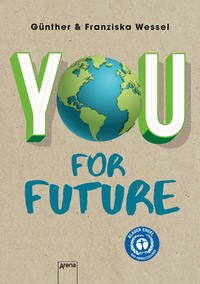 Children's & YA
You for Future
by Franziska Wessel/ Günther Wessel
‘We will not stop demonstrating,’ writes Franziska Wessel in a guest column in the Berliner Zeitung. Franziska is pursuing a goal. Decisive measures must finally be taken to protect the climate. While that is not happening she spends every Friday on the streets, gives interviews and puts pressure on politicians. But climate change isn’t the only thing threatening our future. There is so much suffering, injustice and destruction in the world. Something must be done about it. And as a climate activist, Franziska knows exactly how to be active. Together with her father, the journalist and author, Günther Wessel, she explains: How do I start a petition? How do I organise a campaign? How does lobbying work? So that everyone knows how they can make things happen.
-
Trusted Partner
 2023
2023Food Composition Table for the Practice
The small Souci/Fachmann/Kraut
by Founded by S.W. Souci, W. Fachmann and H. Kraut. Revised by Dr. Petra Steinhaus. Edited by the Leibniz Institute of Food Systems Biology at the Technical University of Munich.
■ How many omega-3 fatty acids does salmon contain? ■ Which dairy product contains the most calcium? ■ How iron-rich is spinach, really? Whether calories, vitamins or amino acids – whether in field beans, bananas, eggs, chicken, parmesan cheese or onion – it is all here. The compact edition of the time-tested „large SFK [Souci/Fachmann/Kraut]“ offers tested data on over 70 ingredients in more than 360 foods, systematically structured according to food groups. This edition with thousands of values has been completely revised and updated by the Leibniz Institute of Food Systems Biology at the Technical University of Munich. Extra: 32 summary tables cover more than 300 other, less common foods and allow for targeted, clear comparisons. 16 orientation tables provide information about foods with particularly high or low amounts of ingredients. Nutritional values, energy content, main components and ingredients displayed in uniform systematics and a practical format – just look it up!
-
Trusted Partner
-
Trusted Partner
 November 2021
The Forest of the Future – A New Reality
Understanding the ecosystem
by Hans Jürgen Böhmer
What happened with forest dieback? The predictions of the 1980s that forests would be in decline across Europe have not come true. Currently, attention again focuses on the doom scenarios of the loss of entire forests and cultural landscapes in an emotional and sometimes hysterical debate. Biogeographer Hans Jürgen Böhmer refers to updated case studies and his 30 years of research experience on global ecosystems to demonstrate extremely complex interrelations of the natural world that various actors monitor in contrasting ways and characterized by different times and ideologies. Böhmer advocates to embed the sustainability debate more strongly in the living environment, rather than relying exclusively on model calculations.
-
Trusted Partner
 Humanities & Social SciencesSeptember 2017
The future of western capitalism?
by Alberta Andreotti, David Benassi, Yuri Kazepov
-
Trusted Partner
 Humanities & Social SciencesApril 2021
The future of U.S.–India security cooperation
by Šumit Ganguly, M. Chris Mason
-
Trusted Partner
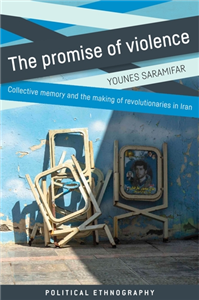 Humanities & Social SciencesJuly 2026
The promise of violence
Collective memory and the making of revolutionaries in Iran
by Younes Saramifar
Revolutionaries in Iran choose to identify memories of the Iran-Iraq War as their 'collective' memory to mark the war era as the temporal reference in history - the time of times, or sometimes even a time beyond time. Can a sole event and its violence truly become - for some - the all-encompassing, constituting element of history and memory? This book pursues this question and follows revolutionaries in the maze of 'collective' memory to offer a temporal account of the breakdown of happenings - as well as the mending of happenings through the force of remembrance.
-
Trusted Partner
 2022
2022A Healthy Pregnancy with Selected (Micro)Nutrients
by Uwe Gröber
Adequate nutrition and a healthy lifestyle – before and during pregnancy - are of great importance for a trouble-free pregnancy, birth, and the subsequent development of the child. Since the nutritional status before the onset of pregnancy influences both fertility and the course of pregnancy, including complications, the birth and breastfeeding, close attention should be paid to a healthy diet and adequate supply of essential (micro)nutrients well in advance and not only at the family planning stage. Poor micronutrient status prior to conception is often carried over into pregnancy, and can significantly increase the risk of pregnancy complications and, for example, lead to the dreaded spina bifida in the child. This patient guide tells you what you need to know! Various micronutrients are described in detail. Special emphasis is placed on the latest study results concerning pregnancy and nutrition.
-
Trusted Partner
 Business, Economics & LawJanuary 2022
Reclaiming economics for future generations
by Lucy Ambler, Joe Earle, Nicola Scott, Julie Froud
-
Trusted Partner
 Humanities & Social SciencesJune 2023
Soft power and the future of US foreign policy
by Hendrik W. Ohnesorge


